
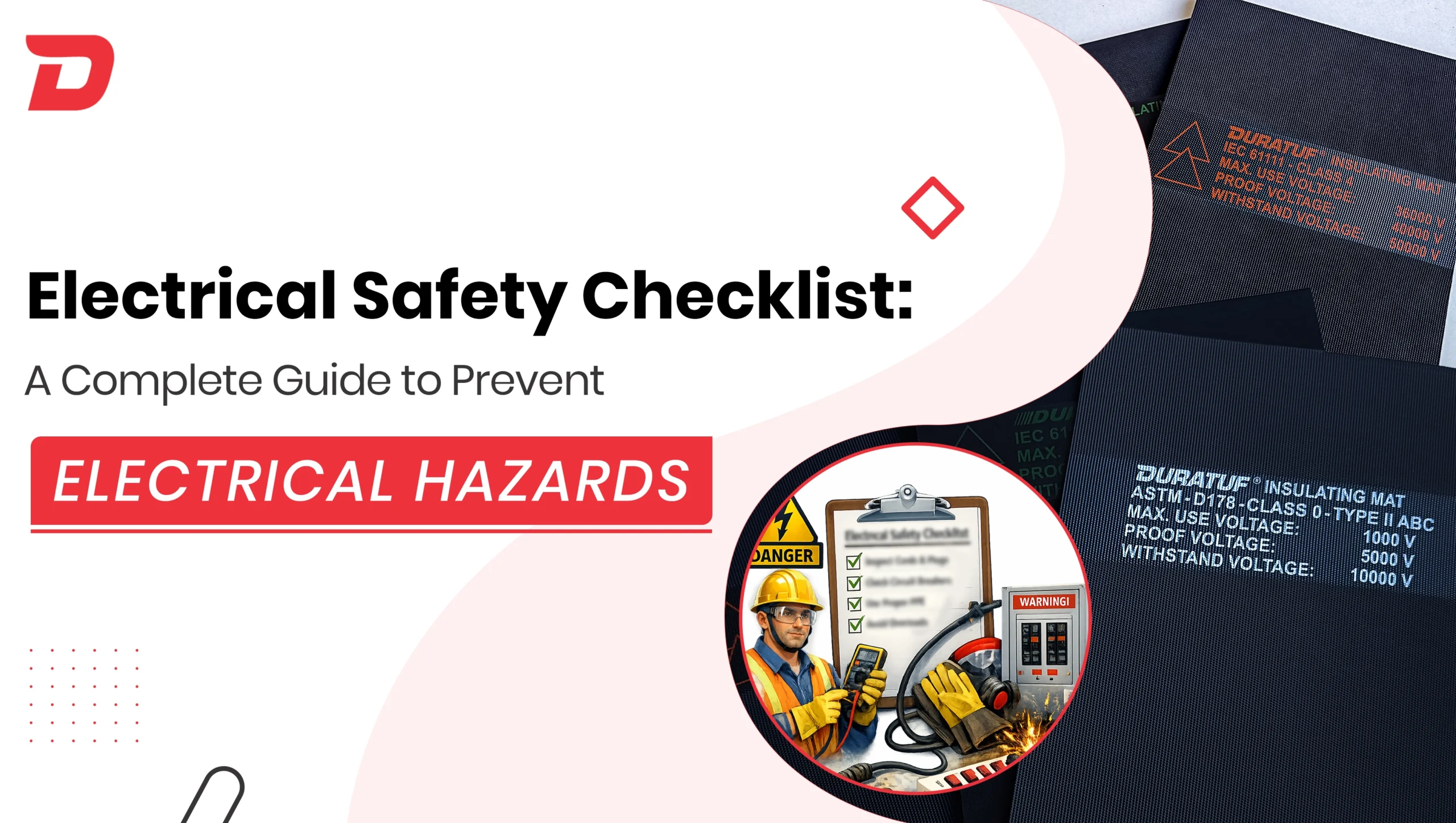
In this blog, we are going to give a complete guide through an electrical safety checklist. It will help you ensure electrical safety in your workplace. From protective gear, such as electrical insulating mats, to warning signs, we will explain each point for you.
Burns, injuries, or neurological disorders are not the only effects of electrical hazards.
Sometimes, they might even lead to the immediate death of the one operating the faulty system.
This is why your workplace should have an electrical safety checklist because prevention is better than cure.
Mandatory Electrical Safety Checklist For All Workplaces
Industries are prioritizing electrical safety. To ensure that only best practices are conducted in the workplace, they have a complete electrical safety checklist to prevent such electrical accidents. Let us see how many boxes you tick:
Are you using protective gear?
An electrical safety checklist is incomplete without mentioning protective gear. Safety gear such as electrical insulating mats, rubber gloves, safety boots, arc-flash suits, and other PPE is mandatory for industries to use. They ensure the electrical safety of the workplaces.
For extreme-voltage applications, you should install electrical safety mats. Depending on the standards, they are suitable for working voltages (IEC 61111 & ASTM D178 mats: 1 kV to 36 kV). However, your electrical safety checklist should also have checkboxes to see if the electrical insulating mats have:
- Compliance with the industrial safety standards.
- Suitable electrical insulation properties (dielectric strength, AC-proof voltage, and working voltages).
- Adequate thicknesses and sizes as per the dimensions of the workplaces.
- Test certifications to prove their reliability (source and specifications).
- Markings (safety labels, manufacturing date, and others).
Do you know when to switch off the power?
Turning off power at the right time can minimize the chances of power hazards. The electrical safety checklist suggests turning off the power:
- Before any maintenance work (opening, repairing, and fixing) of electrical panels.
- During emergencies such as floods, fire hazards, and other unavoidable situations.
- Before the installation of new lights, sockets, and other electrical components.
- When you see sparks or find out that an electrical machine is damaged or faulty.
- During component cleaning or near objects.
Are you making sure that your circuits are protected?
You should install circuit breakers and relays to protect your circuits from overloading or short circuits. Besides, you should also have fuses to prevent any such damage. The electrical safety checklist also includes factors such as proper grounding to reduce the risks of electrical shocks.
Is your electrical device exposed to water?
This is one of the most important items on an electrical safety checklist. The electrical safety checklist ensures that your electrical appliances are kept away from water. Water, being a good conductor of electricity, results in short circuits.
Are all your electrical devices maintained?
Faulty and damaged electrical systems can cause power hazards. As a result, with the electrical safety checklist, you should make sure that all your electrical appliances are maintained. They should have proper ratings, periodic maintenance, and be in good condition to avoid such situations.
Do you regularly inspect the wires and cords in your workplace?
Your electrical safety checklist should have the following points:
- Frayed wires
- Worn-out wires
- Loose wires connected
These often lead to dangerous electrical accidents. Hence, for the best safety systems, you should attend to these issues.
Are you using warning signs?
Signs play a huge role in the electrical safety checklist. They minimize the chances of workplace injuries. They create an immediate awareness. You can see some signs reading “danger”, “caution”, “do not use”, and others. They restrict workers from operating faulty appliances or stepping into a danger zone.
Summary
You should keep this electrical safety checklist to minimize the risk of electrical accidents in your workplace. Document and monitor to ensure best practices are followed, and workplace safety is maintained.