Butyl Rubber Sheet
Butyl rubber, a copolymer of isobutylene and isoprene (IIR), is the industrial specification standard where gas impermeability is the primary requirement. No other common elastomer approaches butyl's resistance to air, vapour and gas transmission. With strong chemical resistance and a wide thermal range (-40°C to +130°C), butyl rubber sheet is specified for vapour barriers, chemical tank linings, airtight sealing systems & automotive engine bay applications. Duratuf butyl sheets are available in two halogenated grades, Chloro-Butyl (CIIR) and Bromo-Butyl (BIIR), both at 100% polymer compound, 60 Shore A hardness & 8 MPa tensile strength.
What is a Butyl Rubber Sheet?
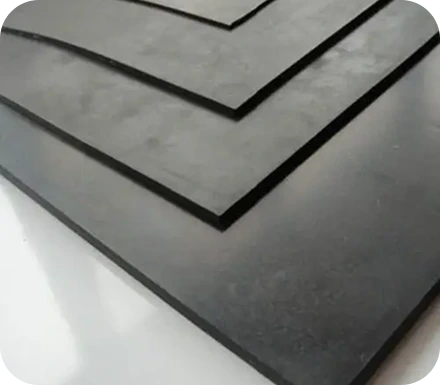
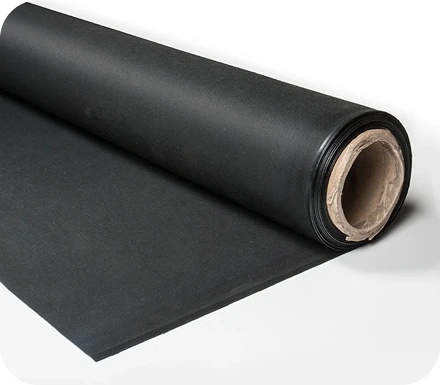
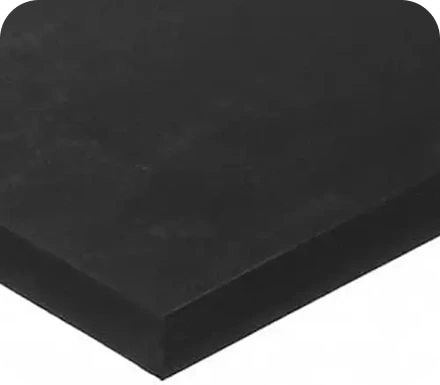
Butyl rubber, Isobutylene Isoprene Rubber(IIR ), is a synthetic elastomer produced by copolymerising isobutylene with a small percentage of isoprene. It is classified under ASTM D1418 as IIR. The saturated polymer backbone gives butyl rubber its defining property: exceptionally low permeability to gases, air and water vapour, significantly better than EPDM, neoprene, natural rubber, or nitrile.
For industrial sealing applications where vapour transmission, gas containment or airtight integrity must be maintained over long service cycles, butyl rubber sheet is the specification standard. It is used in pharmaceutical barrier layers, chemical vessel linings, vacuum system seals and automotive engine bay components.
Duratuf offers butyl rubber sheet in two halogenated variants: Chloro-Butyl (CIIR) for standard airtight sealing and chemical stability, and Bromo-Butyl (BIIR) for heat and flame-exposed applications requiring superior bonding and cure characteristics. Both are 100% halogenated butyl compound.
- Vapour barriers and gas-impermeable sealing systems
- Pharmaceutical plant barrier layers and sterile seals
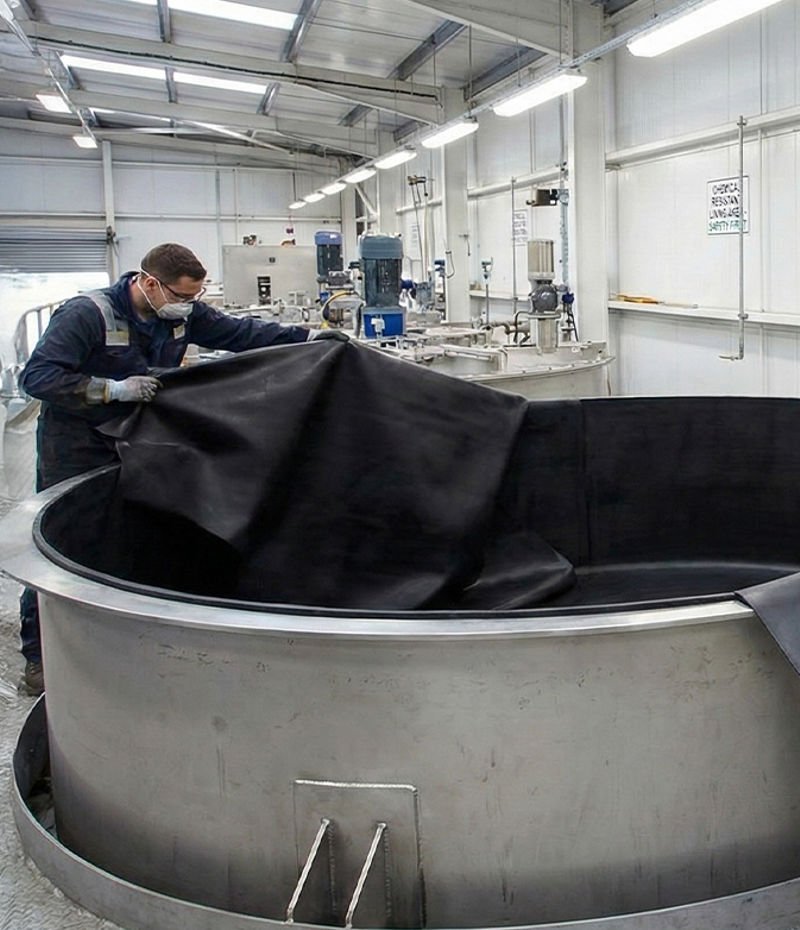
- Chemical tank and pipeline linings in corrosive environments
- Automotive engine bay sealing and insulation
Types of Butyl Rubber Sheets: Duratuf's Grade
ButylShield60 Pro – Bromo
Made of Brominated Butyl rubber- has enhanced resistance to chemicals and high temperatures …
ButylShield60 Pro – Chloro
Made of Chlorinated Butyl rubber- offers protection against UV radiation and ozone degradation …
Technical Specification
| Product Name | Color | Tensile Strength (MPa) (Min) | Elongation at Break | Hardness | Specific Gravity | Working Temperature (°C) | ||||
|---|---|---|---|---|---|---|---|---|---|---|
| Testing Standard | Specified Value | Testing Standard | Specified Value | Testing Standard | Specified Value | Testing Standard | Specified Value | |||
| ButylShield60 Pro – Chloro – Black | Black | ASTM D412 | 8.0 MPa (Min) | ASTM D412 | 350% | ASTM D2240 | 60 ± 5° Shore A | ASTM D297 | 1.20 ± 0.05 | -40 to +130 |
| ButylShield60 Pro – Bromo – Black | Black | ASTM D412 | 8.0 MPa (Min) | ASTM D412 | 350% | ASTM D2240 | 60 ± 5° Shore A | ASTM D297 | 1.20 ± 0.05 | -40 to +130 |
If your application requires sealing against gas or vapour transmission in a chemical or industrial environment, specify Chloro-Butyl. If the application involves heat exposure, automotive underhood conditions, or pharmaceutical manufacturing where FDA-traceable bonding and cure quality matters, specify Bromo-Butyl.
How do we ensure certified quality in our Butyl Rubber Sheets?

Gas Impermeability Verification
Specific gravity tested per ASTM D297 on every batch, density consistency confirms compound integrity and the gas barrier performance the application depends on.

REACH & RoHS Certified
Free from restricted substances. Batch certificates and compliance documentation available with every shipment for export and regulated industrial procurement.

100% Halogenated Butyl Compound
Both grades compounded at 100% CIIR or BIIR polymer, no blended grades. Halogenation type and polymer purity verified before production release.

Mechanical Properties Testing
Tensile strength and elongation at break tested per ASTM D412. Hardness per ASTM D2240. Observed values documented and available with every shipment.
Major Industrial Applications of Butyl Rubber Sheet
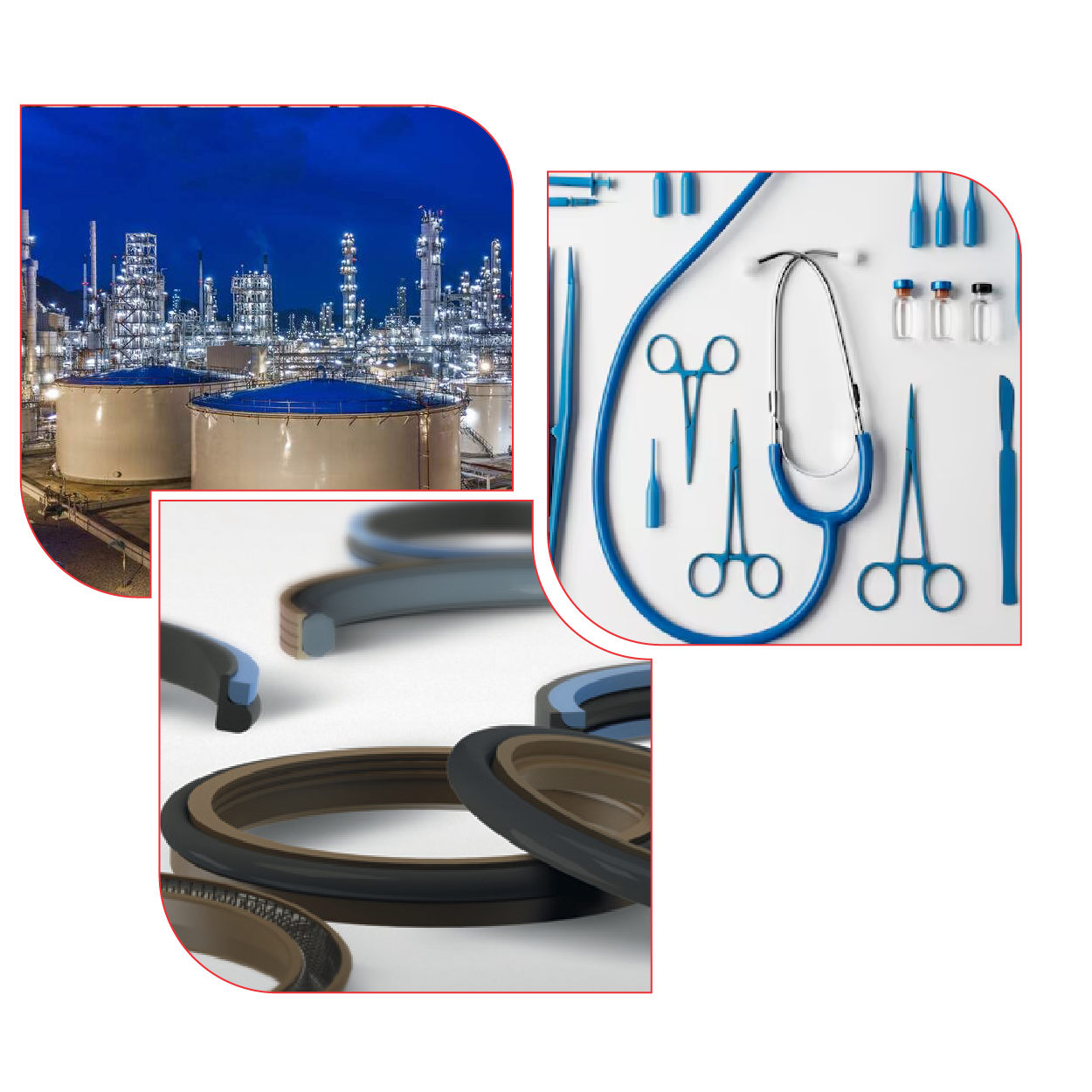
- Chemical Tank & Pipeline Lining: Lining material for storage tanks, pipeline seals and chemical vessel gaskets handling acids, alkalis, and water-based media, where butyl’s gas impermeability and chemical resistance prevent vapour transmission through the liner.
- Pharmaceutical Plant Barrier Layers: Sheet-cut barrier components and seals in pharmaceutical manufacturing plants where low extractables, chemical inertness and airtight integrity are regulatory requirements. Bromo-Butyl grade specified where bonding and cure traceability matter.
- Vapour & Gas Sealing Systems: Airtight seals, expansion joints, and gaskets in vacuum systems, gas distribution lines and industrial enclosures where preventing gas or vapour transmission is the primary engineering objective.
- Automotive Engine Bay & Underhood Sealing: Engine bay insulation, brake system components and underhood sealing in automotive applications, Bromo-Butyl preferred for its superior heat resistance and bonding characteristics.
- Waterproofing Membranes & Roofing Applications: Butyl rubber sheet is used as a waterproofing membrane in below-grade construction, pond liners, and flat roofing systems where long-term resistance to water transmission is required.
Key Features of Duratuf Butyl Rubber Sheets
Duratuf Butyl rubber sheets are designed to deliver performance in harsh environments, where there is constant chemical exposure. Some features of our Butyl rubber sheets are:
Butyl rubber has lower gas permeability than any other common industrial elastomer. Specified as standard in pneumatic tyre inner tubes, pharmaceutical barrier layers, and vacuum sealing, applications where other elastomers fail on gas transmission.
Excellent resistance to steam and hot water at operating temperatures up to +130°C, a property butyl shares with EPDM but not with nitrile, neoprene, or natural rubber. Correct specification for steam-exposed sealing systems.
Free from restricted and hazardous substances. Compliance documentation and batch test reports available with every shipment for regulated procurement and export applications.
Maintains flexibility at low temperatures and structural integrity under sustained heat. Wider operating range than neoprene (+110°C) and standard natural rubber (+70°C).
When you buy Duratuf rubber sheets, you invest in productivity and performance equally.
Why Choose Duratuf for Industrial Butyl Rubber Sheeting?

Thermal Stability
Stays in shape in very high and very low temperatures

Certified Performance
Comes with a product warranty for performance

Airtight Formulation
Does not allow gases to pass through the butyl seals

Chloro-Bromo Options
Choose as per your need and applications
Customer testimonials and success stories
Take a look at what our customers think and say about us


I must say that Duratuf Products provided me EPDM rubber sheets of top quality. The sheets delivered by you guys are perfect for applying in my workplace’s industrial tanks! The order was delivered to us on time so a big thanks to you people.
Omar Hassan
On-time delivery: Thank you Duratuf for the EPDM rubber sheets of top quality. The sheets delivered by you guys are best for applying in my workplace’s industrial tanks! The order was delivered to us on time so a big thanks to the sales and support team.
Chris Taylor
I’ve long sought a dependable solution for our sealing applications. Thanks to your Viton Rubber Sheets, our search is finally over. These sheets have revolutionized our sealing processes, offering unparalleled resistance to extreme temperatures, chemicals, and pressure.
Sakshi B
The Nitrile Rubber Sheets exhibit exceptional resistance to oils, fuels, and abrasion, making them ideal for our demanding applications in the automotive sector. Very happy with customer services.
Rajiv Barua
As the proprietor of a manufacturing unit in Kolkata, India, I’ve relied on Neoprene Rubber Sheets from Duratuf to meet our demanding industrial requirements. The Neoprene material’s resilience against abrasion, weathering, and oil has significantly enhanced the durability of our products.
Anita Singh
As a steel fabrication company based in Mumbai, India, maintaining the integrity of our equipment is essential. These rubber sheets have significantly enhanced the efficiency and safety of our blasting processes.
Vikram Singh
Living in Chennai, India, I’ve struggled to find a reliable solution for my industrial needs until I discovered Silicone Rubber Sheets from Duratuf. The quality of the silicone is impeccable, offering unmatched resistance to extreme temperatures and chemicals, crucial for our diverse applications.
Rajesh Kumar
After placing my first order, I was thoroughly impressed with Duratuf’s easy ordering process and attention to the customer’s needs. The insertion rubber sheet provided to us has surpassed my expectations, proving to be an essential component in our production line.
Steven Miller
I run a small manufacturing unit specializing in inflatable products. We recently switched to Hypalon rubber sheets supplied by Duratuf for our production line, and the difference has been remarkable.
Sarah Johnson
As a customer based in London, I’ve been thoroughly impressed by the Natural Rubber Sheet offered by Duratuf. Its eco-friendly composition aligns perfectly with my values.
R. Patel
Being in the heart of monsoon-prone Mumbai, finding a reliable waterproofing solution was paramount for our construction project. We chose the EPDM Rubber sheets, and it has exceeded our expectations. Thanks to this innovative product, our investment is protected for years to come. Highly recommend it to fellow developers!
Anastasia Ivanova
I must say that Duratuf Products provided me EPDM rubber sheets of top quality. The sheets delivered by you guys are perfect for applying in my workplace’s industrial tanks! The order was delivered to us on time so a big thanks to you people.
Omar Hassan
I recently purchased Butyl Rubber Sheets for a project, and I must say, I am thoroughly impressed with their quality and performance.
João Pereira
The Abrasion Resistant Rubber Sheet exceeded our expectations, providing exceptional protection against wear and tear.
Diego Martinez
The General Purpose Rubber Sheet is a game-changer for us. It seals effectively, withstands extreme conditions, and saves time and resources. Highly recommended for reliable sealing and insulation
Oliver Smith

Frequently Asked Questions: Butyl Rubber Sheets
What are the key properties of butyl rubber sheets?
Butyl rubber sheets have these properties:
- Resistance to ozone, UV, and environmental degradation
- Low permeability to gases and vapors
- chemical inertness
- Flexibility at both low and high temperatures
- Non-polar surface reduces reactivity with other materials
- Smooth surface finish ideal for lining and gaskets
- Aging and weathering performance
- Heat and flame resistance
- Bonding ability with a wide range of materials
- Stable under dynamic mechanical stress
Are butyl rubber sheets waterproof?
Yes, Butyl rubber rolls are waterproof.
What thicknesses are available in butyl rubber sheets?
Butyl rubber sheets are available in thicknesses 2, 3, 5, 6, 8, 10 and 12mm.
Can butyl rubber sheets withstand chemicals and acids?
Yes, according to Butyl rubber manufacturers, these can withstand even strong acids, bases, and solvents.
Are butyl rubber sheets suitable for outdoor use?
Yes, they are, but they might not be as cost-effective as EPDM rubber sheets.
What is the temperature resistance of butyl rubber sheets?
Butyl rubber sheets work under temperature ranges from -40°C to +130°C.
Are butyl rubber sheets safe for potable water applications?
Yes, some certified grades of Butyl sheeting are suitable for potable water applications.
How do butyl rubber sheets compare to EPDM or neoprene rubber sheets?
Butyl rubber sheet is ideal for acid-resistant airtight seals. EPDM is suitable for outdoor weather and UV exposure, and Neoprene rubber sheets are best for marine applications, vibration absorption, etc.
You can find out more by contacting our product experts.