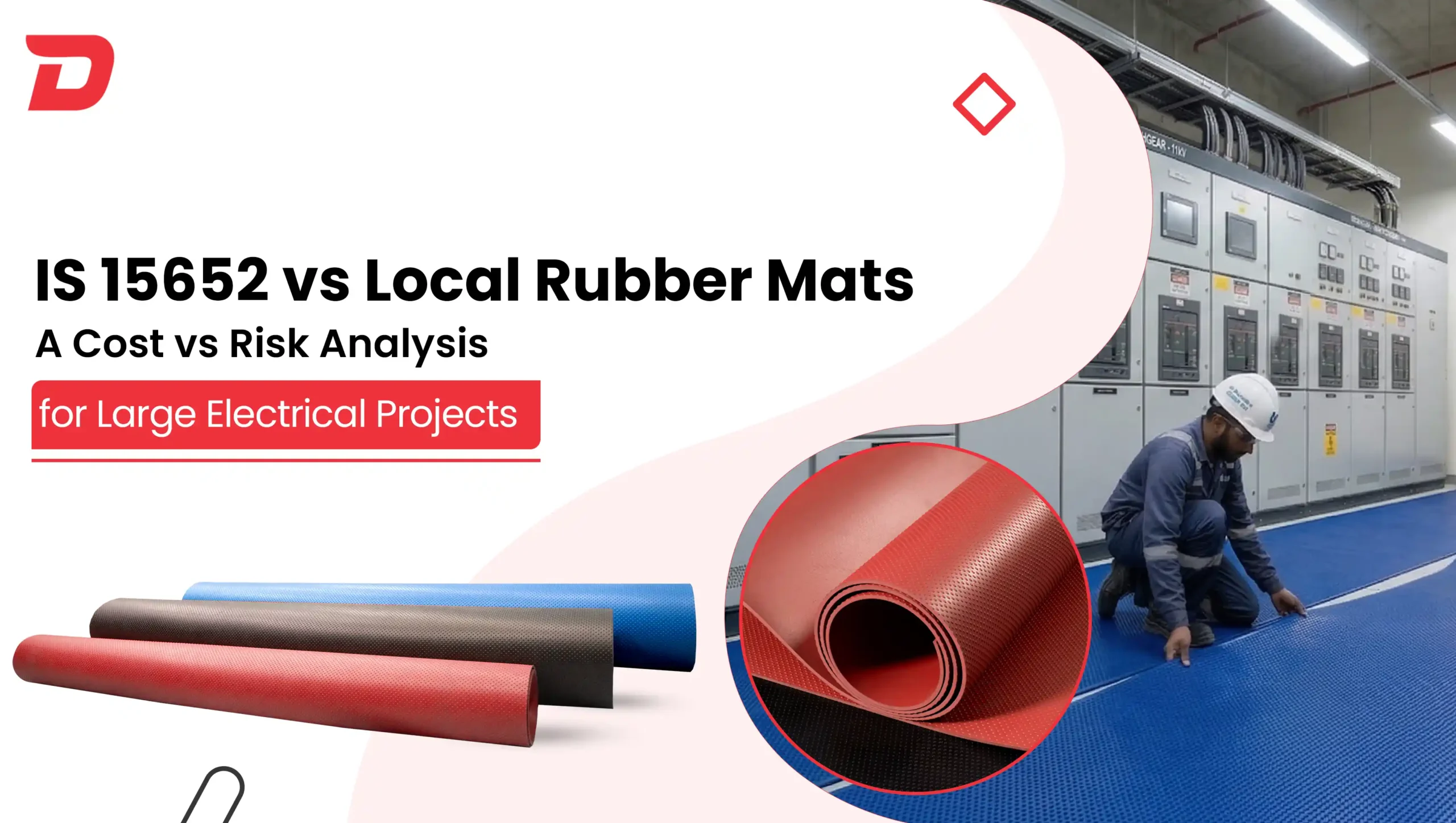
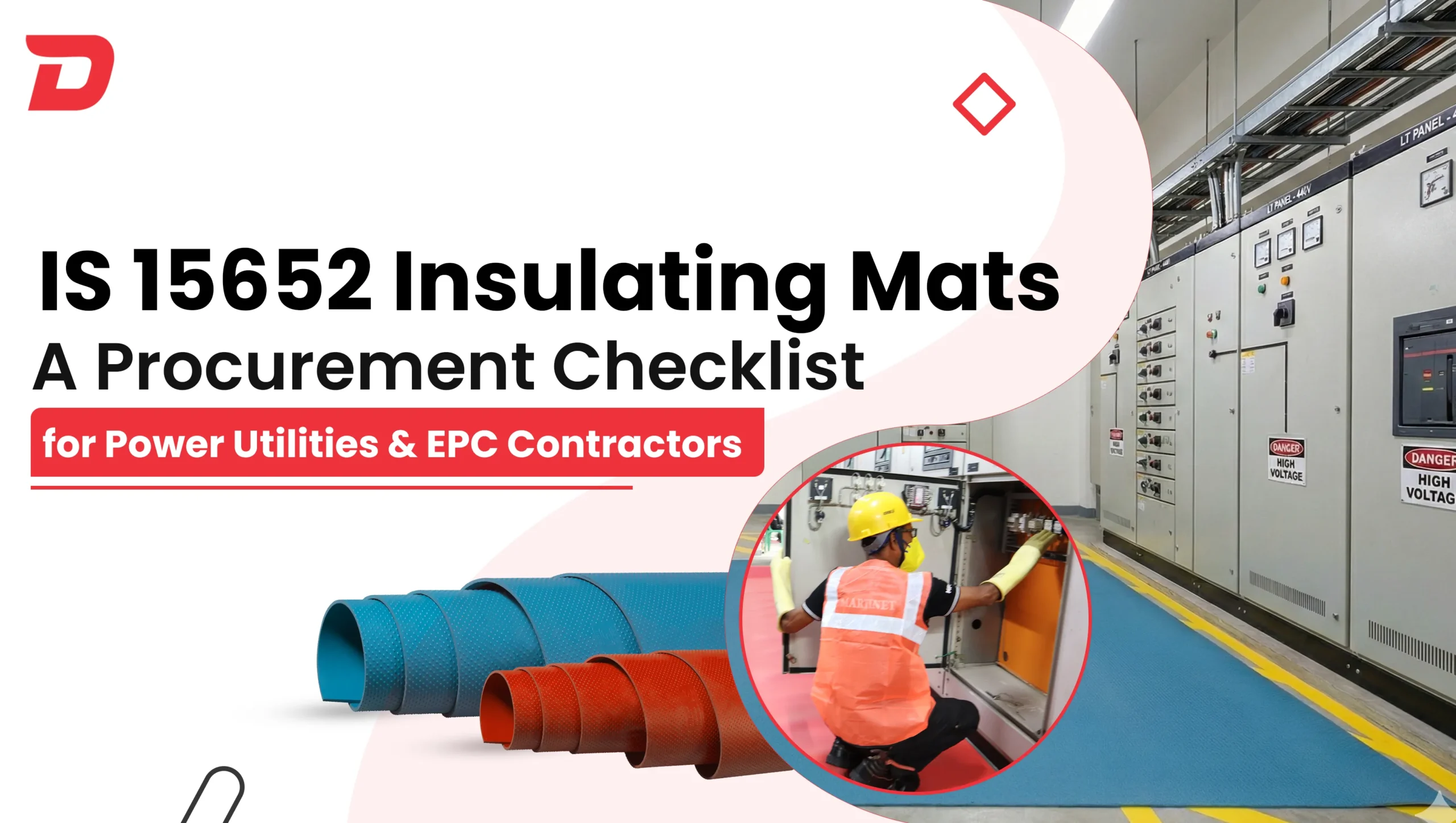
Are you in the power industry or an EPC contractor looking for IS 15652 insulating mats to buy?
Are you sure that you are getting the right insulating mat for the industry? As a buyer, do you think it ticks all your boxes, or do you actually not have a checklist in hand?
The Must-Have Checklist for Power Utilities & EPC Contractors for Buying IS 15652 Insulating Mats
Buying an electrical insulating mat takes more than just money. You need detailed technical knowledge, industry standards, and more to make the right purchase decision. Especially when it is for a high-danger zone like the power utilities, where handling high voltages is a regular affair. The right mat will be able to deliver great insulation performance, protect workers, and have a promised lifespan. Here’s a complete checklist:
Test Certificates
The EPC contractors of power utilities swear by the credibility of an electrical insulation rubber mat. The main thing that proves whether this essential safety equipment is credible enough or not is its certification, which for Indian electrical mats is IS 15652. The IS 15652:2006 electrical insulating mats are tested on several parameters before they are certified. They should pass tests of dielectric strength, AC-.proof voltage, hardness, tensile strength, elongation at break, and others. As a result, this will ensure that they are quality-assured.
Warranty
In power utilities, power surges are common, and mats may degrade faster than expected. Therefore, EPC contractors focus on getting a product that is warranty-covered.
Warranty proves the reliability of the electrical safety mats. They should come with a warranty. Hence, in case of damaged or wrong products, your suppliers will give you a refund or replace them. Duratuf IS 15652 electrical insulating mats have a warranty of 12 months.
Electrical Insulation Specifications
The ideal IS 15652 electrical insulating mats meet with electrical insulation specifications specified in the BIS guidelines. Power utilities deal with the generation, transmission, and distribution of electricity and operate up up to a working voltage of 33 kV. Then, they require various types of mats depending on the application and voltages.
The IS 15652 insulating mats come in three classes, Class A, Class B, and Class C. Each class is suitable for different working voltages, have different dielectric strength and AC proof voltage. Check out the classes:
Class A:
- Working voltage: 3.3 kV
- Dielectric strength: 30 kV
- AC-proof voltage: 10 kV
Class B:
- Working voltage: 11 kV
- Dielectric strength: 45 kV
- AC-proof voltage: 22 kV
Class C:
- Working voltage: 33 kV
- Dielectric strength: 65 kV
- AC-proof voltage: 36 kV
Thus, their ratings should match your application.
Mechanical Strength
The IS 15652 mats have a tensile strength of 15 MPa and an elongation at break of 250%. Hence, make sure that they can endure the physical stress of your industries and do not have a premature breakdown. Power utilities have high traffic areas, especially the control rooms and generator areas. An electrical mat that is not durable might not be able to sustain such foot traffic.
Surface Texture
Power utilities and EPC contractors seek insulating mats with anti-skid properties amid the alarming rise in workplace accidents. You should check if your electrical safety mats have an anti-skid design. It minimizes the risk of slipping and falling for workers in motion. The IS 15652 mats usually come in a dotted surface texture.
Thickness
The standard thicknesses of your mats are 2 mm (Class A), 2.5 mm (Class B), and 3 mm (Class C). You should make sure that you purchase a mat with adequate thickness for your high-voltage risk zone. In addition, they are also used to enhance the comfort of the workers and reduce their fatigue.
Size
The standard size is 1 m x 10 m for IS 15652 electrical mats. However, you can customize it as per your required dimensions. Power utilities might have critical zones with uneven dimensions where you might need an electrical mat beyond the standard size.
You should properly measure your application area and ask for a quotation for mats considering that dimension. This will make sure that your application area has complete coverage.
Markings
An electrical mat should have proper ISI markings on every meter as per the BIS guidelines. This will ensure that the mats are reliable for usage in the power utilities. Besides, you should also make sure that they have proper labels showing the specifications, usage guidelines, manufacturer details, batch number, and others.
Source
As an EPC contractor, it can be overwhelming to choose the best electrical insulating mats for a power station. However, things to keep in mind here are the reputation of your supplier, their credibility, and market presence.The source you are purchasing your electrical mats from should have a good reputation in the market. They should have high ratings and positive reviews across e-commerce and social media platforms. This will ensure that they are authentic and have high credibility in the market.
Duratuf is a leading electrical mats supplier with a stunning 4.8 Google review from over 250 clients including end users, contractors and resellers.
In a nutshell,
To make a good purchase decision, it is important that the power utilities and EPC contractors have a buying checklist. This will help you get the ideal IS 15652 insulating mat for your industrial set up, considering your working voltages and environmental condition. Reach out to us for more information