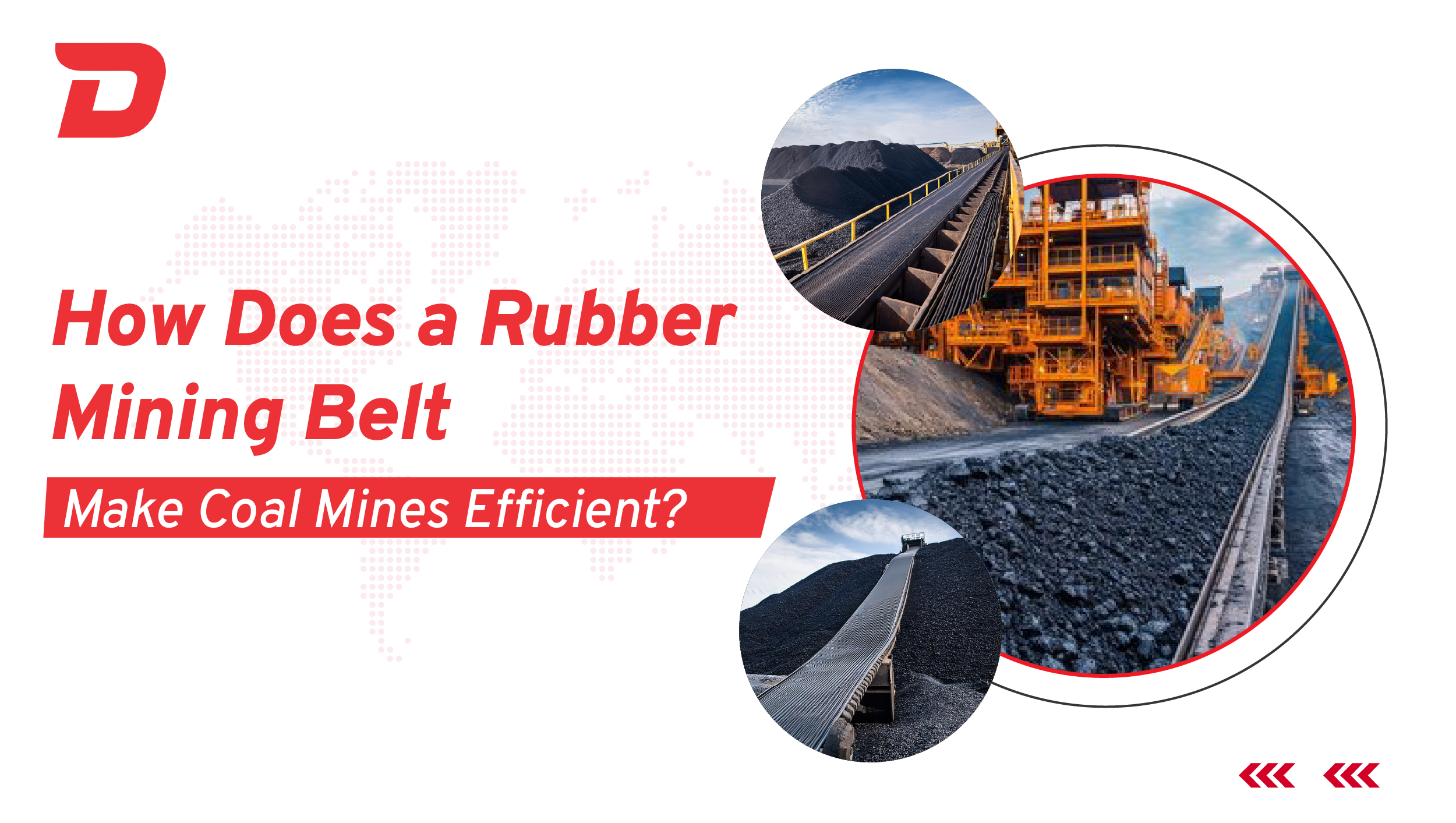
Coal, an important fossil fuel, is a vital source of energy. To make it simple- coal runs the world of power generation. But, are they easy to extract? News channels often cover news about accidents in coal mines. What if we say, a rubber mining belt can be a lifesaver?
Coal is difficult to extract. With excessive mining and depletion of natural resources, underground mines often get flooded, causing the workers to get trapped inside. Accidents are not only unfortunate, but they cause business loss too.
What are the Different Types of Coal Mining?
Coal mining is broadly classified based on the depth of the coal seam and the mining method used. Each method has different operational challenges, where efficient material handling, especially through reliable rubber mining belts, plays an important role in maintaining productivity.
1. Surface Mining (Opencast Mining)
Surface mining is used when coal seams are close to the ground surface. It is the most common and cost-effective coal mining method.
Key types of surface mining:
- Strip Mining: Coal is extracted by removing long strips of overburden. Conveyor belts are extensively used to transport coal and waste material over long distances.
- Open-Pit Mining: Here, large pits are excavated to access coal seams. Where Heavy-duty rubber conveyor belts are used to handle high loads, sharp materials and continuous operation.
- Mountaintop Removal: Here, the top of a mountain is removed to reach coal seams. WherehHigh-capacity belts are essential for moving bulk coal efficiently.
2. Underground Mining
Underground mining is used when coal deposits are located deep beneath the surface. This method is more complex and requires precise material handling systems.
Major underground mining methods:
- Room and Pillar Mining: Coal is mined in rooms while pillars are left to support the roof. Flexible and abrasion-resistant rubber belts help transport coal through narrow underground tunnels.
- Longwall Mining: A highly productive method where large coal panels are mined in a single slice. Flame-resistant and low-maintenance rubber mining belts are critical for continuous, high-speed coal movement.
3. Highwall Mining
Highwall mining is a hybrid method used when surface mining is no longer economical. Coal is extracted from exposed coal seams using remote-controlled equipment and conveyor belts move coal directly from the highwall to collection points.
7 Ways in Which a Rubber Mining Belt Makes Your Operations Smarter
Yes, you have read it right. Types of conveyor belt used in mining make you 10x smarter!
How do we know that? Well, our 1000+ mining belt conveyor users vouch for the simplicity and cost savings of a rubber mining belt. Come on, let’s DIG deeper!
Below are seven ways in which a conveyor belt in mining industry is revolutionizing the sector and how it can save users time and money.
1. Mining Conveyor Making Bulk Material Handling Easy
Tonnes of coal are extracted every day in the mines. A mining conveyor belt streamlines the entire process. The functioning of various parts of a belt mining system in sync ensures continuous and automated coal transport.
Furthermore, the mining belt conveyor connects various points in the mining operation, from extraction sites to processing plants and storage facilities. Thus, it eliminates the need for manual transportation or excessive machinery.
2. Rubber Mining Belt Durability Endures Extremes
Coal mines are found in areas with harsh weather- geographical places with scorching sunlight, high humidity, and long spells of rainfall. Additionally, the heavy load and sharp edges of coal make it more challenging to transport coal in the mines.
Specialists suggest using a general purpose or M24 heavy-duty rubber mining belt with nylon insertion here. The durable but flexible rubber cover has a long life, even against sharp coal lumps.
3. Mining Belt Conveyor Adds Safety to the Coal Mines
Every day, more than 10 workers get injured or killed in mining accidents. Hence, safety should be a top priority in mining operations, where even minor accidents can lead to severe consequences. A conveyor belt in underground mining incorporates safety features to mitigate risks:
- Fire Resistance: An FR-grade mining conveyor belt is treated with fire-retardant materials, which is critical for underground mines prone to flammable gases.
- Heat Resistance: In some mining operations, high heat is involved. In such places, using a mining conveyor belt will enhance efficiency while keeping the accidents in check.
- Slip-Resistant Surfaces: Special textures and coatings on belt mining systems prevent materials from sliding back on steep inclines, reducing hazards.
4. Mining Conveyor Belt is a Sustainable Alternative
Do you know how much pollution does a mine truck cause? According to a research paper by the Rocky Mountain Institute, mining trucks contribute to 30-40% of the mine’s total emissions. Indeed, mining is energy-intensive and modern mining conveyor belt manufacturers design rubber belts with this in mind.
5. Belt Mining Cuts Costs Without Compromising the Efficiency
Are you worried about the increasing business costs? Searching ways to master disaster management? Accident compensation is becoming heavy on your pocket?
Install a rubber mining belt now. Conveyor systems will cut down your costs without affecting your efficiency even by a bit.
They save costs across multiple areas:
- Labor Charges: Automated conveyor systems reduce the need for a large skilled workforce to handle coal transportation.
- Fuel and Equipment Costs: Replacing mining trucks with conveyor belts eliminates fuel expenses and the maintenance of vehicles.
- Long-lasting solution: Durable, quality certified mining conveyor belts require fewer replacements and are a long-lasting solution.
6. Customized Rubber Mining Belt For Unique Mining Needs
The nature of every coal mine is different, and unique challenges like extreme weather, steep slopes, and corrosive environments remain. The good part is, that you can customize a mining conveyor belt as your mining needs demand.
- You can get a fire-resistant or FR-grade rubber mining belt with self-extinguishable properties.
- HR-grade conveyor belts in the mining industry are for tackling the heat that man cannot.
- An M-24 mining belt conveyor is fit for transporting coal lumps with sharp edges.
7. Mining Belt Conveyor System Drives Productivity with Advanced Technology
You can integrate rubber mining belts with advanced technologies like automated controls, sensors, and real-time monitoring systems. These innovations further enhance productivity and minimize operational disruptions.
- IoT Integration: Sensors installed on mining belts provide data on wear, tension, and load, enabling predictive maintenance and avoiding unexpected failures.
- Smart Controls: Automated systems regulate the mining belt’s speed and load distribution for optimal performance.
Duratuf Rubber Mining Belt For Managing Your Mine Like a Pro!
The Duratuf conveyor belts are crafted with the latest engineering techniques. Having a tough cover and strong reinforcements, our conveyor belts support the operations of industries including mining, construction, agriculture, manufacturing, etc. You get Duratuf mining conveyor belts in abrasion, fire, heat, or oil-resistant variants.
If you’re a mining operator looking to boost productivity, reduce costs and improve safety, investing in a high-quality conveyor belt in mining industry is a smart move.
What are you going to do next? Connect with us, of course! Call, mail, or WhatsApp us- you will get an exclusive mining belt conveyor quote within the next hour!