
Have you ever got an electric shock?
Remember that tingling sensation, buzzing in your body and ringing ears?
Well, electric shock is not mild always. Thinking about how to keep yourself safe?
Well, try an electrical insulator.
The National Institute of Health Statistics highlights that 1000 (approx) Americans get electric chocks each year.
What is an electric shock?
The human body is electrically conductive because of the presence of water in our body. If you come in contact with a live electric wire where there is a free flow of electricity, the currents pass through the body. When the nerves get exposed to such a high volume of electricity, the neuro-transmitters get disturbed. The signaling system between the brain and body also distorts. As a result, you feel a tingling sensation, dizziness, and numbness in your body.
An electrical insulator stops the free flow of electricity and channels the surge of electrons in your body to the electricity-neutral ground.
What is an Electrical Insulator?
As the name suggests, an electrical insulator creates an ‘insulation’. They protect the workers by stopping the electricity flow. Common insulating materials are rubber, glass, ceramics, and plastics.
Thinking that a quick comparison would have been great now? Find the comparison between different electrical insulators by clicking here.
Talking about rubber, it is used mainly to make an electrical mat. Electrical mats are primarily made of elastomer (a type of rubber). With the addition of some compounds and fillers, these protective floor mats get their dielectric strength, heat, Ozone, UV, and chemical resistance.
These fillers play a vital role in making the safety mats more functional, especially where the climate is extreme.
What are the Effects of Electric Shock on Human Body?
While a minor phase (less than 500 watts) of electrocution is recoverable with home remedies. Mid to high electric shocks (greater than 500 watts) need medical attention.
According to the healthcare experts, some effects of electric shocks are:
- Burns
- Chest pain
- Shortness of breath (Dyspnea)
- Numbness in the body
- Muscle spasms
- Pain in the body
- Seizures
- Vision and hearing impairment
- Death
Importance of electrical safety
Why Electrical Safety is Important?
Accidents are uncalled for. They cause loss of assets and human life. It takes a lot of time to heal from the effects of electric shocks; complete healing may not take place as well. Moreover, if any of the workers get electrocuted on your factory floor, it will create a shortage in your overall manpower.
The production will be affected. Your integrity as a business owner will be questioned if there is a sudden rise in electrical accidents at your workplace. According to the Channel News Asia, a woman employer in Singapore was fined $100,000 for neglecting the importance of electrical safety.
Worry not as an electrical insulator can keep the accidents at bay ensuring lesser downtime. You can keep yourself safe from electric shocks by using the protective floor mats and other insulators.
Personal Protective Equipment: Electrical Mats, Boots and More
Personal protective equipment (PPE) refers to the safety gear that is to be used for individual safety. PPE keeps you safe and eventually, the workplace protected.
Insulation rubber mats for electrical applications are not the same as an electrical floor heat mat. Electrical heat mats are used for ‘heat insulation’ not for ‘electrical insulation’. Moreover, electric mats are heavy duty industrial floor mats, thermal heating mats are not.
Insulated Rubber Gloves
These are the first line of defense. the insulated gloves are also made of rubber. Specifically designed to withstand high voltages and prevent current from flowing through your hands, they also come in different voltage ratings.
Insulating sleeves
Going further upward, insulating sleeves protect the hands of the workers from burns, flash fires, and blistering.
Di-electric boots
The di-electric rubber boots have insulated rubber soles. Rubber being ‘di-electric’ minimizes the risks of getting electrocuted.
Apart from these, we suggest using hard hats, goggles, and arc flash suits.
Embracing Safe Work Practices: How do they help?
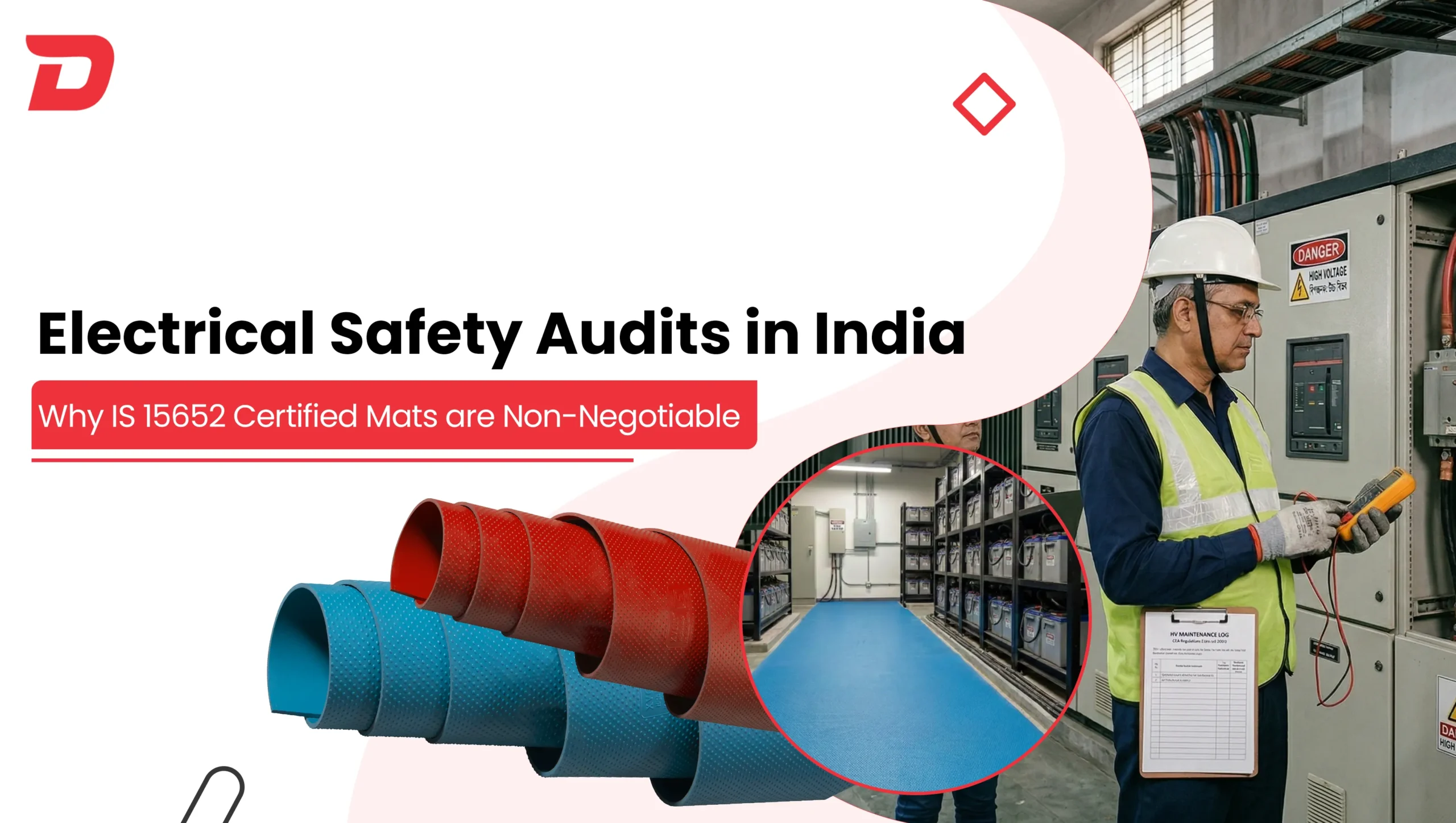
1.Safe work practices include: Use of certified electrical insulators: Quality certificates testify that the safety equipment you chose is made and tested following an approved guideline. For electrical mats in India, the IS 15652 safety standard is followed. Globally, the IEC 61111:2009 standards, set by the International Electrotechnical Commission are accepted.
Similarly, in the North American regions, the ASTM D178 standards are applicable.
If you are confused about why should you use an electrical insulator mat and not only boots, gloves, or other things?
2. Regular Maintenance and Inspections: You never know when an electricity-operated machine will start malfunctioning. Typically running on a complex system of wires, they might go awry for several reasons. Extreme climate in the GCC countries like UAE affects the wires also.
Unlike the electric heat mats which do not keep you safe from such hazards, the rubber mats for electricity prevention protect you. However, to understand where should you lay the mats, first you should inspect the machines.
3. Identify which machine runs on how many volts of electricity and whether AC or DC. Knowing your working voltage before buying the electrical mats is necessary. It helps you pick the right type of electrical insulator mat.
Moreover, with regular maintenance you stay updated with the current condition of your workplace at all times. Nevertheless, inspecting the electrical insulator mats is not time-consuming. You can do it easily with the help of expert guidance. Find ours here!
4. Implying emergency response protocols: You can set up an emergency response protocol to keep any hazardous situation in control. Include points like:
- Do Not Touch the Victim or Live Wire
- Turn Off Power
- Apply protective measures like using non-conductive objects to separate the victim
- Call for Help
- Do not panic and more
- What to do immediately when someone comes in contact with electricity?
- Do Not Touch the Victim or Live Wire
- Turn Off Power
- Apply protective measures like using non-conductive objects to separate the victim
- Call for Help
- Do not panic and more
5. Training and development: The safety protocols keep on changing from time to time. Similarly, the testing procedures for electrical insulators, especially the electrical mats also get updated periodically.
Hence, training your team has become the constant need of the hour, undoubtedly. You can arrange monthly revision sessions where you can practice fire drills, emergency response protocols, etc.
Take Electrical Safety Seriously and Stay Stress-Free
‘Continuous effort – not strength or intelligence – is the key to unlocking our potential.’ – W.Churchill
Electric shocks can be unforgiving. It can not only affect your revenue margins but can create an irreversible impact. When you can stop electric shocks with the right tools like electrical insulators, then why not take adequate steps today?
Connect with us for free technical advice for our heavy duty industrial floor mats today!