
In industrial operations where there is constant exposure to oil or strong chemicals- choosing the right rubber compound for industrial tanks is crucial. The two most popular contenders for this role are Neoprene and Nitrile (NBR) rubber. Neoprene vs NBR who do you think will win the game?
Rubber plays a crucial role in the making of industrial equipment. From gaskets to seals and floor coverings to belt conveyors, rubber is still one of the most preferred materials to make them.
If we talk about nitrile vs neoprene, both are synthetic rubbers known for their excellent chemical resilience. Therefore, their suitability depends a lot on application-specific demands. So how do you decide between them? Most importantly, what do industry experts prefer and why?
What are the Difference Between Neoprene and NBR Rubber Sheets?
We have seen buyers debate on neoprene vs NBR as the most suitable tank lining material. The reason behind that is, both are synthetic rubbers and have similar characteristics.
But, we are here to resolve this debate, and it starts with the basics:
What is Neoprene Rubber?
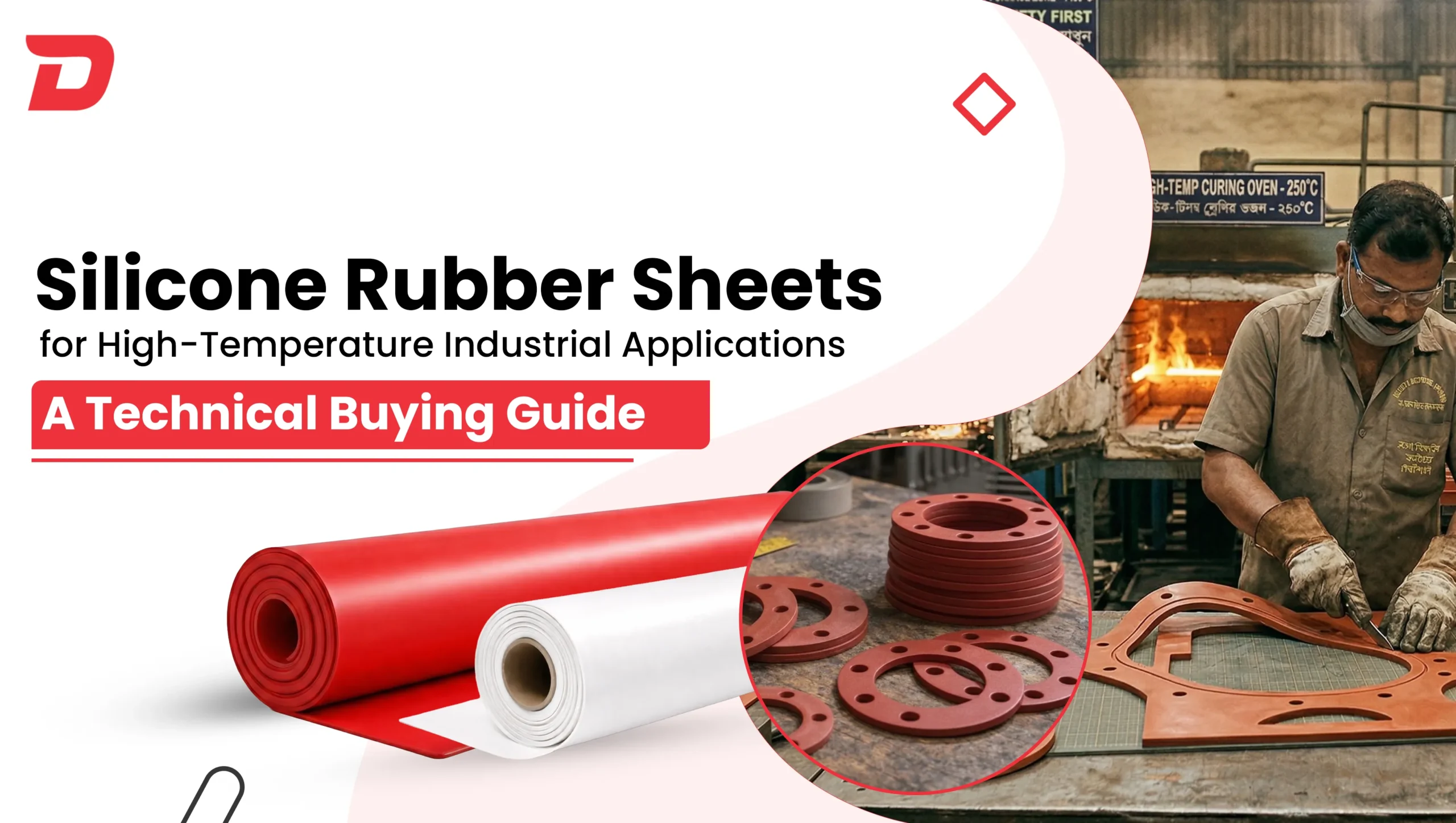
The industrial name for neoprene rubber or Chloroprene rubber. It was first developed by the DuPont company. Commonly supplied as neoprene rubber rolls or sheets in different thicknesses, neoprene rubber is essential in some industries. The industries are shipping, fitness, construction, sound engineering, etc.
Typical neoprene sheet uses include:
- Tank linings in chemical refining plants
- Neoprene sheet for metal protection
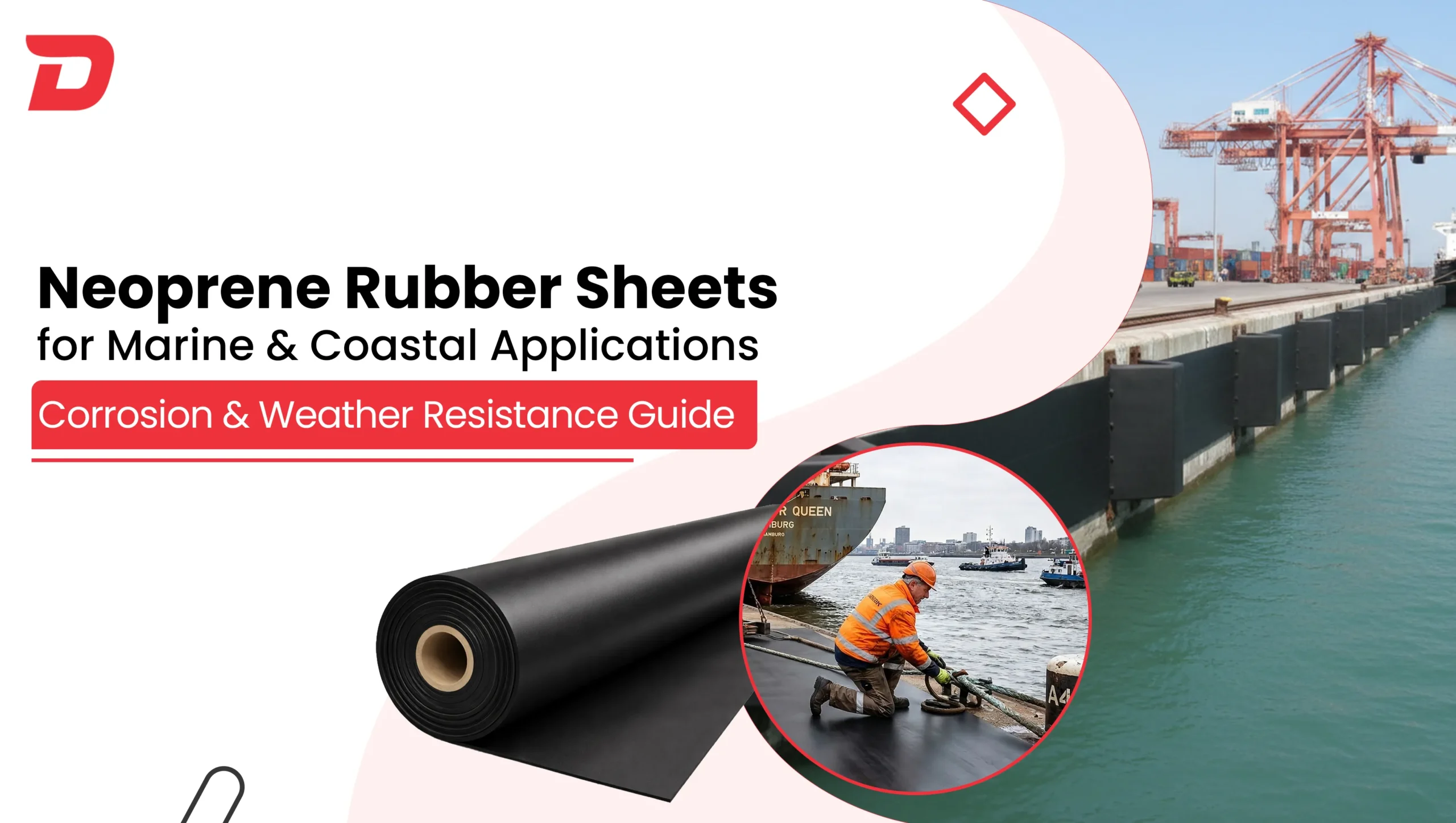
- Gasketing in marine environments
- Heat-insulating pads
- Bridge expansion joints
- Gym gears
Experts recommend neoprene sheet use in the marine and other mentioned industries because of these features:
Key Features of Neoprene Rubber
Good Resistance to
- Oil
- Chemical
- Ozone
- Salt Water
Excellent Resistance to
- Vibration
- Weathering
- Abrasion
What is NBR rubber?
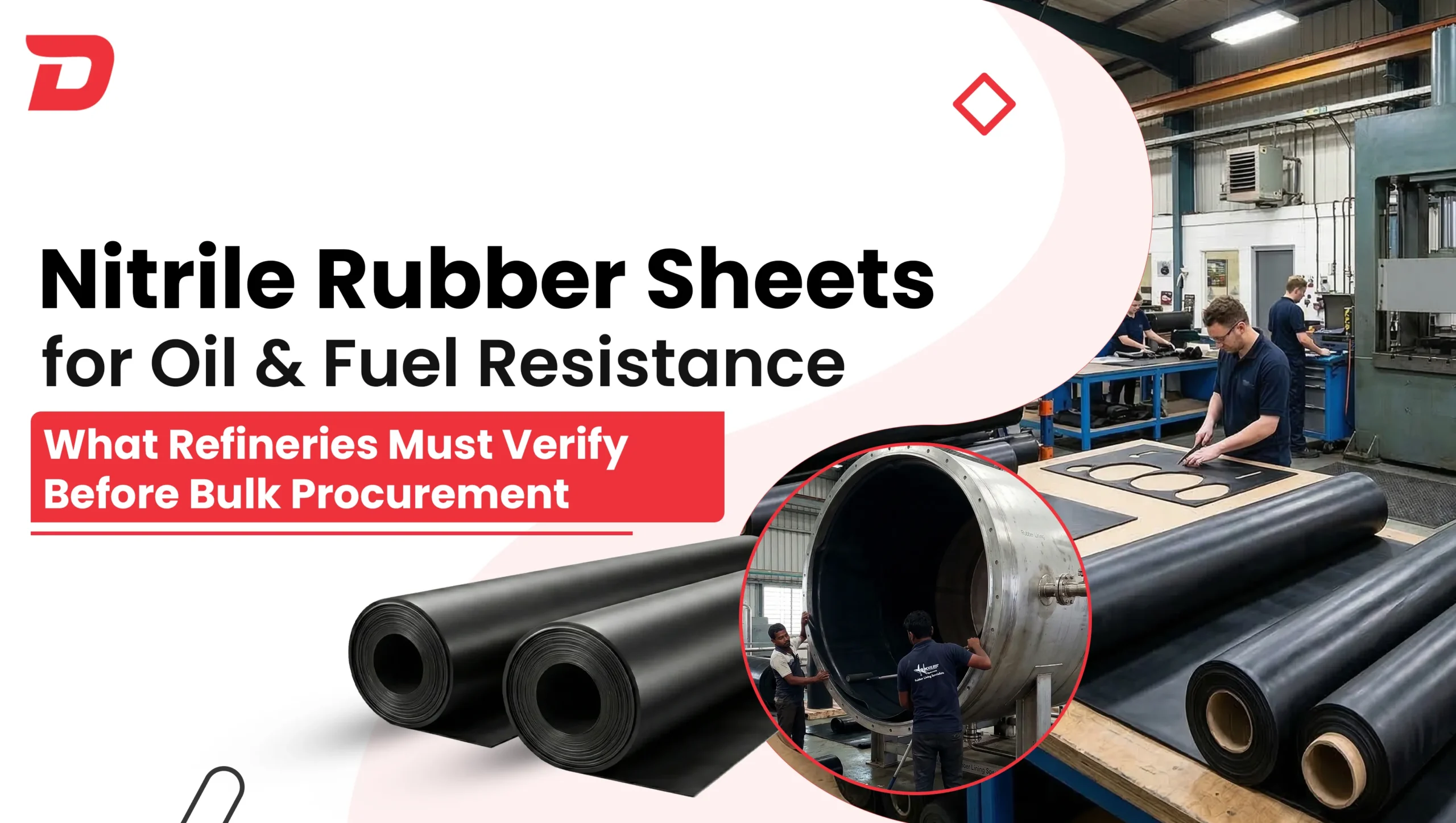
The technical name for Nitrile rubber is NBR or Acrylonitrile Butadiene Rubber. It is widely used in environments with heavy oil exposure.
Therefore, NBR rubber is a go-to material in fuel and hydraulic systems.
NBR has compared with neoprene in many aspects-particularly again in the debate between nitrile rubber gasket vs neoprene for oily environments.
Typical NBR (Nitrile Rubber) sheet uses include:
- Oil & fuel tank linings
- Gaskets and seals for automotive and industrial equipment
- Hydraulic and pneumatic system components
- Oil-resistant flooring and workbench mats
- Conveyor belt covers in oily environments
- Protective padding in workshops and factories
Experts recommend NBR rubber sheets for oil-intensive and mechanical applications because of these features:
Key Features of NBR Rubber
Excellent Resistance to
- Oils and fuels
- Grease and hydrocarbons
- Abrasion and wear
Good Resistance to
- Compression and pressure
- Mechanical stress
- Moderate heat
Limited Resistance to
- Ozone
- Weathering
Strong acids and alkalis
Nitrile vs Neoprene for Industrial Tanks: Technical Comparison
According to a major neoprene rubber sheet supplier in the UAE, neoprene rubber thrives in the arid climate. Note that GCC countries have the most number of oil refineries, too. However, nitrile rubber suppliers in North American regions advocate for the NBR rubber. Neoprene vs NBR-what do you choose? Come on, let’s look at the technical aspects now:
| Feature | Neoprene | NBR (Nitrile) |
|---|---|---|
| Oil Resistance | Moderate | Excellent |
| Chemical Resistance | Broad range of acids and alkalis | Best for petroleum oils and greases |
| UV/Ozone Resistance | Excellent (ideal for outdoor use) | Limited |
| Abrasion Resistance | High | Medium-High |
| Weather Tolerance | Strong (ideal for fluctuating conditions) | Average |
| Temperature Range | -20°C to 120°C | -25°C to 100°C |
| Flexibility in Cold | Moderate | Excellent |
| Availability | Widely available (e.g., Neoprene Sheet 5mm ) | Readily stocked in fuel-oriented industries |
Neoprene vs NBR Sheets- What do the Industries Prefer?
We have been saying that whether you have your industrial tank lined with neoprene or NBR depends on your applications. Here are the common preferences of a few industries:
1. Oil & Gas Applications
Oil and gas are stored in industrial tanks in their crude form and after refining. Both of the forms have different corrosive properties. In this aspect, it is nitrile vs neoprene. That is users prefer NBR or colored nitrile rubber sheet more because of their capacity to withstand chemicals.
Its chemical breakdown resists swelling and breakdown, unlike neoprene rubber sheets.
2. Marine Applications
Rubber is used in marine applications for sealing, vibration, and mechanical resistance. Here, rubber products have a test to pass, that is how well they can sustain themselves in salt water, high humidity, and sunlight.
Specialists recommend using neoprene rubber rolls in tanks where brine, alcohol, and acids are held, especially in saltwater treatment plants.
3. Chemical Refineries
In chemical refineries, industrial tanks stay at a constant risk of corrosion. Acids and alkalis corrode the surface of metal tanks; they can react and cause accidents, Therefore, choosing the right rubber lining for chemical tanks is a tricky job here. Now, talking about neoprene vs nitrile, both types are resilient to chemicals. However, each has its limitations as well.
| Chemical | Neoprene | NBR (Nitrile) |
|---|---|---|
| Acetic acid (10%) | Good | Good |
| Sulfuric acid (30%) | Moderate | Poor |
| Hydrochloric acid (10%) | Moderate | Moderate |
| Phosphoric acid (30%) | Moderate | Fair |
| Citric acid | Good | Poor |
| Sodium hydroxide (20%) | Good | Poor |
| Potassium hydroxide | Moderate | Limited |
| Ammonium hydroxide (dilute) | Good | Poor |
| Boric acid | Good | Poor |
| Magnesium hydroxide | Good | Limited |
| Sodium carbonate | Good | Good |
| Oxidizing agents (e.g. H₂O₂) | Good | Good |
4. Gasketing Applications
Gaskets and seals are tiny productive warriors. They keep the leaks away. The nitrile rubber gasket vs neoprene debate depends on fluid exposure. NBR gaskets work best for oil-heavy applications; neoprene excels where flexibility and environmental resistance matter.
‘Gaskets exposed to oil—NBR. For water, chemicals, or general sealing, neoprene wins.’
Neoprene rubber market vs NBR growth: What are the industry trends?
In the nitrile vs neoprene war, you should be more concerned about the market trends if you are thinking of dealing with them. You can be a reseller or channel partner supplying rubber sheets in India or any other part of the world.
Well, according to recent research, the global NBR (Nitrile Butadiene Rubber) market is valued around USD ~2.7 billion in 2024 and is projected to reach about USD ~3.9 billion by 2030 at a CAGR of ~5.4% from 2024 to 2030.
On the other hand, the Neoprene market is currently valued around USD ~2.2 billion in 2025 and is expected to grow to approximately USD ~2.5–2.7 billion by 2030, reflecting a CAGR of roughly 2.5–4% over the forecast period depending on the source.
Conclusion
There is no one-size-fits-all for industrial applications. You will have to be very specific if you want to decide right. In the debate neoprene vs NBR, you might find it difficult to make the right choice without technical knowledge.
This is why we recommend you talk to our experts before buying the rubber sheets. Want immediate help? Connect with us now!