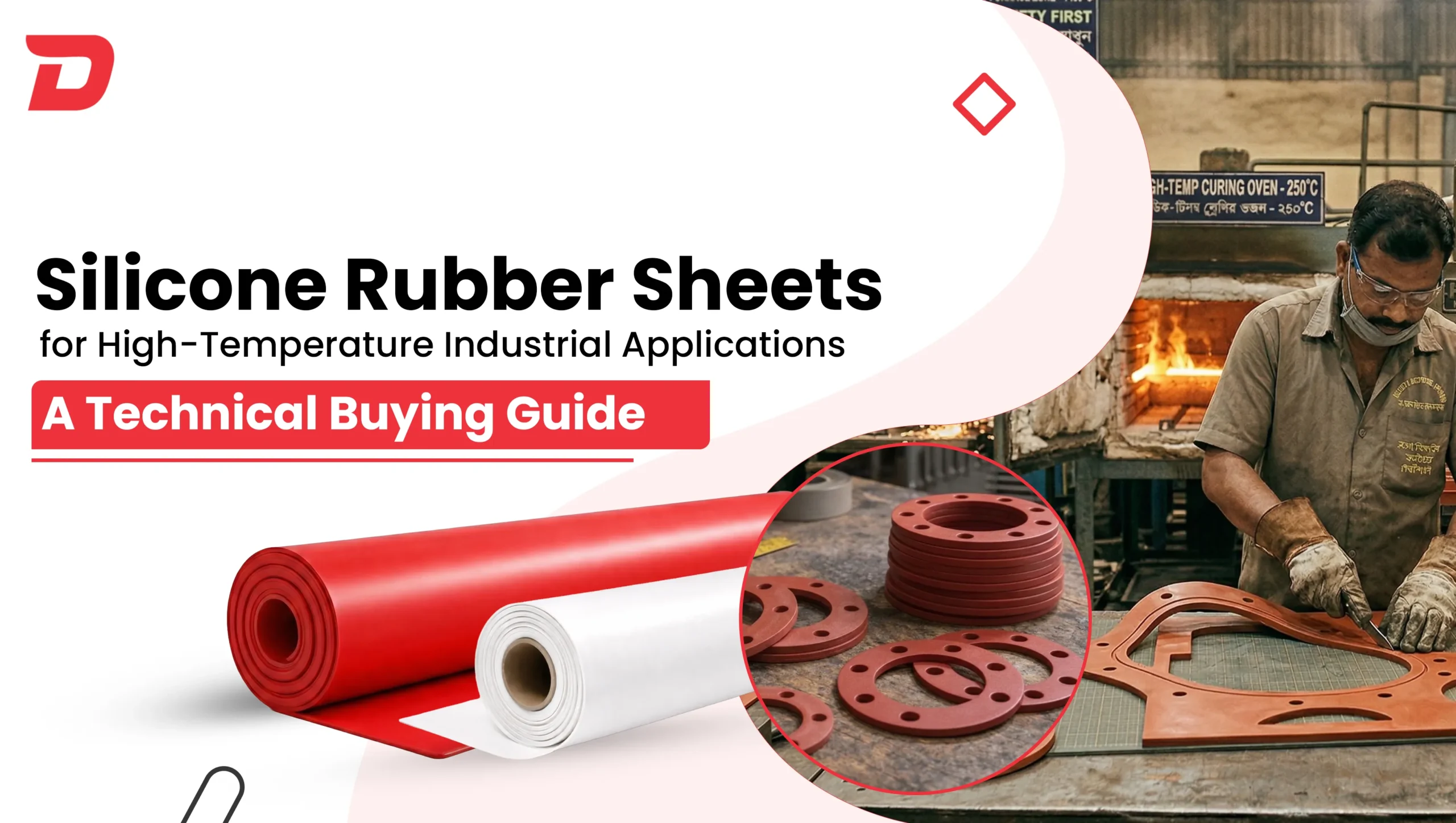
In this blog, we are going to primarily focus on the density of silicone rubber. We will also discuss the methods for measuring its density. Further in the blog, we will highlight how it affects its applications in the pharmaceutical sector. We are also going to discuss the other properties of silicone rubber that make them ideal for the pharmaceutical sector.
Did you stumble upon the ‘Silicone rubber density’ on the datasheet?
The value of the silicone rubber density affects its performance, this is why this time we are talking about that!
Read the blog to know why. Here, we are going to focus on these topics:
- What is the Density of Silicone Rubber?
- How is the Silicone Rubber Density Measured?
- Role of Silicone Rubber Density in the Applications of the Pharmaceutical Sector
- Other Silicone Rubber Properties That Make it Suitable for Pharmaceutical Applications
- Summary
- FAQs
What is the Density of Silicone Rubber?
The density of silicone rubber ideally ranges from 0.95 g/cm3 to 1.6 g/cm3. However, the density of the commercial-grade silicone rubber ranges from 1.1 g/cm3 to 1.3 g/cm3. Some factors, including the added fillers, base polymers, curing agents, and processing of the silicone rubber, influence its density.
You should purchase the right silicone rubber density for your pharmaceutical applications. Choosing the right density minimizes the risks of premature breakdown and unnecessary downtime in the industries. Thus, make sure to let your manufacturer or supplier know your application and requirements for getting the suitable density.
How is the Silicone Rubber Density Measured?
The mass and volume of the silicone rubber are used to determine its density. However, there are different methods to calculate the density of silicone rubber.
Gas pycnometry: In this method, the material volume is measured with the help of helium, gas.
Hydrostatic weighing: The density of silicone rubber is measured by weighing it in air and then in water.
Capillary rheometer: The measurement of density is done at high temperatures. This can also be done by observing flow in the molten state (under pressure).
Compression density: The silicone rubber density is measured under a particular pressure.
Role of Silicone Rubber Density in the Applications of the Pharmaceutical Sector
Fluid Tubes
Silicone rubber is used to make fluid transfer lines, tubes for drugs and formulation, and other pharmaceutical fluid tubes. This application requires a lower value of silicone rubber density to ensure a smooth flow of fluids and better elastic recovery.
Seals and O-rings
Gaskets, seals, and o-rings in filling lines, mixers, and others are made of silicone in the pharma sector. Usually, for such applications, a higher density of silicone rubber is required. This is because higher silicone rubber density ensures higher compression set as well as anti-leakage properties.
Stoppers
Stoppers in vials and packaging are made of silicone rubber. Lower silicone rubber density is required for their to prohibit coring, which is common while a needle penetrates. Besides, this silicone rubber density also ensures resealability.
Medical Instruments
Silicone rubber is used in the pump components, diaphragms, membranes, and others. Besides, they are also used in valves, inhalers, and other tools. The silicone rubber density for this application is low. The low density of silicone rubber ensures accurate elastic response.
Mats
When you are using silicone rubber for mats, it requires a higher density. The higher silicone rubber density has better load-bearing capacity. Besides, it does not wear out or get damaged with abrasion. It offers a durable and longer service life due to the silicone rubber density.
Protective Layers
A higher density of silicone rubber makes good protective sheaths. As a result, you can use them to protect your pharmaceutical tools from any external damage, wear, or punctures.
Other Silicone Rubber Properties That Make it Suitable for Pharmaceutical Applications
- Non-toxic: This is one of the silicone material properties that is needed for the pharmaceutical sector. Silicone rubber does not produce toxic gases or substrates due to reactions.
- Hypoallergenic: It does not cause allergies when in contact with human beings.
- FDA-approved: Owing to these silicone rubber properties, they are approved by the FDA (Food & Drug Administration).
- Easy to clean: The silicone material properties also include its smooth surface. It is easy to clean and meets the hygiene standards in the pharma sector.
Good compatibility with sterilization: Silicone rubber can endure gamma radiation, ethylene oxide, and other sterilizing agents.
In a nutshell,
Out of all other silicone rubber properties, specifically, its density has important roles to play in pharmaceutical applications. It is measured by different methods such as gas pycnometry, compression density, and more. You should know which density of silicone rubber is suitable for your pharma application.
Talk to our experts for more information!
If you have completed reading the blog, check some FAQs that might help you!
What type of material is silicone?
Silicone is inorganic in nature, and it is a synthetic polymer.
Is silicone a rubber or plastic?
It is a synthetic polymer having attributes of rubber as well as plastic. However, silicone rubber structure has extensive applications in the rubber industry.
How to make silicone rubber?
First step of silicone rubber production is making a silicone polymer base. This is followed by compounding and shaping. It is then cross-linked to attain the required attributes in the silicone chemical formula.
What is silicone rubber?
Silicone rubber is an elastomer with silicone, oxygen, carbon, and hydrogen in the polymer chain. It is used for a variety of industrial applications.
Which cover is best, silicone or rubber?
You can use a silicone cover as it has a smooth finish. It is flexible and has better resistance properties, ensuring higher durability.
How to make soft silicone rubber?
You can soften the hard sealant of silicone rubber with the help of acetone, mineral spirits, or denatured alcohol.
What is silicone rubber used for?
Application of Silicones includes making seals, gaskets, insulation, padding, prosthetics, and many more.