
While learning to swim, have you ever thought about what type of rubber are the swimming tubes made of?
Or, what makes a scuba diver’s wet suit water resistant? Yes, you may have guessed it right! It is a neoprene rubber sheet.
A neoprene sheet, also known as polychloroprene has become a crucial part of many industrial applications. Thanks to the durability and resistance of the neoprene rubber sheeting, users find them extremely value-adding.
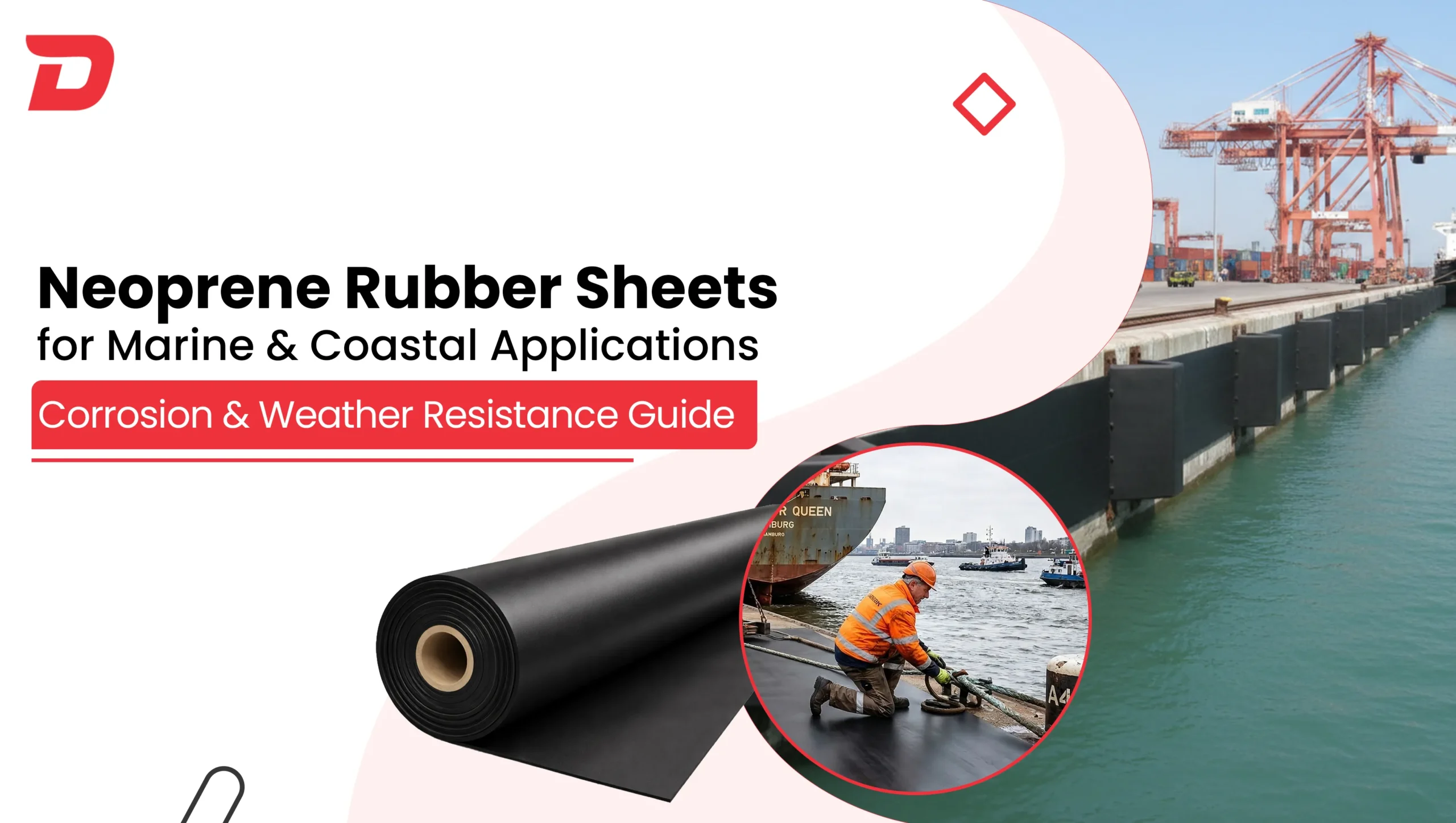
Nevertheless, according to many neoprene rubber sheet manufacturers in India and across the globe- the marine industry benefits the most from this product. Given the unforgiving environment and high salt content in the water, this synthetic rubber sheet turns out to be a reliable companion.
But how? We will be talking about that and the common applications of neoprene rubber sheet in the marine sector in this blog.
First, let’s quickly take a look at the key features of neoprene sheeting that make it so relevant in the marine industry:
Key Properties of Neoprene Rubber Sheet for Marine Industry Applications
Composition:
Neoprene is a synthetic rubber. Its molecular structure provides a barrier that prevents chemicals from penetrating and degrading the material. Moreover, neoprene rubber is vulcanized, which creates cross-links between the polymer chains, making it durable.
Water Resistance:
Whether it is saltwater or seawater, rubber sheet neoprene can withstand prolonged exposure to water. It does not degrade, and the physical integrity of the neoprene sheet stays maintained.
Acid-Oil-Base Resistance:
One of the main features of a neoprene sheet is its chemical resistance. The more the polymer content, the more resistant it will be when exposed to acids, oils, or bases.
Owing to this property of neoprene sheet, it is widely used in oil and gas extraction plants too.
Ozone and UV resistance:
Marine environments expose materials to prolonged sunlight and high levels of ozone. However, the composition of the neoprene rubber sheet makes it sustain high levels of Ozone and UV.
Thermal insulation:
Mechanical parts of ships or water transport remain underwater mostly. Thus, they have to go through temperature fluctuations throughout. If a neoprene sheet is used to make the boat fenders and other parts, the parts stay functional for a long due to the properties of neoprene.
Top 8 Applications of Neoprene Rubber Sheet in Marine Industry
Neoprene rubber is an essential part of marine applications. Below are 8 areas where they are used:
1. Marine Seals and Gaskets
A neoprene gasket sheet is used to make seals and gaskets. Seals and gaskets play a vital role in waterproofing and sealing. As a result, they safeguard the structural integrity of marine equipment like engines, pumps, raw water impellers, etc. They prevent the ingress of water, oil, or other harmful substances into sensitive areas.
2. Boat flooring and Decking
Boat floors and decks are used for recreational purposes. Of course, they also act as a landing area. Despite being popular as a flooring material, a natural rubber sheet cannot be used in this case. They might be cheaper, but they are not the right choice.
Neoprene’s anti-slip properties, combined with its resistance to saltwater and oil, make it ideal for marine flooring.
3. Protective Coatings for Marine Equipment
A neoprene rubber pad or sheet protects cables, electrical enclosures, and structural components from salt water and oil. Spilled oil in seawater is not an uncommon thing.
4. Dock Fenders and Bumpers
When the boats are anchored to the docks, they go through a heavy blow because of the sudden change of direction. Neoprene sheeting can absorb the force of impact between vessels and docks, preventing structural damage to both.
5. Hatch Seals and Weather Stripping
You cannot neglect waterproofing in the ships and boats. Neoprene rubber is often used in making hatch seals and weather strips.
6. Underwater Components and Subsea Applications
Neoprene rubber fabric is used to make underwater components like diver’s suits, diving equipment, and submersible equipment. Its resistance to degradation from water pressure and its thermal insulation properties make it suitable for these uses.
7. Engine Mounts and Vibration Damping
A ship while running produces excessive sound and vibration. As a result, it may disturb the driver and others traveling in the boat. Nonetheless, this vibration can affect the sensitive boat parts too. Neoprene rubber sheeting minimizes the vibration frequency. Therefore, neoprene sheet is used in making engine mounts and for vibration damping.
8. Life Rafts and Inflatable Boats
Neoprene rubber is also used in the construction of life rafts and inflatable boats. These emergency devices need to be highly durable and resistant to the elements to ensure the safety of users.
Why quality of the Neoprene Sheet Vital?
A neoprene sheet has multiple features that make it suitable for marine applications. However, not general grade neoprene rubber sheet may not be suitable for every marine application.
For example, for underwater applications, specialists recommend going for a very high-quality neoprene sheet. A high-quality neoprene sheet has to pass through essential tests like the Hardness test and more. They are only certified after they pass the respective tests.
Therefore, before buying a neoprene rubber sheet, discuss with a specialist about what type of neoprene rubber sheet you should use.
Conclusion
The marine sector operates in one of the harshest environments on the planet, where materials must withstand constant exposure to water, salt, chemicals, and sunlight. A neoprene rubber sheet having all the features of withstanding the extremes plays an integral part in marine applications.