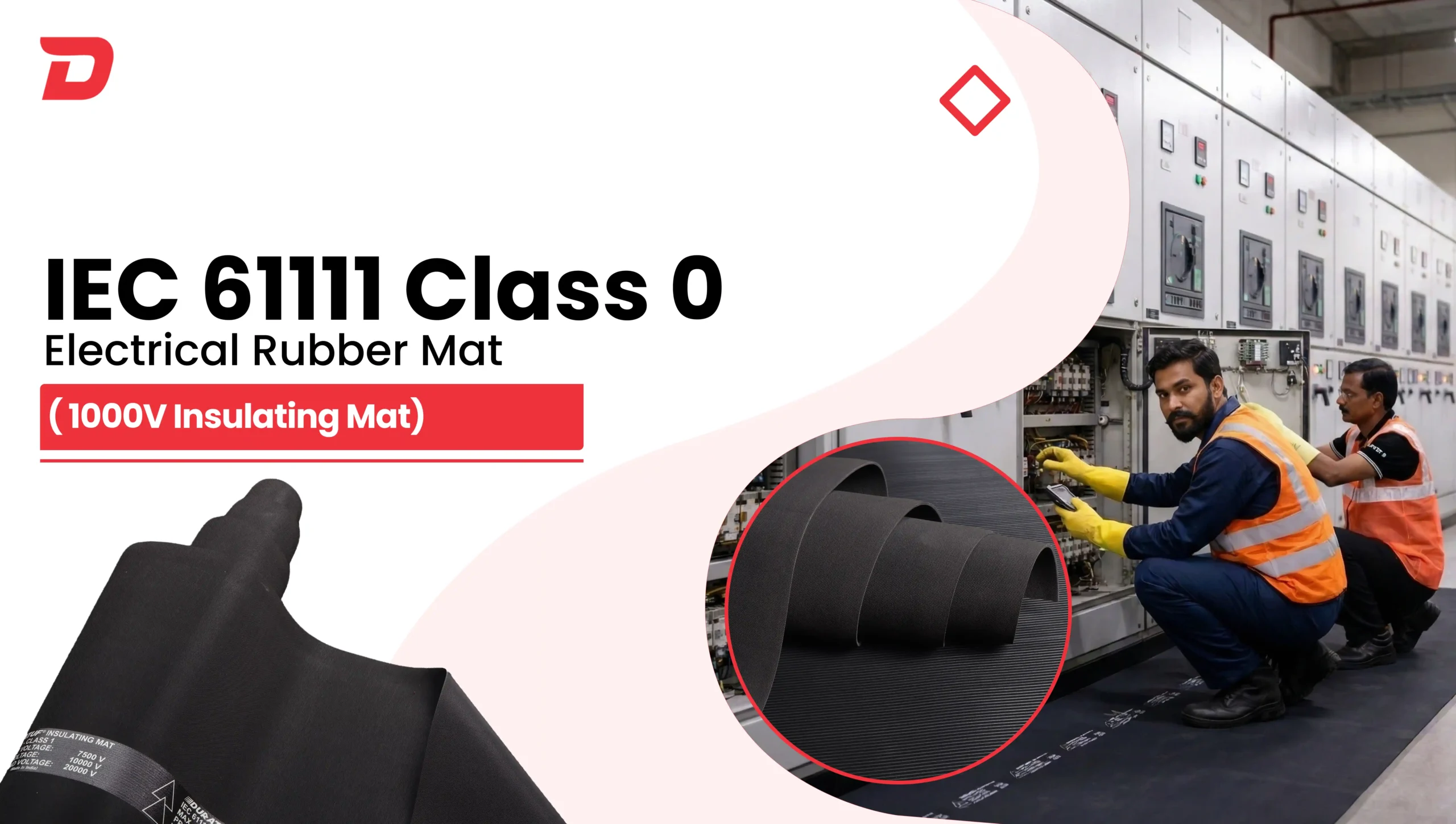
If you work around low-voltage electrical equipment and are looking for a reliable safety mat, the IEC 61111 Class 0 electrical rubber mat is what you need. It is the entry-level insulating mat in the IEC 61111 standard and is widely used in commercial and industrial installations where the working voltage is up to 1000V AC.
In this article, we will walk you through everything you need to know about the Class 0 insulating mat like what it is, how it works, where to use it, and why choosing a certified mat matters for workplace safety.
What is an IEC 61111 Class 0 Electrical Rubber Mat?
An IEC 61111 Class 0 electrical rubber mat is a certified insulating floor mat made from high-quality elastomer. It is designed to protect workers from electric shocks in environments where the electrical voltage does not exceed 1000 volts (AC).
The IEC 61111 standard is published by the International Electrotechnical Commission (IEC). It sets out strict requirements for electrical insulating mats including material quality, voltage withstand capacity, thickness, surface design, and testing methods. A Class 0 mat is the first classification under this standard.
Key Voltage Ratings for Class 0:
| Specification | Value |
| Max Use Voltage (AC) | 1,000 V |
| AC Proof Voltage | 5,000 V |
| Withstand Voltage | 10,000 V |
| Recommended Thickness | 2.0 mm |
| Max Thickness Allowed | 6 mm |
| Standard Length | 10 m |
| Standard Width | 1.0 m |
Where is IEC 61111 Class 0 Mat Used?
Class 0 insulating mats are ideal for low-voltage electrical environments. Common applications include:
- Distribution boards and circuit breaker panels
- Electrical control rooms and switch rooms
- UPS rooms and data centers
- Battery rooms and charging stations
- Commercial buildings with low-voltage switchboard
- Electrical laboratories and testing zones
- Motor control centres (MCCs) running on 400V–1000V supply.
If your workspace runs on standard industrial voltage (up to 1000V), the Class 0 mat provides the right level of protection without over-specifying.
Material and Design Features
The IEC 61111 Class 0 rubber mat is made from a premium elastomer compound, free from any insertion or foreign material. Here is what makes it different:
- Anti-slip ribbed surface on top to prevent slips, trips and falls
- Textured surface on the bottom for additional grip and stability
- Flame retardant, does not catch fire under standard conditions
- Resistant to mild acid, alkali, oil, water and moisture
- Works in a temperature range of -25°C to +55°C
- Marking printed at every meter for easy identification and compliance
- Durable and long-lasting even in demanding industrial environments.
Technical Specifications of IEC Class 0 Electrical Mats
| Technical Property | Performance Value |
| Material | Elastomer (Natural Rubber + Synthetic Polymers) |
| Mechanical Puncture Resistance (min) | 70 N |
| Slip Resistance (min) | 50 N |
| Flame Retardance | Does not catch fire |
| Low Temperature Test (-25°C) | No visible tears or cracks |
| Acid Resistance | Mechanical values ≥ 75% of original |
| Oil Resistance | Mechanical values ≥ 75% of original |
| Aging at 70°C for 168 hrs | Puncture resistance ≥ 80% of original |
Why Choose a Certified IEC 61111 Class 0 Mat Over a Non-Certified One?
Many buyers make the mistake of purchasing cheap, uncertified rubber mats thinking they offer the same protection. Here is why a certified Class 0 mat is worth the investment:
- Guaranteed electrical safety: The mat has been tested at 10,000V withstand voltage, ensuring it can handle fault conditions safely.
- Regulatory compliance: Required by OSHA, HSE, and other safety bodies for electrical workplaces.
- Quality assurance: Each roll is tested at the factory level and comes with a test certificate.
- Marked on every meter: Authenticity and class information are printed throughout the mat, making verification simple.
- Reduced liability: Using certified equipment protects your business during safety audits.
Non-certified mats may appear similar but lack documented testing, which puts workers at risk.
How to Install and Use the Class 0 Mat Correctly
Installing the Class 0 insulating mat is simple and easy. Follow these steps:
- Clean the floor area where the mat will be placed. Remove any oil, dust or debris.
- Unroll or lay the mat flat in the work area, covering the entire zone where operators stand.
- Do not overlap adjacent mats as overlapping seams create trip hazards.
- Do not fold or crease the mat during use, as this can damage its insulating properties.
- Inspect the mat visually before every use. Check for cuts, tears or surface damage.
- Keep the surface clean. Wipe with a damp cloth or mild soap solution if contaminated.
- Replace immediately if any physical damage is found.
Maintenance and Storage Tips
- Store rolled or flat in a cool, dry, and well-ventilated area.
- Avoid exposure to direct sunlight, heat sources or ozone-generating equipment.
- Do not store near sharp objects or chemicals.
- Inspect mats at least once every 12 months. If in doubt, send for dielectric re-testing.
Conclusion
Choosing the right electrical insulating mat is not just a compliance exercise, it is an important step in protecting human lives. The IEC 61111 Class 0 mat is a reliable, tested, and trusted solution for low-voltage environments. Always verify that your mat comes with a proper test certificate before use.