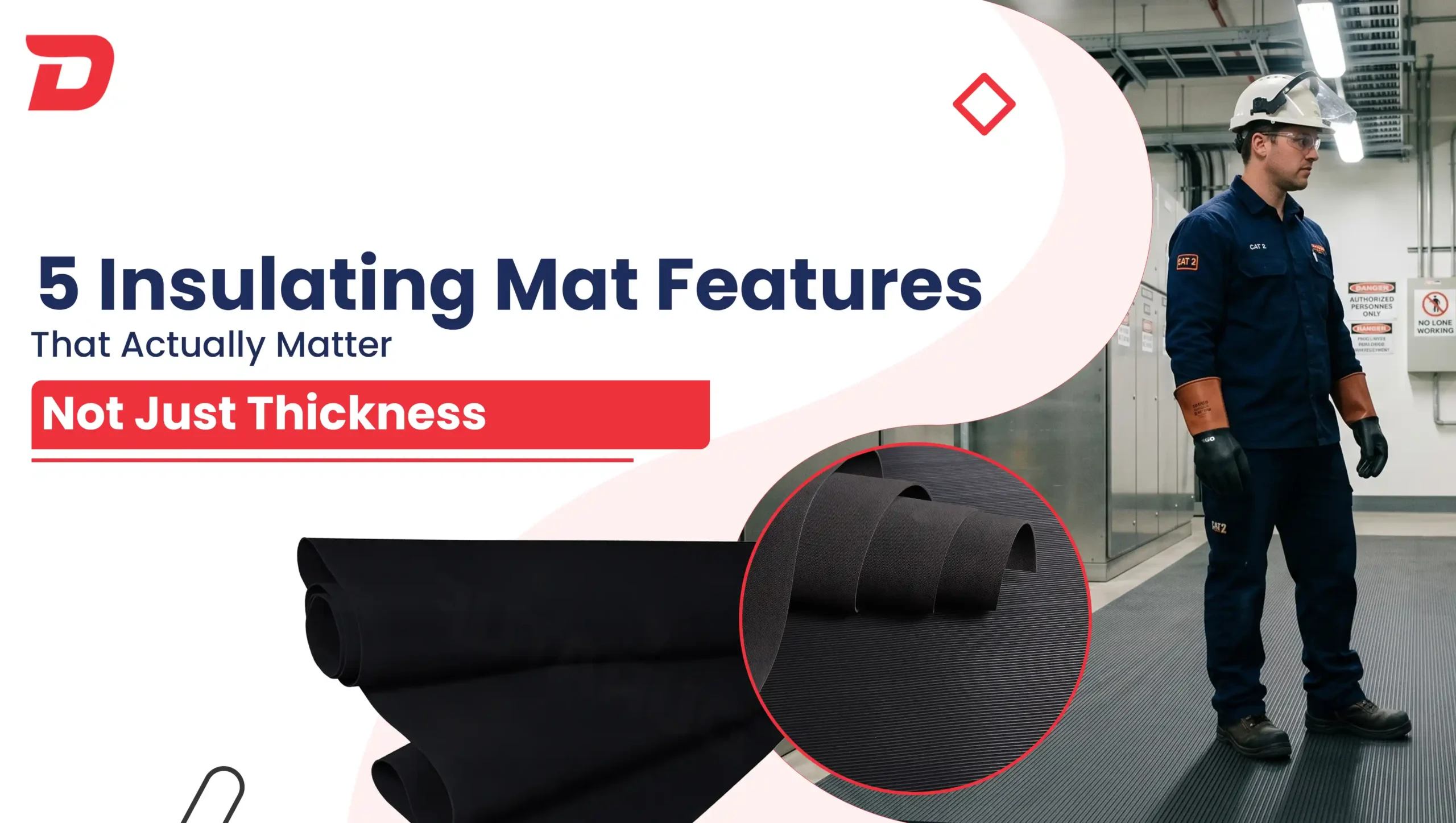
Most buyers compare insulating mats by thickness in millimetres, and thickness does matter. For the same material, a thicker mat can withstand a higher voltage before it breaks down. But it is not the whole story. Take two mats that are both officially Class 2, both rated for a maximum working voltage of 17,000 volts. One manufactured to IEC 61111:2009 has a recommended thickness of 3.0 mm. The other, manufactured to ASTM D178, has 6.4 mm. Same class, same voltage, more than double the thickness. The gap exists because each standard uses different test methods and rubber formulations to reach the same rating, so thickness only compares fairly within one standard. Here are the five features that actually decide how a mat performs, in the order buyers tend to skip them.
Voltage Class
A mat’s protection comes from three linked figures: the maximum working voltage it is rated for, the AC proof voltage it is tested against, and the dielectric or withstand voltage it has to survive without breaking down. Thickness is simply what each standard’s test data says is needed to reach those figures for a given elastomer formulation, and different standards do not agree on the answer. IEC 61111:2009 and ASTM D178 both use numbered classes from 0 to 4, but as the example above shows, matching class numbers between the two standards does not mean matching thickness.
IS 15652:2006, the standard that applies to most Indian sites, does not use the 0 to 4 scale at all. It uses Class A, B and C, mapped directly to working voltages of 3.3 kV, 11 kV and 33 kV. If you are sourcing a mat for an Indian panel room and a supplier quotes you an IEC or ASTM class number, that number needs converting to the actual working voltage of your equipment before it means anything. The number to start from is always the working voltage on your panel’s nameplate, never the class label on a datasheet.
Anti Skid Surface Design
Every recognised standard requires some form of anti skid finish, but the finish itself varies more than most buyers expect. IS 15652 mats typically use a dotted pattern on the top surface. IEC 61111 mat and ASTM D178 mats commonly use a fine ribbed top with a plain textured underside on the higher classes, and textured on both sides for the lower ones. IEC 61111 also sets a minimum slip resistance figure of 50 newtons and a minimum puncture resistance of 70 newtons, so a mat’s anti skid claim should come with numbers behind it, not just a description of the pattern.
This is also the feature that decides how comfortable the mat is to stand on through a full shift, and whether it holds its grip in a room where oil or condensation collects on the floor. Ask whether the anti skid finish is on the top surface only or on both sides, since a mat that is only textured on top can still slide if it sits on a wet or dusty subfloor.
Flame Retardance and Self Extinguishing Time
Panel rooms and switchgear rooms carry a real fire risk, and the three major standards test flame behaviour differently enough that a generic “flame retardant” claim is close to meaningless without a number attached. IS 15652 requires the mat to extinguish within 5 seconds after the flame source is removed. IEC 61111 runs a stricter pass test where the sample is not allowed to catch fire at all. ASTM D178’s optional Type IIB variant measures the height of charring on the sample after a 30 second burn, capped at 12.7 mm, which is a different kind of measurement entirely. When a supplier tells you a mat is flame retardant, the useful follow up question is which of these three tests it was run against, and what the actual result was.
Chemical, Oil and Ageing Resistance
A mat that looks fine on the day it is installed can fail within a year if it sits somewhere with oil, ozone from arcing, or regular exposure to acids and alkalis, and not every mat is built to handle that. Entry level mats are the clearest example. Duratuf’s own entry level range, for instance, carries no chemical resistance claim at all against dilute acids, concentrated acids, ozone, oils or solvents, and is positioned specifically for dry, low risk locations rather than transformer rooms or areas near cable joints.
Mats built to the full standards carry an actual ageing test result instead. IEC 61111 requires the mat to retain at least 80 percent of its original puncture resistance and at least 75 percent of its mechanical strength after acid or oil exposure, following 168 hours of ageing at around 70°C. IS 15652 sets its own ageing retention figure at 75 percent minimum after the same kind of exposure, and 80 percent minimum specifically for acid, alkali and oil resistance. If your site has any oil, ozone or chemical exposure near the panel, the ageing retention percentage is the number to ask for, not just whether the product is described as chemical resistant.
Mat Certification and Traceable Testing
The last feature is the one that confirms the first four are real rather than marketing copy. IS 15652 mats carry mandatory BIS certification under a Quality Control Order, so a genuine mat should be ISI marked and traceable to a specific manufacturing licence, not just labelled as compliant. IEC 61111 and ASTM D178 do not have a BIS style mark, so the equivalent check is a type test certificate from an accredited lab that names the exact standard, class and product code you are buying, not a generic company level compliance statement. Some manufacturers go further and test every metre of output for withstanding voltage rather than sampling a batch, which is worth asking about directly if your site has a low tolerance for field failures.
A Quick Checklist Before You Buy Electric Mat
| Feature | Why it matters | What to ask your supplier |
| Voltage class | Determines actual protection, not thickness | What is the maximum working voltage and proof test voltage for this exact product code? |
| Surface design | Slip resistance and standing comfort | Is the anti-skid finish on the top only, or on both sides? |
| Flame behaviour | Panel rooms carry real fire risk | Which standard was the flame test run against, and what was the result? |
| Chemical and ageing resistance | Decides service life in oil or ozone exposure | What is the tensile strength or puncture resistance retention after the ageing test? |
| Certification | Confirms the mat was actually tested, not just labelled | Can I see the type test certificate for this specific class and product code? |
Conclusion
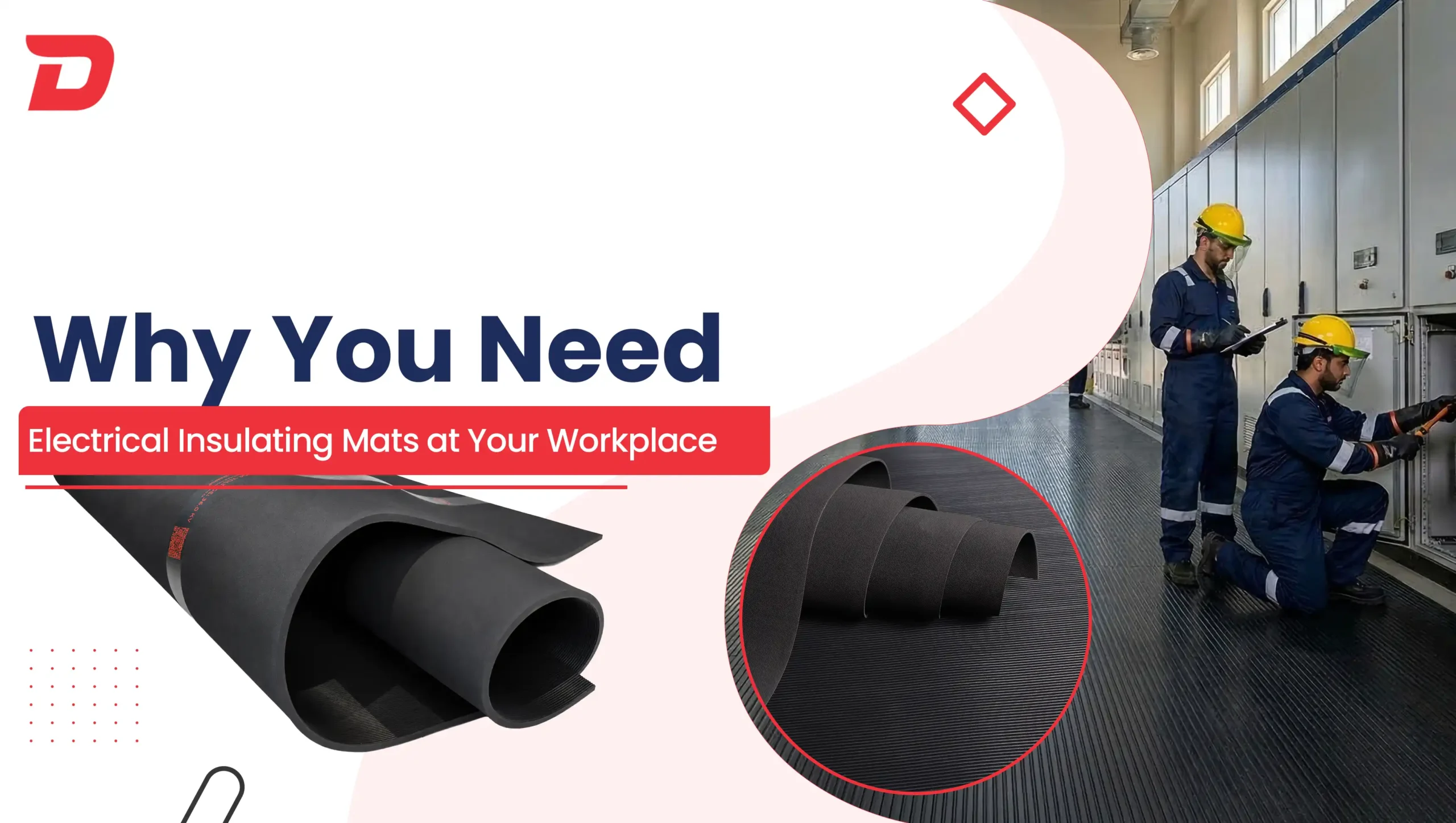
Once you know which class and features your site actually needs, the next question is usually why an insulating mat belongs in that room in the first place, which is what we cover in Why You Need Electrical Insulating Mats at Your Workplace. Our IS 15652 mat range covers Indian voltage classes A, B and C, and our IEC 61111 mat and ASTM D178 mat ranges cover international markets, all manufactured and type tested to the relevant standard rather than simply labelled to it.