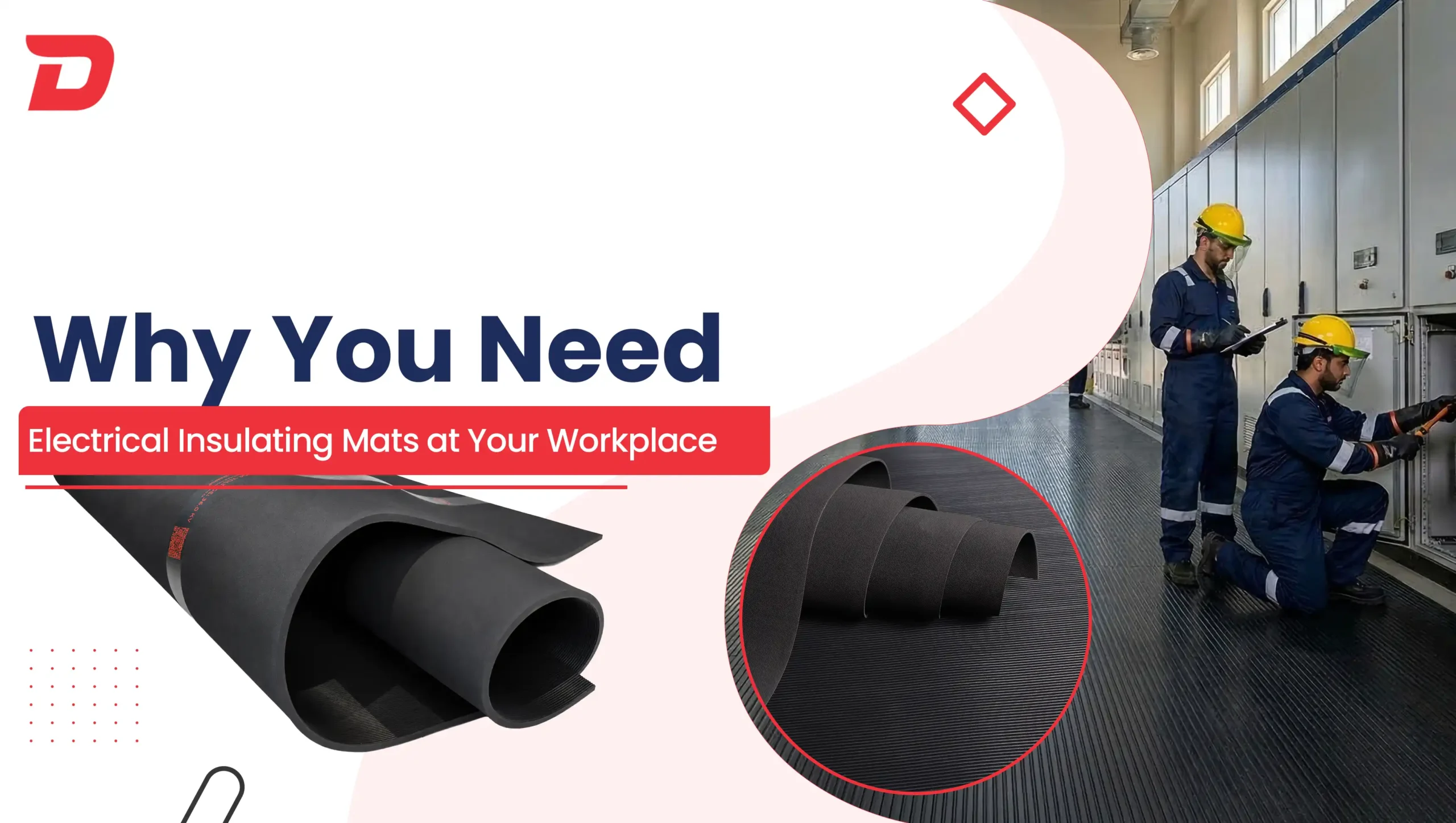
Central Electricity Authority data for the 2024 to 2025 reporting year puts India at 14,430 electrical accidents, including 6,342 human fatalities, across the full chain from generating stations and transmission lines through to distribution networks and consumer installations. Several hundred of those fatalities happen at industrial installations specifically, year after year, which is exactly the environment an insulating mat is built for. An insulating mat is one of the few pieces of safety equipment built specifically to interrupt the path back to earth that turns accidental contact into a shock. If you are trying to work out whether your facility actually needs one, the honest answer depends on what sits behind your switchboard, not on how careful your electricians already are.
How an Insulating Mat Actually Protects a Worker?
When a person standing on a conductive floor touches a live part by accident, their body can become part of the circuit back to earth. An insulating mat breaks that circuit by placing a layer of dielectric material, elastomer or synthetic rubber compound, between the worker and the ground. It is an additional protective measure that increases the electrical resistance between the worker and the ground. It works alongside isolation procedures, earthing, safe work practices and insulated gloves, not as a substitute for any of them.
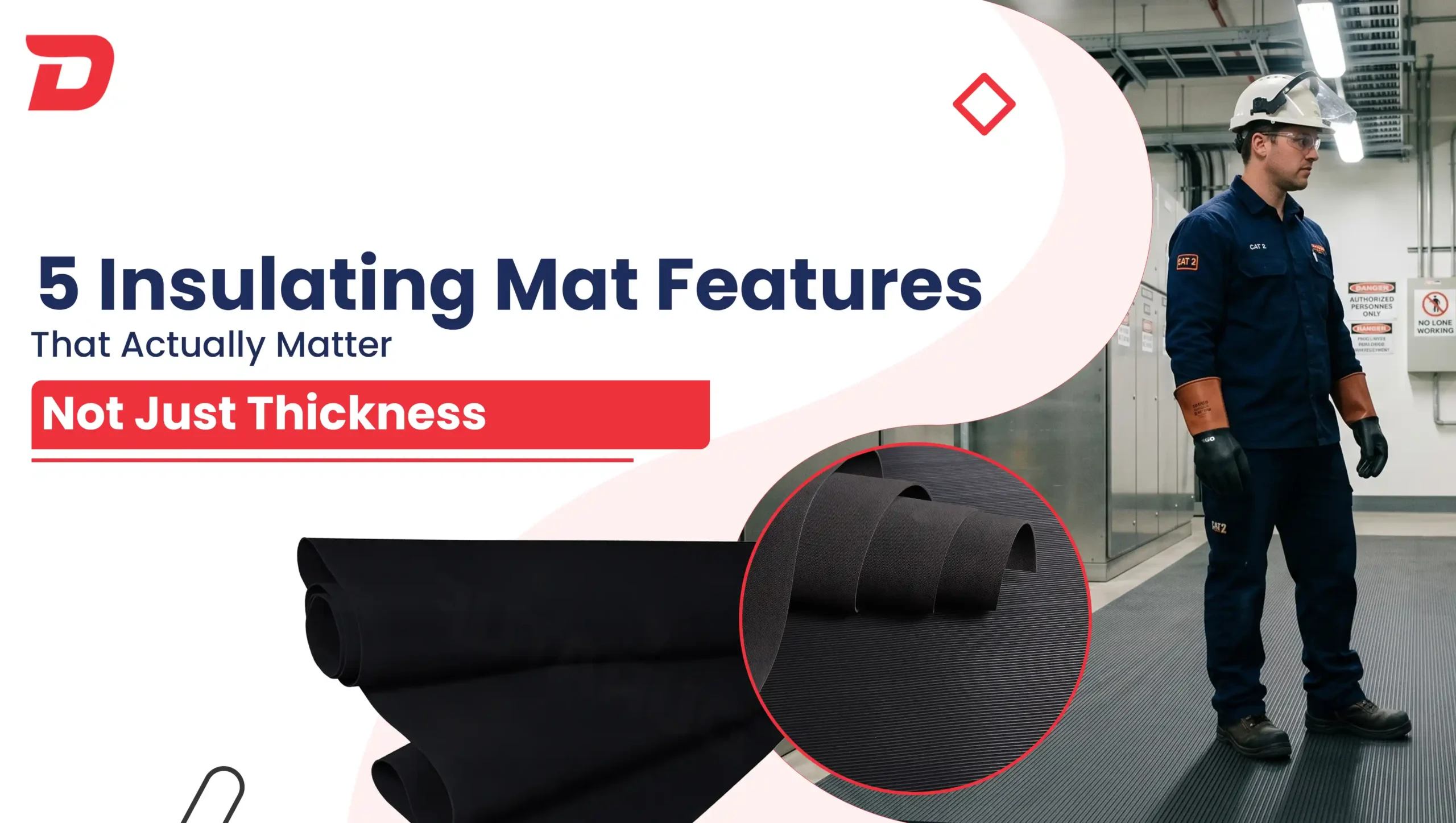
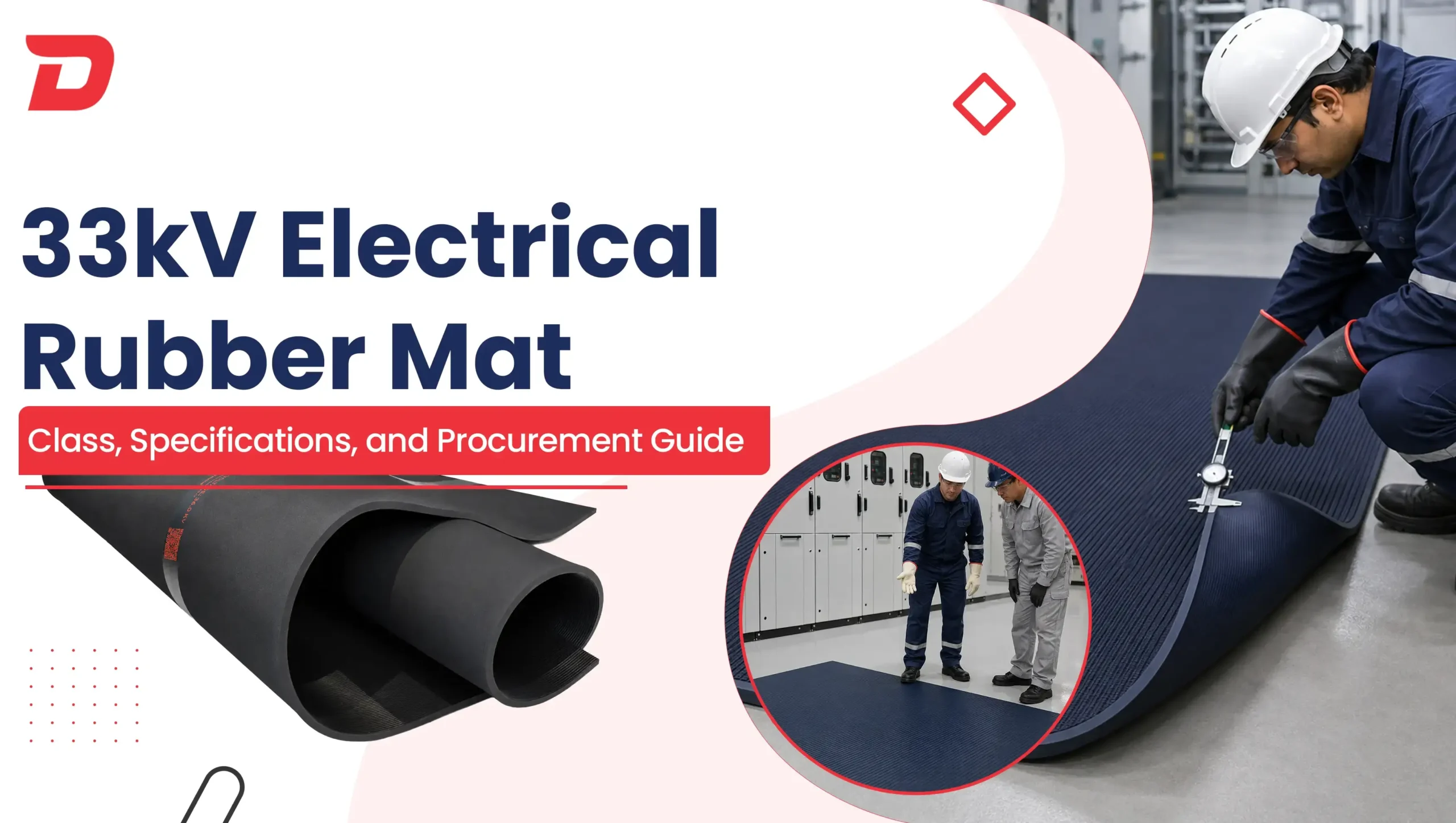
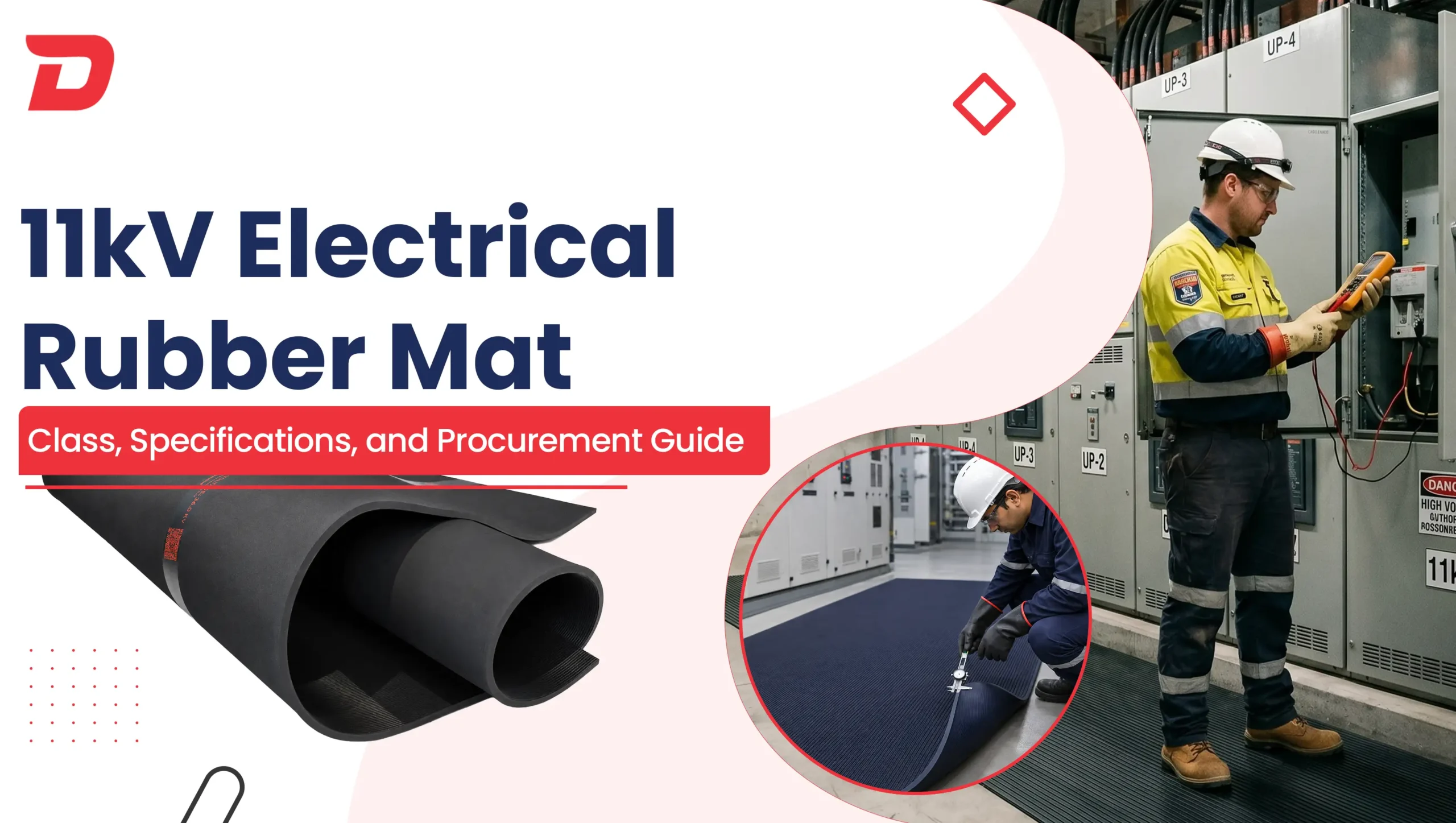
What actually determines how much protection a mat gives is not its thickness in millimetres, it is its voltage class. A mat rated for a working voltage of 3.3 kV and one rated for 33 kV can look identical to the eye and behave completely differently under fault conditions. Every recognised standard, including IS 15652:2006, also sets specific leakage current and insulation resistance limits that a electrical mat has to pass in testing, figures that have nothing to do with how thick the mat feels underfoot and everything to do with what its test certificate actually says. Matching class to the actual working voltage of your panel is the decision that matters here, and it is worth a short conversation with your supplier rather than a guess.
Where the Risk Actually Sits in Your Facility?
Not every room needs the same mat, but most industrial sites have more of these rooms than the safety audit initially assumes.
- Electrical substations and HT and LT control panel flooring
- Switchboard and switchgear rooms
- Transformer rooms
- Generator and lift machine rooms
- Bus bar areas
- MCC rooms
- Any outdoor or indoor location where staff work on live equipment
If your facility has any of these and the floor in front of it is bare concrete, painted floor or a generic anti fatigue mat, that is the gap an insulating mat is built to close.
The Regulatory Reality in India
This is not just good practice, it is written into the regulatory framework. Electrical installations in India are governed by the Central Electricity Authority’s Measures Relating to Safety and Electric Supply Regulations, issued under Section 53 of the Electricity Act, 2003. The CEA replaced the long standing 2010 version of these regulations with an updated 2023 edition, and the underlying requirement for insulated flooring conforming to IS 15652:2006 in front of switchgear and control panels has been part of this framework for over a decade.
Separately, IS 15652:2006 is covered under India’s Electrical Accessories Quality Control Order, which makes BIS certification mandatory for this product category. That means a compliant mat has to conform to the standard and carry the BIS Standard Mark under a valid manufacturing licence, not simply be labeled as compliant. When you are sourcing mats, the correct question to ask a supplier is whether the mat is manufactured and type tested to IS 15652:2006 and carries a valid ISI mark, not whether the company selling it is certified.
The Business Case Beyond Compliance
Compliance gets a mat installed, but it is not the only reason facilities keep reordering them. A rubber insulating mat gives an electrician a cushioned surface to stand on through a long shift in front of a panel, which cuts down on the fatigue that comes with standing on bare concrete for hours. Compliant mats also carry identification markings, including the applicable class, so a technician can confirm the mat in front of a given panel actually matches that panel’s voltage, instead of relying on memory or a faded label. And when an Electrical Inspector or an insurance auditor walks the floor, a facility that can show matched, tested mats at every panel closes out that line item in minutes instead of becoming the finding on the report.
What a Missing Mat Actually Costs You?
The downside is not abstract. Failure to maintain an electrical installation in line with applicable safety requirements can lead to regulatory action, including a formal direction to rectify the defect and, where that direction is not complied with, disconnection of the installation. The CEA’s regulations place that responsibility squarely on the installation owner. Compliance can also matter for insurance, in cases where a policy’s conditions or warranties reference regulatory compliance, though the exact effect always depends on the specific policy. None of this needs a worst case scenario to matter. It is simply cheaper to buy the mat.