Most industrial accidents happen in the same zones, from the same triggers, year after year. Do you think the real problem is awareness? Well, it is the gap between knowing where the dangers are and actually taking corrective actions.
Elastomers like natural rubber, neoprene, nitrile, EPDM, silicone are one of the most effective ways to close that gap. Engineered to insulate, grip, resist chemicals, withstand heat, and absorb vibration, they build protection directly into the environment. No compliance required. No reminders needed.
Wondering why? Here, industrial workplaces need them most. But, let’s start with-
What are Elastomers?
Elastomers are a class of polymers. They can be natural or synthetic. Elastomers can stretch significantly under stress and return to their original shape once the force is removed.
Now, let us see how do elastomers significantly mitigate industrial risks:
Key Risk Areas in Industrial Workplaces
Here are the 5 key risk areas in any traditional or modern industrial workplace:
Electrical Hazard Zones
What makes electrical hazards particularly dangerous is who gets hurt. The majority of electrical fatalities in U.S. workplaces involve workers in non-electrical occupations. For example, maintenance staff, cleaners, and contractors who simply work near energized equipment, not on it.
Switchgear rooms, transformer bays, control panels, and battery stations are the highest-risk zones. Without proper insulation at ground level, anyone entering these spaces is exposed. Arc flash events compound the danger further, releasing explosive thermal energy that causes severe burns even without direct contact.
Slips, Trips, and Falls
This is the category that costs businesses the most and the one with the least excuse for ongoing negligence. The majority of fall injuries happen not from ladders or elevated platforms, but on the same level: wet floors, oil residue, chemical spills, and bare concrete near processing equipment.
OSHA has cited fall protection as its single most violated standard for 15 consecutive years. The floor conditions responsible have not changed. What needs to change is what covers them.
Chemical Exposure Areas
Chemical exposure is industrial safety’s slow-burn problem. Unlike a fall or an electrical shock, the damage often accumulates over time, through repeated skin contact, inhalation, or ingestion. This makes it easy to overlook until the harm is already done.
A spill on an unprotected floor does not stay a chemical problem. It becomes a slip hazard, a vapour source, and a structural threat to the concrete and drainage beneath it. The right floor protection contains the incident at the point it occurs.
High-Temperature Zones
Foundries, steel plants, boiler rooms, glass manufacturing units, and industrial ovens create environments where sustained heat affects both workers and the materials meant to protect them. Standard rubber softens, cracks, and loses its insulating properties under prolonged thermal load, often gradually and without visible warning.
Workers in these zones face burn risk from direct surface contact, heat exhaustion from extended exposure, and fatigue from standing near intense heat for long shifts. The material under their feet needs to be rated for the environment they are actually working in.
Mechanical and Vibration-Prone Areas
Vibration is the hazard most facilities underestimate because it never causes a single dramatic incident. It builds through daily hours on vibrating tools, near compressors, on machinery floors until nerve damage, joint deterioration, and musculoskeletal disorders become unavoidable.
Hand-Arm Vibration Syndrome (HAVS) ends careers. Whole-body vibration causes chronic back conditions that are difficult to treat and expensive to manage. And beyond the human cost, uncontrolled vibration accelerates equipment wear and creates precision errors in manufacturing processes.
The Role of Elastomers in Enhancing Workplace Safety
What makes elastomers valuable across all five of these risk areas is that their protection is passive and continuous. A safety mat does not get tired. It does not skip a step. It does not need to be reminded.
Behavioral controls with training, signage, PPE protocols are necessary, but they are also imperfect. The moment a worker is fatigued, rushed, or simply distracted, a behavioral control can fail. An elastomer product installed correctly in the right location does not.
The economics are equally straightforward. Each prevented incident, whether a slip-and-fall, an electrical contact, or a chemical exposure saves costs that dwarf the investment in the material that prevented it.
Types of Elastomer-Based Safety Solutions
Here are some of the common types of elastomer based safety solutions used in different industrial sectors:
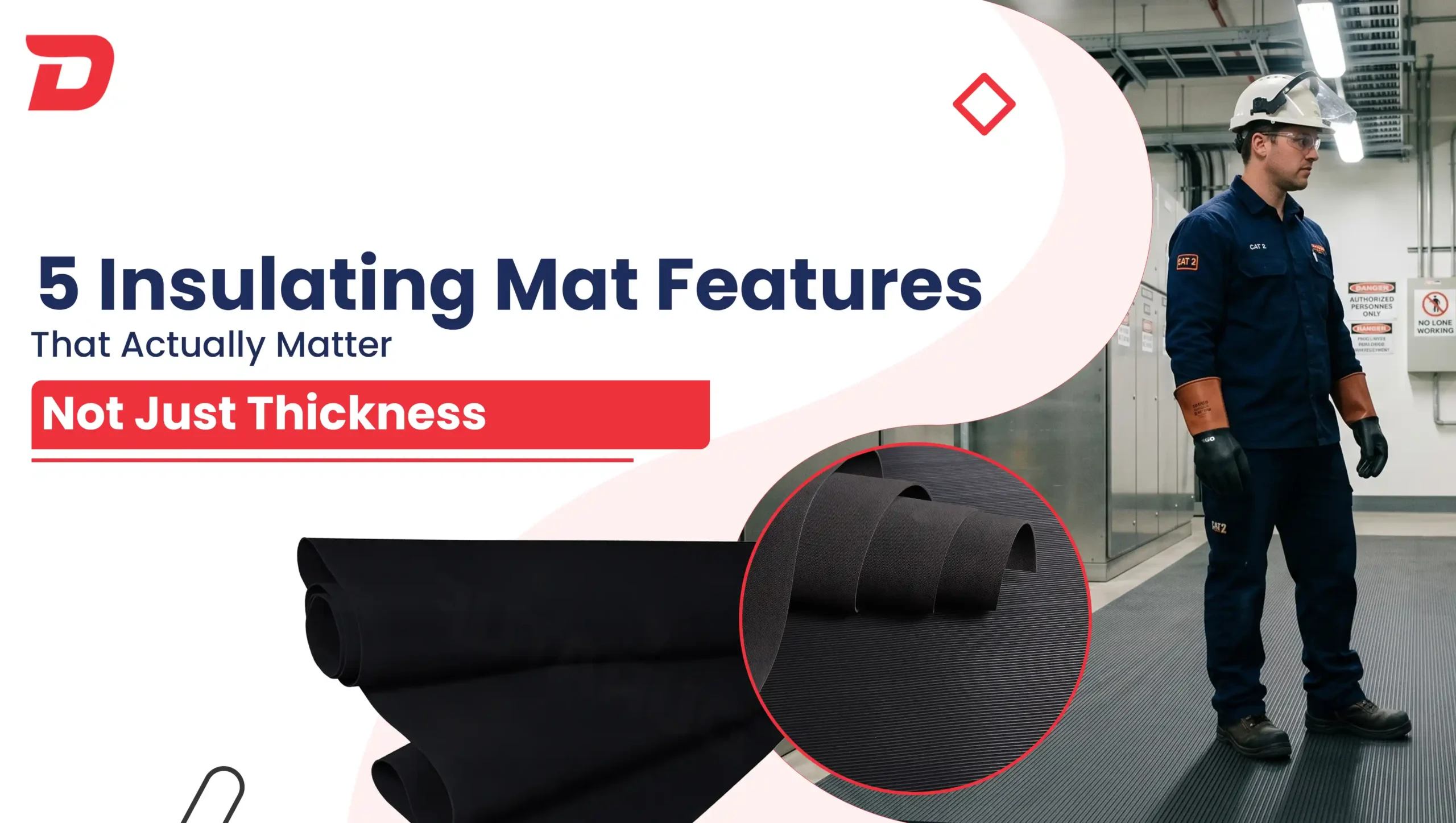
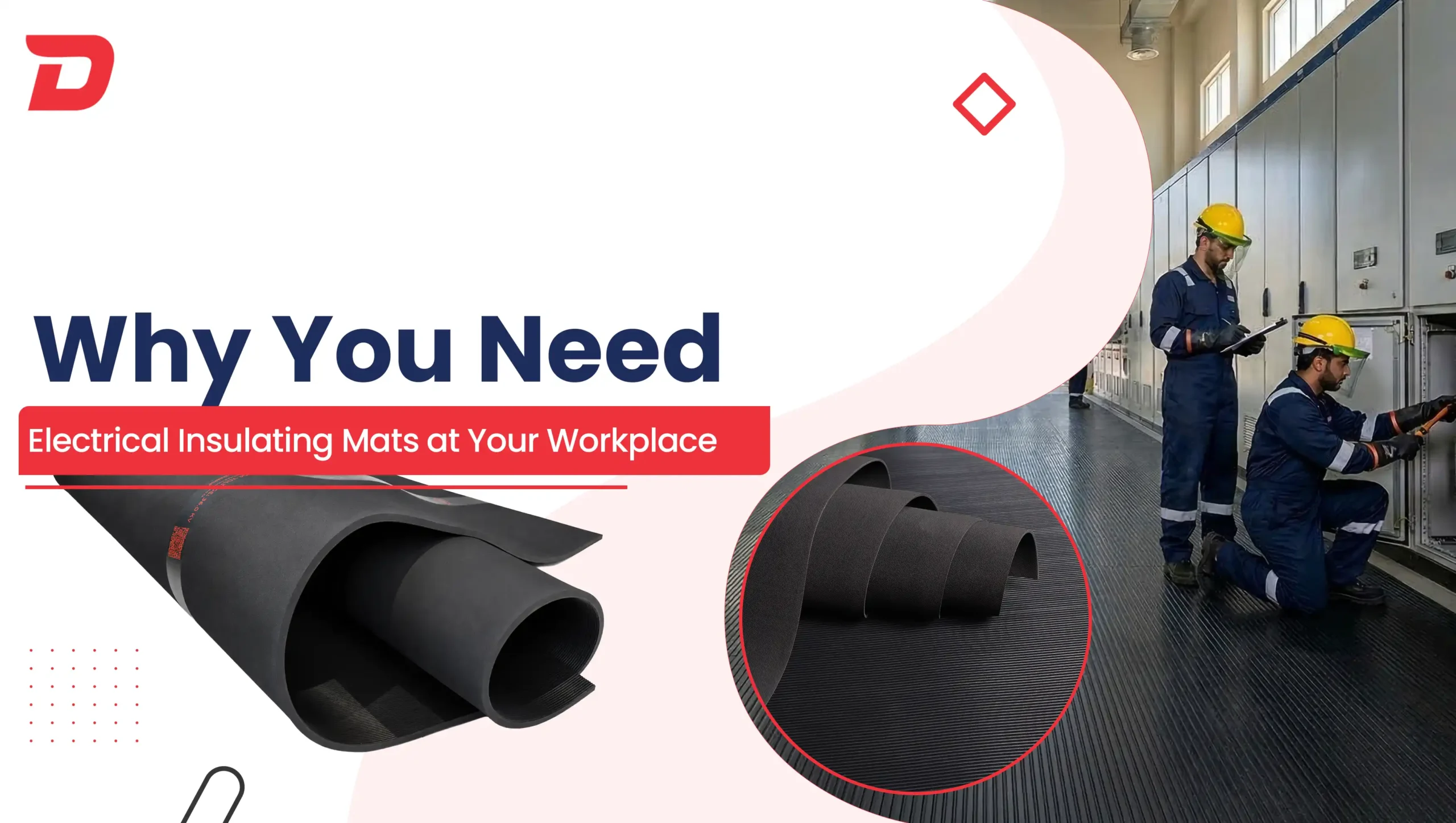
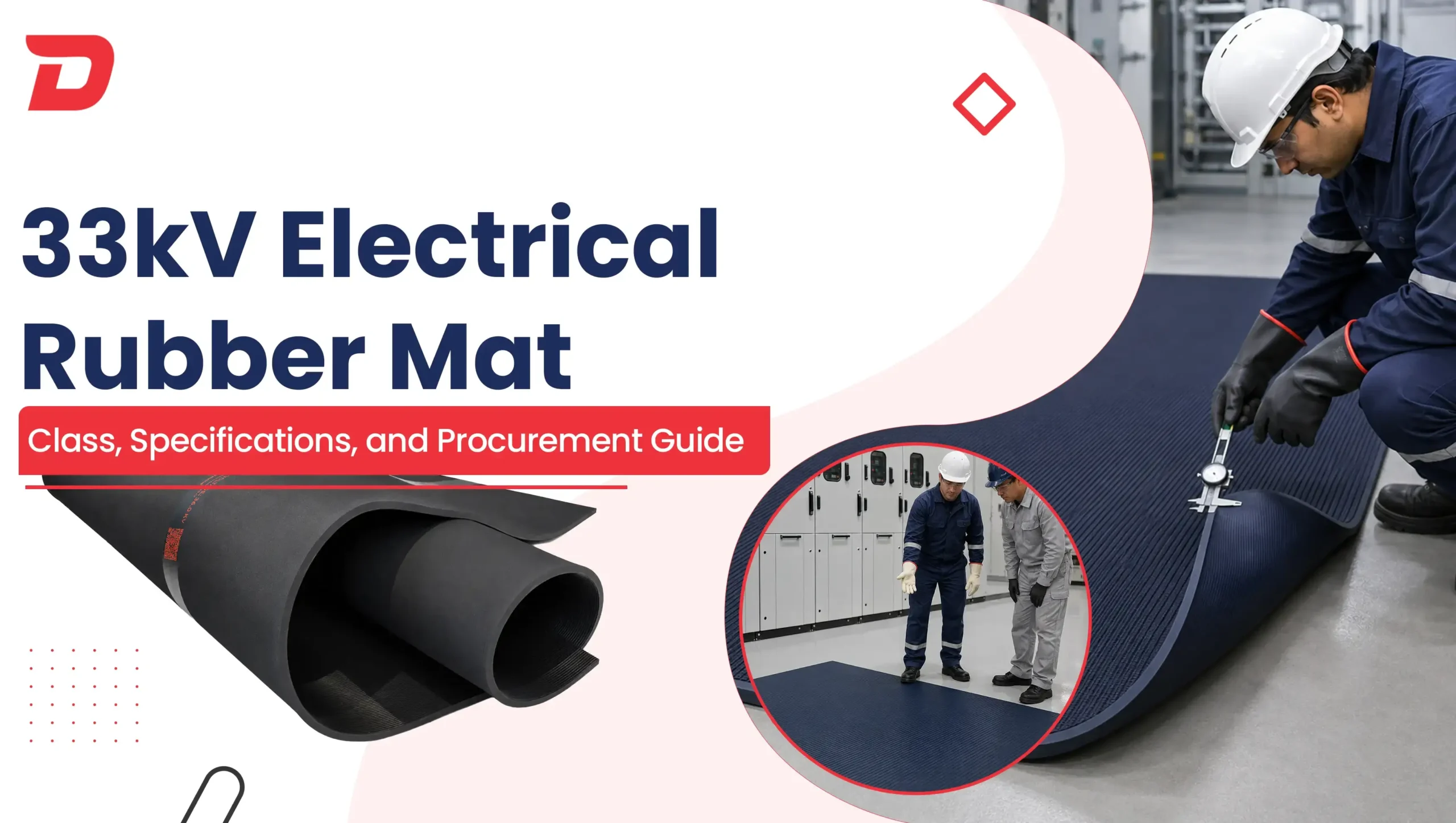
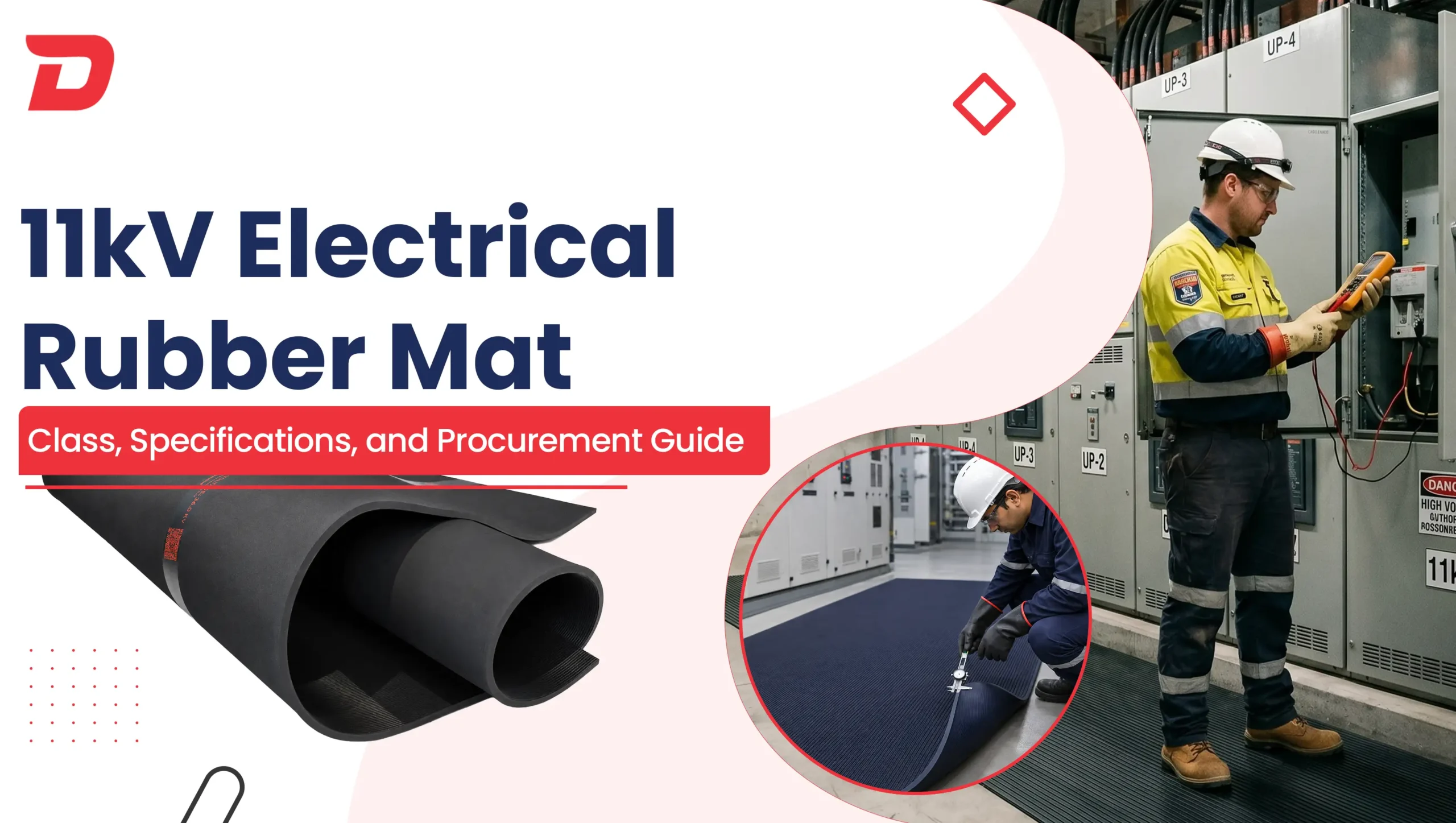
Electrical Insulating Mats
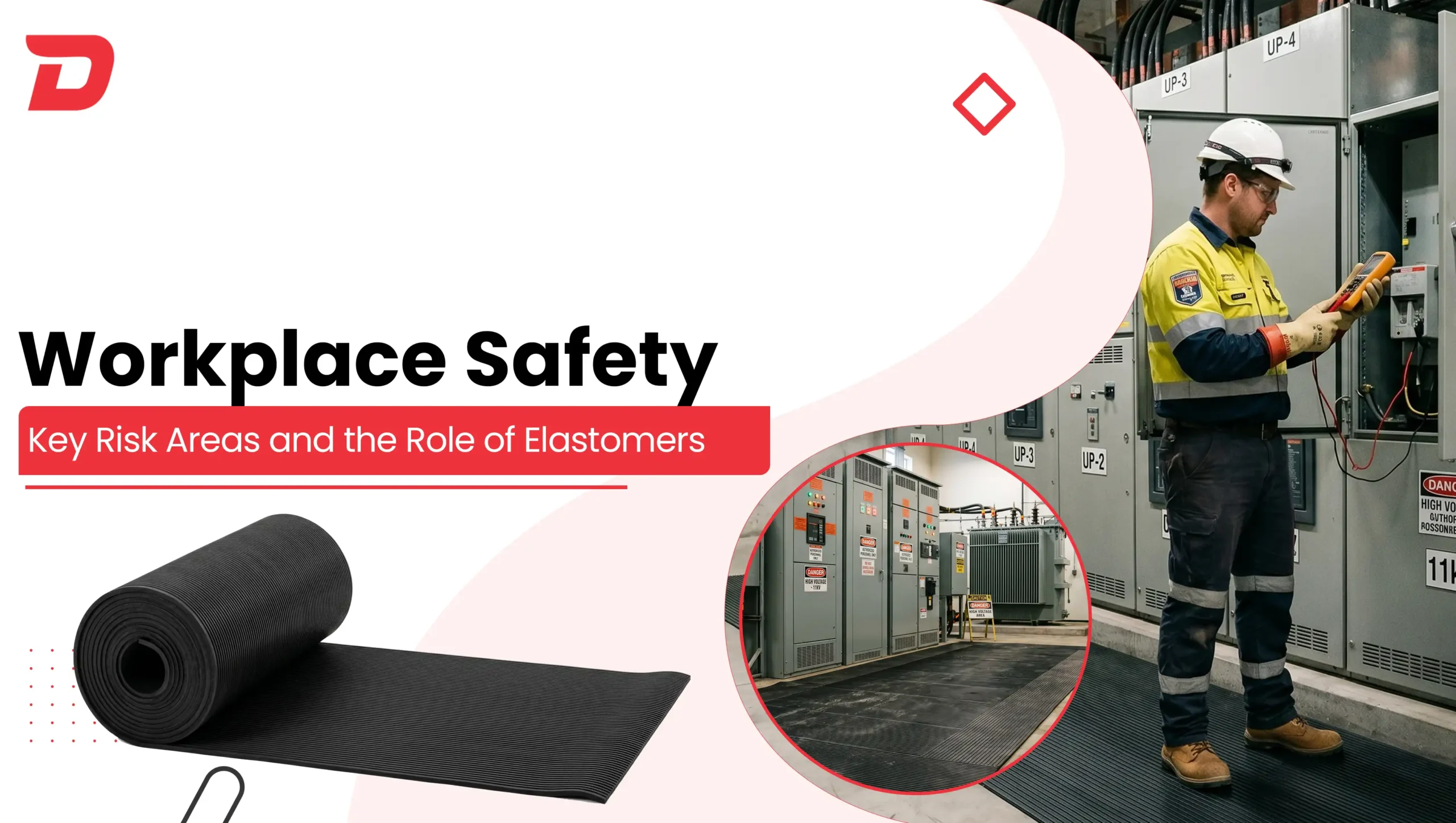
Rated from Class 0 to Class 4 under IEC 61111 and ASTM D178 standards, these mats are placed in front of live electrical equipment to break the ground fault path. They are not general-purpose rubber mats. They are precision-rated safety products. In most jurisdictions, their use in electrical zones is a regulatory requirement.
Anti-Slip Rubber Mats
Engineered with open-grid drainage patterns, raised studs, or corrugated profiles, anti-slip mats channel liquids away from the walking surface while maintaining traction underfoot. A mat that traps moisture rather than draining it is not a solution. It is a hazard in disguise. The right specification for a food-safe environment differs from what a chemical plant floor needs.
Chemical-Resistant Rubber Sheets
Different chemicals demand different compounds. Neoprene handles oils and moderate acids. Nitrile (NBR) resists hydrocarbons and fuels. EPDM suits steam and polar solvents. Viton is the benchmark for the most aggressive combined chemical and thermal conditions. Used as floor linings, workbench surfaces, or containment liners, these sheets protect workers and facility infrastructure simultaneously.
Heat-Resistant Elastomers
Silicone and Viton maintain structural integrity at temperatures that destroy standard rubber. They are the materials behind pipe insulation sleeves, furnace gaskets, press pads, and foundry flooring and environments where failure of the protective material is not an inconvenience but a safety event.
Vibration Dampening Rubber Materials
Anti-vibration mats, isolator mounts, and rubber underlays absorb mechanical energy before it reaches workers or structural supports. Correct specification matters here . The wrong hardness or geometry for a given machine’s frequency range can amplify vibration rather than reduce it. Getting this right protects workers and extends equipment life at the same time.
How Elastomers Help Reduce Workplace Accidents?
Elastomers address the root condition rather than the symptom. Anti-slip matting removes the slippery surface before anyone falls on it. Electrical insulating mats eliminate the fault path before current finds a worker. Chemical-resistant sheets contain spills before they spread. Anti-vibration materials break the transmission path before the energy reaches the body.
This upstream approach is what makes material-based safety so effective. It works before the incident, not after.
Best Practices for Improving Workplace Safety Using Elastomers
- Identify high-risk zones through a documented hazard audit covering electrical areas, wet zones, chemical handling points, heat sources, and vibration-heavy machinery.
- Select appropriate elastomer types matched to the specific hazard like voltage rating, chemical compatibility, and temperature tolerance must reflect actual site conditions, not general estimates.
- Ensure proper installation: Mats must cover the full working area, be secured against shifting, and be sealed at seams where chemical ingress is a risk.
- Conduct regular inspections for tears, edge lifting, chemical swelling, or surface degradation. A visibly worn mat still looks like protection but may not be providing it.
- Replace worn-out materials proactively as the elastomers degrade under UV exposure, heat cycling, and chemical contact. Scheduled replacement is cheaper than a single serious incident.
Conclusion
The five risk areas covered here are electrical zones, slip-prone floors, chemical environments, high-heat operations, and vibration-heavy machinery are not edge cases. They are the everyday reality of industrial work. And they each have a material-based answer.
Elastomers will not replace training, PPE, or safety culture. But they do something those things cannot: they put physical protection exactly where the hazard is, and they keep it there.
Identify your risk zones. Match the material to the hazard. Maintain it properly. That is where the accidents stop happening.