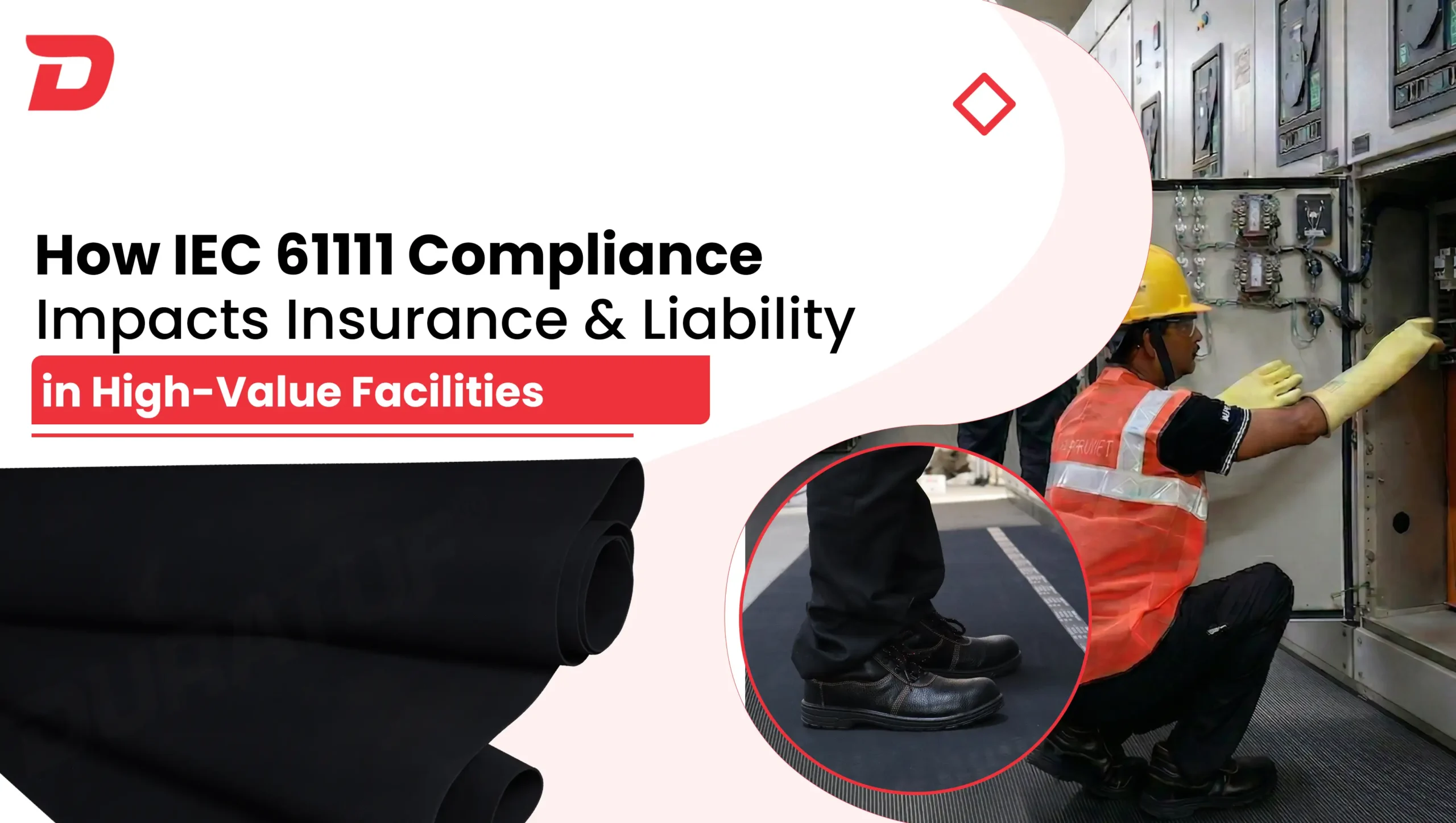
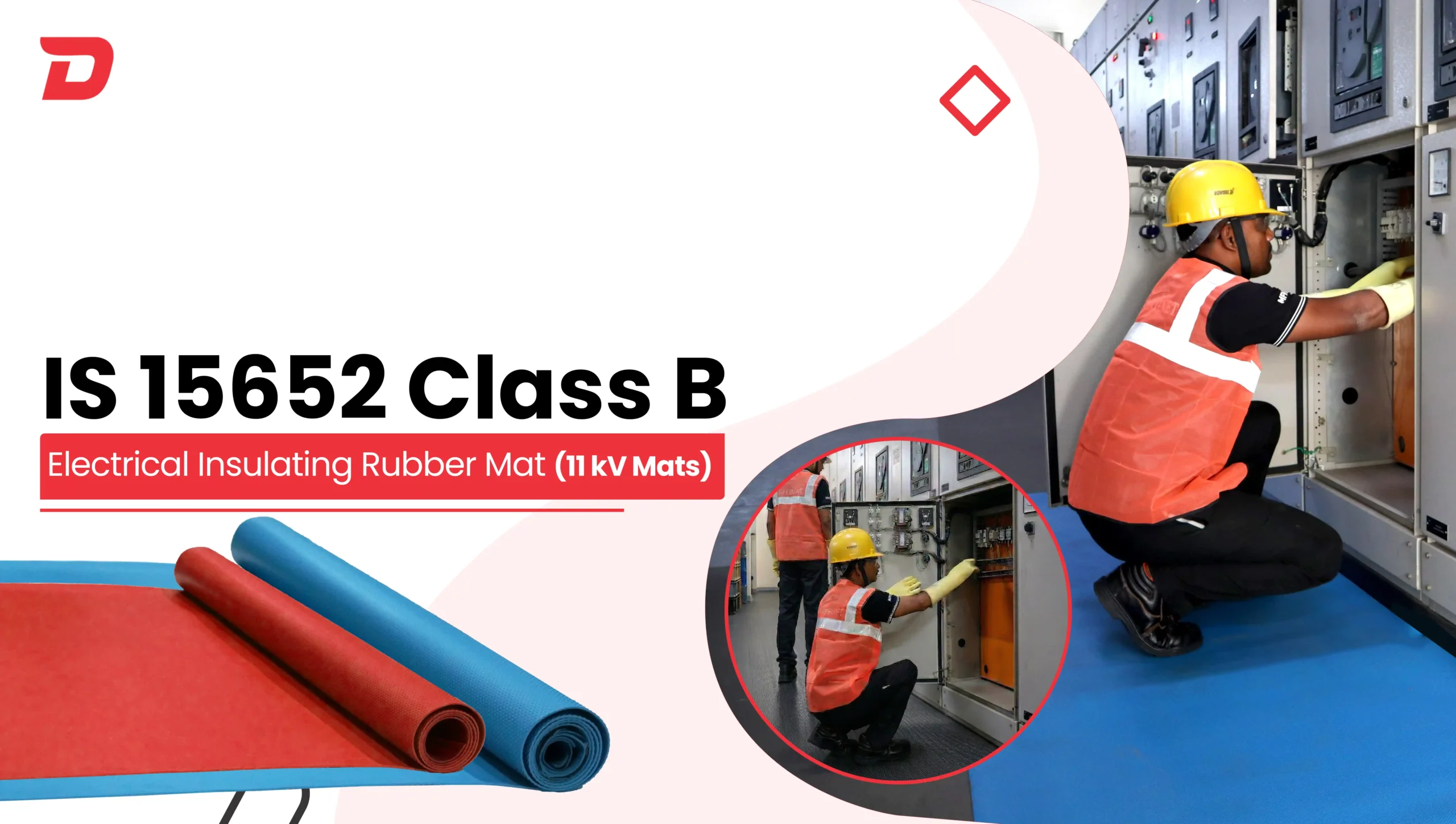
Working near 11 kV electrical equipment is a high-risk task. A single mistake, standing on a non-insulated floor near a live 11 kV panel, can be fatal. That is why the IS 15652 Class B electrical insulating rubber mat is ideal for every 11 kV substation, HT control panel room, and high-tension switchboard area.
This guide gives you everything you need to know about the Class B insulating mat; its specs, applications, features, and how to choose the right one.
What is an IS 15652 Class B Electrical Insulating Rubber Mat?
An IS 15652 Class B electrical insulating rubber mat is a medium-voltage safety mat that protects electrical workers from shock in environments where the operating voltage goes up to 11 kV. It is manufactured and certified according to IS 15652:2006, the Indian Standard for electrical insulating mats issued by the Bureau of Indian Standards (BIS).
Class B is the mid-range classification under IS 15652. It provides significantly higher insulation than Class A and is required wherever the working voltage exceeds 3.3 kV and goes up to 11 kV. The most common use cases include 11 kV substations, HT switchgear rooms, and transformer yards.
Technical Specifications of IS 15652 Class B Mat
Here are the complete technical details of the Duratuf XVolt Class B insulating mat:
| Specification | Value |
| Product Code | IM-XV-CB |
| IS Standard | IS 15652:2006 |
| Class | B |
| Standard Thickness | 2.5 mm |
| Max Use Voltage (AC) | 11 kV (11,000 V) |
| AC Proof Voltage | 22 kV |
| Dielectric (Withstand) Voltage | 45 kV |
| Leakage Current (Max) | 10 mA |
| Tensile Strength (Min) | 15 N/mm² |
| Elongation at Break (Min) | 250% |
| Insulation Resistance (at 5000V, with water) | 1,00,000 MΩ (min) |
| Flame Retardance | Extinguishes within 5 seconds |
| Working Temperature Range | -10°C to 55°C |
| Standard Roll Size | 10 m length x 1 m width |
| Available Cut Sizes | 1 m x 2 m (ready stock) |
| Max Customisable Width | Up to 1500 mm |
| Available Colours (Standard) | Black, Blue |
| Custom Colours Available | Red, Grey, Green, Yellow and others |
| Anti-Skid Design | Dotted top surface, Textured bottom surface |
| Weight per m2 (Approx) | 4.0 kgs |
| Warranty | 12 Months |
What Does ‘Class B’ Mean Under IS 15652?
IS 15652:2006 classifies electrical insulating mats into three classes based on the voltages they can safely protect against. Here is how Class B compares with Class A and Class C:
| Specification | Value | |||
| Class | Max Use Voltage | AC Proof Voltage | Dielectric Voltage | Thickness |
| Class A | 3.3 kV | 10 kV | 30 kV | 2 mm |
| Class B | 11 kV | 22 kV | 45 kV | 2.5 mm |
| Class C | 33 kV | 36 kV | 65 kV | 3 mm |
Class B mats are thicker than Class A (2.5 mm vs 2.0 mm) to handle the higher voltages. Never use a Class A mat in a Class B environment, it will fail to provide the required insulation and put workers at serious risk.
Where Should You Use an IS 15652 Class B Electrical Insulating Mat?
Class B mats are manufactured for medium-voltage environments up to 11 kV. The most common applications include:
- 11 kV Substations: Substation control rooms, switching areas, and transformer yards
- HT (High Tension) Switchgear Rooms: In front of 11 kV switchgear panels, vacuum circuit breakers (VCBs), and bus couplers
- Transformer Stations: Around 11 kV power transformers, cable trenches, and busbar areas
- Power Plants: Generator and turbine areas operating at 11 kV
- Industrial HT Control Panels: In manufacturing plants, cement factories, steel mills, and chemical plants with 11 kV equipment
- UPS Rooms in Data Centres: Where medium-voltage UPS systems are used
- Railway Electrification Maintenance Depots: Signal equipment rooms and OHE maintenance areas
- Battery Rooms (High Capacity): Near large battery banks with higher voltage outputs
If your installation operates at voltages between 3.3 kV and 11 kV, a Class B mat is the correct and legally compliant choice.
Key Features of the Duratuf XVolt Class B Insulating Mat
1. BIS Certified:
The XVolt Class B mat is ISI marked and tested in internationally accredited laboratories; not local or unrecognized facilities. This gives you confidence that the mat will perform exactly as rated when you need it most.
2. 22 kV AC Proof Voltage ( for 11 kV Environments)
The AC proof voltage of 22 kV means the mat has been tested at twice its working voltage, providing a robust safety margin for real-world 11 kV applications.
3. Anti-Skid Surface
The top surface features a dotted anti-skid pattern, while the bottom has a smart slip prevention design to prevent the mat from slipping on the floor. This dual-grip design reduces the risk of slips, trips and falls, a critical feature in busy industrial environments.
4. Flame Retardant
The Class B mat is flame retardant. In the event of an arc flash or electrical fault, the mat stops burning within 5 seconds, preventing the fire from spreading across the work area.
5. Resistant to Oil, Acid, Alkali, and Moisture
The XVolt class B mat is resistant to mild acids, alkalis, oils, water, and moisture, ensuring the insulating properties are maintained even in challenging conditions.
6. ISI Marking on Every Metre
Every metre of the XVolt mat is marked with the product name, class, standard, and BIS license number. This makes it easy to verify the authenticity of the mat and stay compliant during safety audits.
7. Test Certificate with Every Order
Duratuf Xvolt electrical mats are type tested from NABL-accredited labs. We provide the test certificates with every supply. This is crucial for safety audits, government inspections and compliance documentation.
Why Choosing the Right Class Matters?
This is one of the most common and dangerous mistakes in electrical safety: using a lower-class mat in a higher-voltage environment. Here is what happens:
- A Class A mat (rated for 3.3 kV) placed in an 11 kV environment will fail to provide insulation.
- The mat may break down under the higher voltage, creating a path for current to flow through the worker.
- This can result in severe electric shock, burns, or fatality.
- It is also a violation of safety norms and can result in penalties during audits.
Always match the mat class to the working voltage of your environment. For 11 kV environments, use Class B. No exceptions.
How to Install a Class B Insulating Mat Correctly
- Step 1: Clean the Floor: Remove any debris, oil or moisture from the installation area.
- Step 2: Position the Mat: Place the mat flat in front of the HT panel or equipment, covering the full standing area. No portion of the floor in the working zone should be exposed.
- Step 3: Secure if Needed: Use adhesive or double-sided tape to prevent the mat from moving, especially in high-traffic areas.
- Step 4: Align Mats Seamlessly: If multiple mats are needed, align them edge-to-edge without gaps or overlaps. Overlapping can cause trip hazards and create inconsistent insulation.
- Step 5: Inspect Before Every Use: Always do a quick visual check for cuts, tears, punctures or discoloration before the mat is used near live equipment.
Precautions When Using a Class B Insulating Mat
- Always use the correct voltage class, do not substitute Class A mats in Class B environments.
- Do not fold the mat during storage or use, creases can damage the insulation layer.
- Keep the mat surface clean and dry at all times.
- Avoid contact with sharp objects, tools or heavy machinery that could puncture the mat.
- Use in combination with other PPE (personal protective equipment) like insulating gloves, safety shoes, and helmets.
Remove and replace the mat immediately if any damage is found during inspection.