
An insulating mat, also called an electrical rubber mat, electrical safety mat or insulating rubber mat, protects personnel working near live electrical equipment. But not every mat suits every environment. The right specification depends on the voltage present, the standard your facility follows, and the physical conditions the mat has to survive: heat, chemicals, foot traffic or hygiene requirements.
This guide covers how insulating mat specification changes across five common industries, and the voltage-class numbers behind IEC 61111, ASTM D178, and IS 15652, the three standards Duratuf supplies against.
Voltage classes at a glance
IEC 61111 and ASTM D178 use the same five voltage classes (0 to 4). IS 15652 uses three classes (A, B, C) at fixed voltages. These are the numbers that should drive your specification, not a general sense of one standard being “lighter” or “heavier” than another.
| Class | Max Use Voltage | AC Proof Voltage | Dielectric / Withstand Voltage |
| Class 0 | 1.0 kV | 5.0 kV | 10.0 kV |
| Class 1 | 7.5 kV | 10.0 kV | 20.0 kV |
| Class 2 | 17.0 kV | 20.0 kV | 30.0 kV |
| Class 3 | 26.5 kV | 30.0 kV | 40.0 kV |
| Class 4 | 36.0 kV | 40.0 kV | 50.0 kV |
Classes 0-4 apply to IEC 61111 and ASTM D178 alike. IS 15652 (XVOLT) uses Class A (3.3 kV), Class B (11 kV), and Class C (33 kV) instead.
Insulating mat specification across 5 industries
1. Metal Processing Plants
Metal processing runs high-voltage melting, forming, and machining equipment alongside furnaces and corrosive process chemicals. Three factors matter most here:
- Dielectric strength matched to the actual system voltage in the area, not a blanket high spec everywhere
- Flame and heat resistance near furnaces, GlobaVolt (IEC 61111) mats are rated to not catch fire and are tested for ageing at 70C for 168 hours
- Acid and oil resistance: IEC 61111 mats must retain at least 75% of mechanical test values after acid and oil exposure, which matters directly in melting and purification areas
2. Power Stations and Substations
Power generation and distribution facilities operate well above the voltages most people associate with mains electricity. Bus bar areas and transformer rooms call for Class 2 and above; generator and lift rooms need Class 1 and above. For DEWA, ADDC, SEWA, and similarly governed facilities, IEC 61111 or ASTM D178 compliant grades are generally preferred.
Outdoor substations add UV and weathering exposure on top of the voltage requirement, worth confirming with your supplier alongside the class selection.
3. Food Processing Industry
Food processing equipment (mixers, conveyors, packaging lines) typically runs at low to medium voltage, so this is less about maximum dielectric strength and more about hygiene and slip resistance alongside basic electrical safety. A Class B mat under IS 15652 (working voltage 11 kV, 2.5mm thickness) covers most low-to-medium voltage areas in this sector. FDA or food-contact certification is a separate consideration from the insulating mat standard itself; the two aren’t the same compliance requirement.
- Anti-bacterial, easy-clean surface for sanitation requirements
- Textured, anti-slip surface for wet floor areas
- Class selection based on the actual voltage in the electrical room or panel area, not the food-grade requirement
4. Construction Industry
Construction sites run temporary electrical installations and portable tools, so mats need to handle repeated movement and variable voltage exposure. Class 1 or Class 2 covers most portable and site-power applications; confirm the exact class against your site’s electrical distribution voltage rather than assuming one class fits every site.
- Durability and portability for frequent relocation
- Resistance to heavy foot traffic and equipment placement
- Class matched to the site’s actual distribution voltage, typically Class 1 or 2
5. Hospitals and Medical Facilities
Hospitals use insulating mats in power distribution rooms, electrical rooms, and maintenance areas around critical equipment and backup generators. Generator and lift rooms call for Class 1 and above. Beyond the voltage class, anti-static properties protect sensitive medical equipment, and fire resistance and an easy-clean surface matter for the same reasons they do in food processing.
Choosing between IEC 61111, ASTM D178, and IS 15652
| Factor | IEC 61111 Mat | ASTM D178 Mat | IS 15652 Mats |
| Classes | 0–4 | 0–4 | A, B, C |
| Compliance claim | Yes | Yes | Yes — ISI/BIS marked |
| Working temperature | -25°C to +55°C | Not standard-specified | -10°C to +55°C |
| Typical market | International | Americas | India |
All three standards carry a genuine compliance claim; none is inherently “safer” or “lighter” than another. The right one is determined by your facility’s governing standard and region, then the voltage class within it.
Need help selecting the right class?
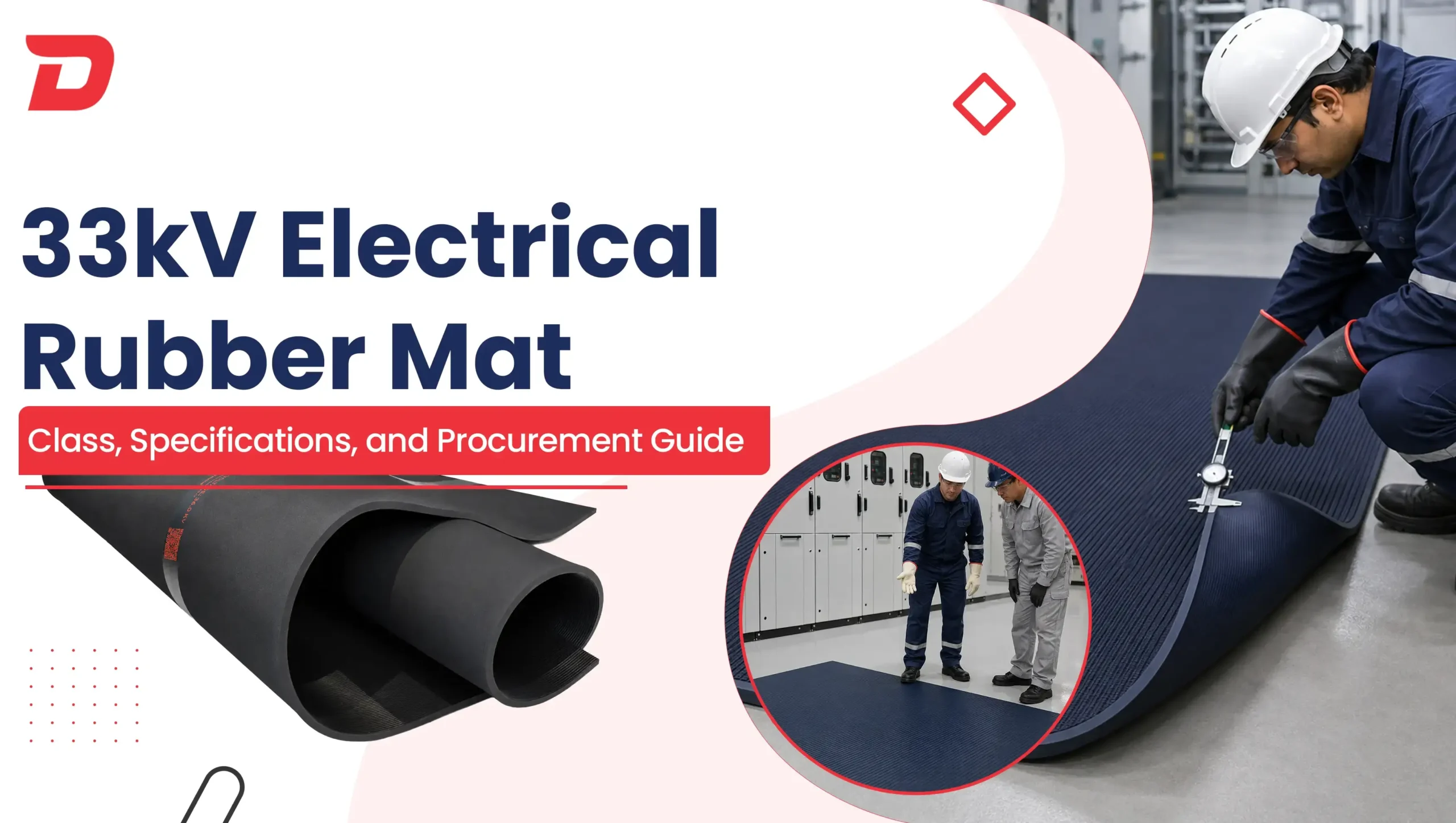
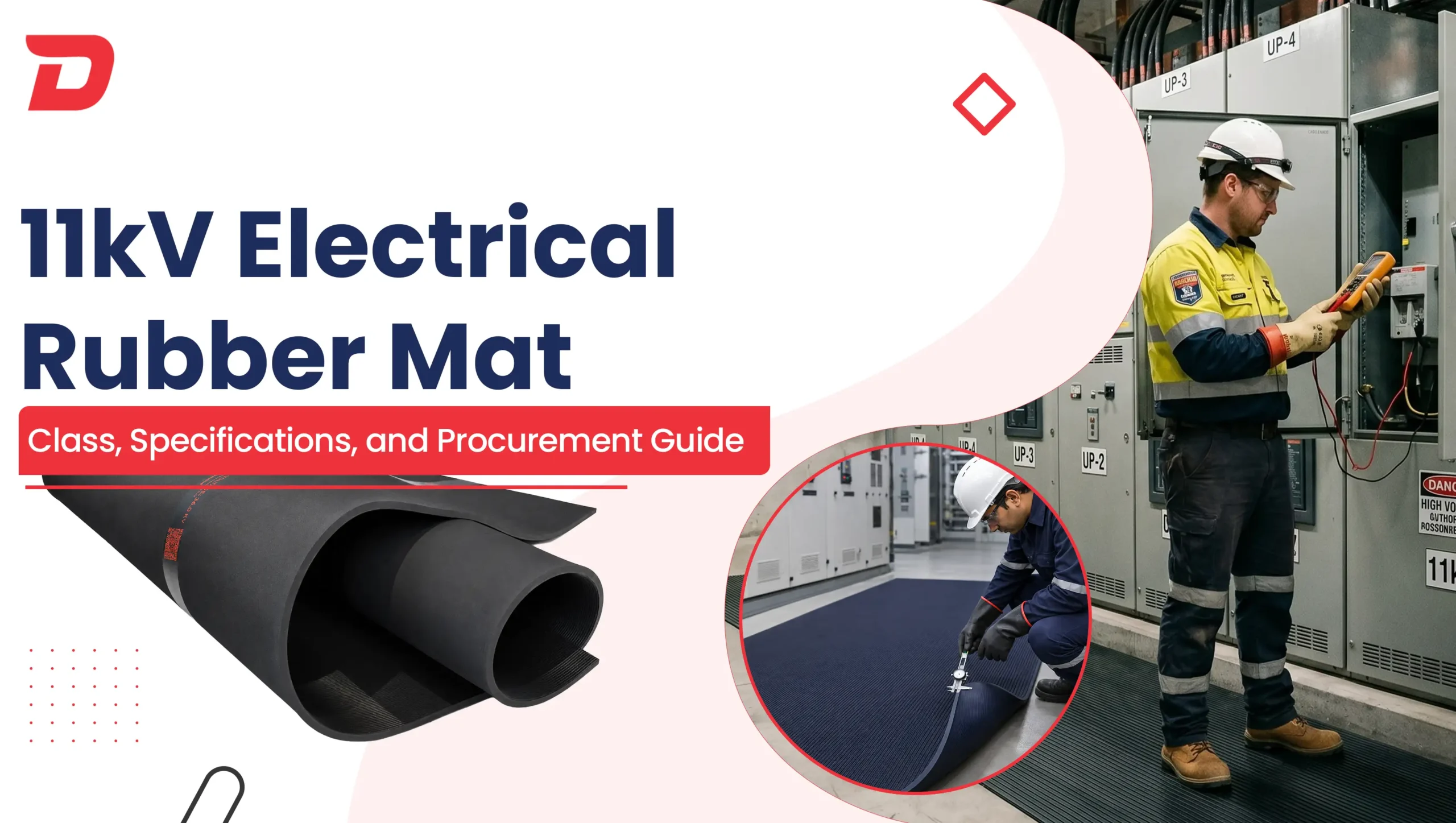
For a deeper look at specific voltage classes, see our dedicated guides on the 33kV electrical rubber mat and the 11kV electrical rubber mat. If you’re unsure which standard or class applies to your facility, our technical team can recommend a specification based on your voltage and environment.