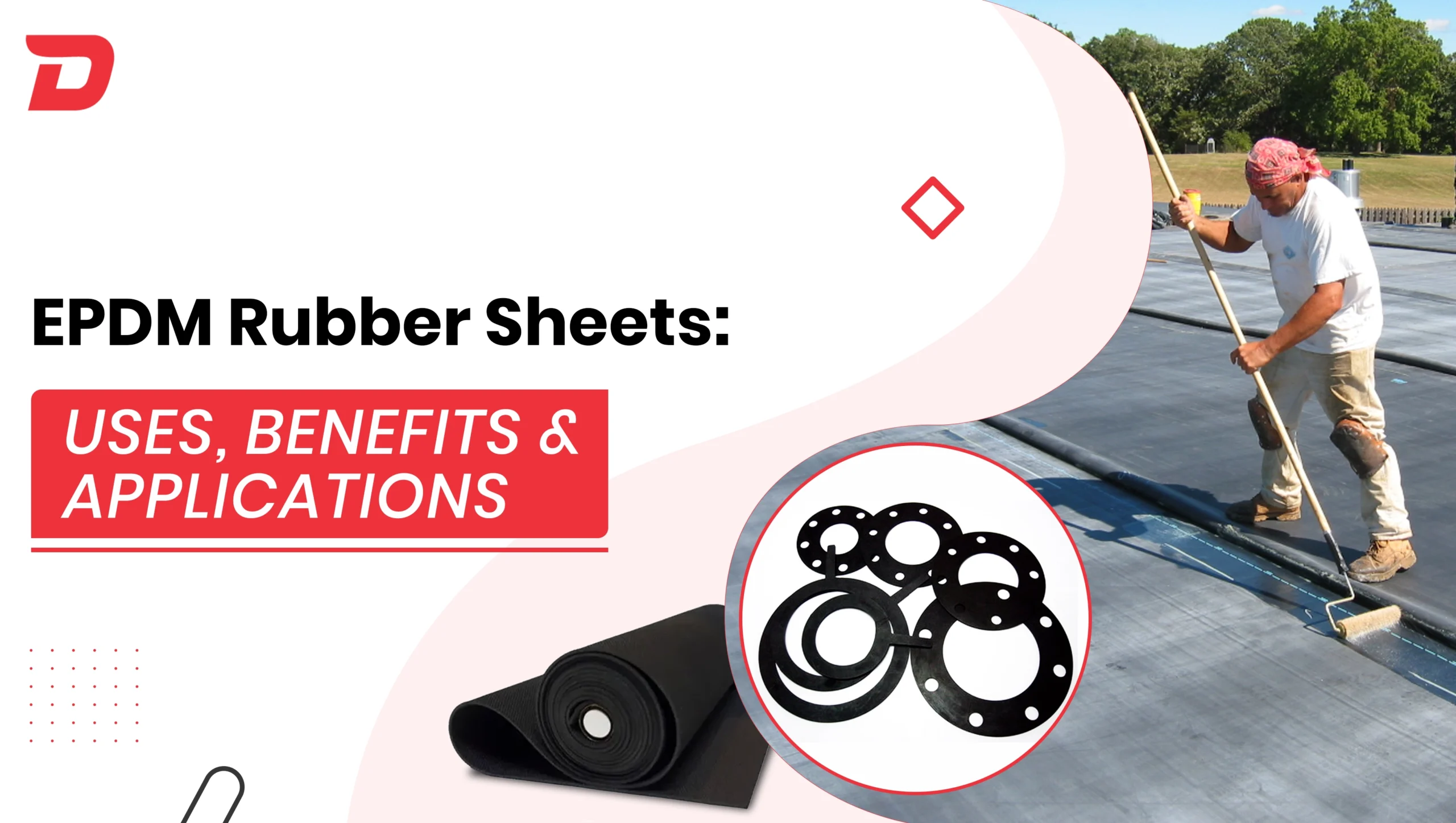
EPDM (Ethylene Propylene Diene Monomer) is a synthetic elastomer produced by polymerizing ethylene, propylene and a small proportion of diene monomer. That combination is what gives EPDM its defining trait: strong resistance to UV, ozone and weathering, which is why it shows up across outdoor and demanding industrial environments where general-purpose rubber degrades faster.
How EPDM Rubber Sheet is Made?
Mixing is the key step in producing any synthetic rubber sheet, and EPDM is no exception. Ethylene, propylene, and diene are combined in controlled proportions to produce a compound that resists UV breakdown, tolerates a wide temperature range, and holds up against many common chemicals. The exact ratio of these monomers is what separates a basic industrial-grade EPDM sheet from a higher-performance one.
Where EPDM Rubber Sheet is Used?
Automotive
- Window, trunk, and door seals
- Weather stripping and window spacers
- Cable and wire harness protection
Industrial
- Gaskets, seals, and lining for equipment and steel surfaces
- Belts, tubing, and grommets
- Hose and water-system O-rings
HVAC
- Mandrel-formed drain tubes
- Seals and panel gaskets
- Compressor grommets and pressure switch tubing
Looking specifically for EPDM roofing content? We’ve covered that in more depth elsewhere: our guide to stopping monsoon roof leaks with EPDM waterproofing, and a look at how EPDM performs across 8 roof types worldwide.
Key Properties of EPDM Rubber Sheet
Temperature resilience
Across Duratuf’s EPShield range, EPDM sheet handles temperatures from -40°C to +120°C depending on grade. No single EPDM sheet covers that entire span, so match the grade to your actual operating range rather than assuming the outer limits apply to any sheet you buy.
UV and ozone resistance
This is EPDM’s strongest characteristic. It resists breakdown from prolonged sun and ozone exposure better than most general-purpose rubber compounds, which is why it holds up well in outdoor and semi-exposed installations.
Chemical resistance
Good resistance to water, steam, mild acids, and alkalis. Poor resistance to oils, fuels, and solvents, so avoid specifying EPDM anywhere with sustained petroleum contact.
Electrical properties
EPDM has some non-conductive, insulating characteristics, but it isn’t a substitute for a certified electrical insulating mat. Where electrical safety is the actual requirement, specify an insulating mat rated to the correct standard rather than relying on EPDM sheet.
Choosing the Right EPDM Grade
| Grade | Temp Range | Best For |
| EPShield65 Lite | -20°C to +70°C | Light-duty sealing and general-purpose use |
| EPShield60 X | -30°C to +90°C | Standard industrial sealing and gaskets |
| EPShield60 Pro | -30°C to +100°C | Higher-cycle sealing, steam and outdoor exposure |
| EPShield60 Max | -40°C to +120°C | Demanding continuous-duty and wider temperature swings |
EPDM vs Other Rubber Sheet Types
EPDM isn’t always the right choice just because it’s a common default. Here’s how its top-tier grade compares against the top-tier grade of the other main rubber sheet families, so you can see where each one actually wins.
| Polymer | Temp Range | Best For | Not Recommended For |
| EPDM (EPShield60 Max) | -40°C to +120°C | UV, ozone and weathering resistance, outdoor sealing | Oil, fuel, or solvent exposure |
| Neoprene (Neo65 Max) | -30°C to +110°C | Balanced weathering plus moderate oil resistance | Extreme or continuous chemical exposure |
| Nitrile (Nitri65 Max) | -30°C to +110°C | Sustained oil, fuel, and grease exposure | Outdoor UV or ozone exposure |
| Natural Rubber/SBR (DuraBlast65 Max) | -20°C to +70°C | Abrasion and impact resistance, flooring and matting | Oil exposure or high-heat environments |
How to Specify EPDM Rubber Sheet?
Best for:
- Outdoor installations with sustained UV, ozone, or weathering exposure
- Water, steam, and mild acid or alkali contact
- Applications needing a wide operating temperature range without cracking or hardening
Not recommended for:
- Sustained contact with oils, fuels, or aromatic hydrocarbons (specify Nitrile instead)
- Food, pharma, or medical contact using standard commercial-grade EPDM, specify FoodSafeEPDM60 Pro instead, see our food-grade EPDM guide
Questions to ask before you order
- What’s the actual operating temperature range for your application, not just the outer limits of the polymer family?
- Will the sheet contact oils, fuels, or solvents at any point, even intermittently?
- Do you need FDA or food-grade documentation, or is standard industrial grade sufficient?
What thickness, width, and hardness (Shore A) does the application call for?