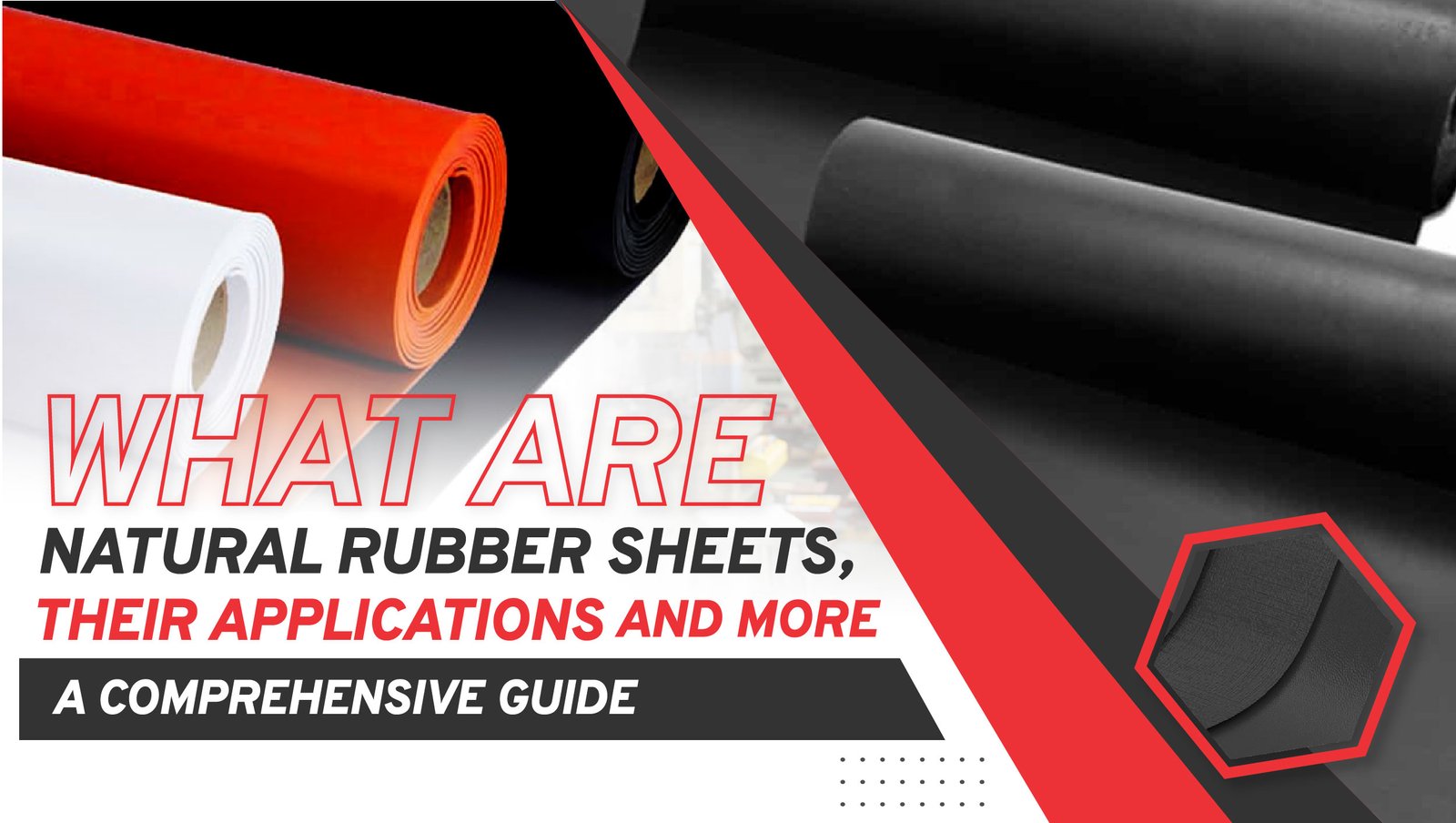
Natural rubber sheet is one of the most widely specified rubber sheeting materials in industrial flooring, gasketing, lining, and impact applications because it has high resilience and abrasion resistance at a lower cost than most synthetic alternatives. This guide covers what natural rubber sheet is, its key properties, where it’s commonly used, and, just as important, where it isn’t the right material.
Here’s what this page covers:
- What natural rubber sheet is and how it’s made
- Key properties: elasticity, tensile strength, abrasion resistance, water resistance
- Common industrial applications
- Maintenance tips by application
- Advantages and limitations, assessed honestly
What is Natural Rubber Sheet?
Natural rubber sheet is made from latex tapped from the Hevea brasiliensis tree, then compounded and processed (vulcanised, calendered) into rolled sheet. From plantation to finished roll, it’s a long but well-established process, which is part of why natural rubber remains one of the most cost-effective sheeting materials available.
Key Properties of Natural Rubber Sheet
Elasticity and flexibility: natural rubber sheet can elongate well before tearing, which is why it’s a common choice wherever flexibility under load matters.
Tensile strength: its resistance to pulling-apart force holds up under sustained mechanical stress, making it suitable for demanding, high-contact applications.
Abrasion resistance: a hard surface that resists breakdown in low-to-mid abrasion environments.
Water resistance: good resistance to water, moisture and humidity.
Biodegradable: recyclable at end of life without adding to carbon footprint.
Duratuf provides natural rubber sheet across three duty tiers, general purpose, impact grade, and abrasion grade, so exact tensile strength, hardness and elongation vary considerably by grade. If you’re comparing grades for a bulk order, our natural rubber sheet procurement guide has the full specification breakdown and a purchase checklist for bulk buyers.
5 Common Applications of Natural Rubber sheet
1. Floor covers
Bare or unreliable flooring increases the risk of slips, trips and falls. Natural rubber sheet’s grip and affordability make it a common choice for warehouse floor covering, gym matting and similar general-duty flooring.
2. Skirtboard sheets
Skirtboard rubber seals the gap between a conveyor belt and its skirt to prevent material spillage. Natural rubber is the most common base material used for this, with heavier-duty variants suited to higher-impact lines.
3. Chute lining
Chute lining sheet needs to be flexible and abrasion resistant. Natural rubber is widely used to line chutes and tanks handling grain, sand or other bulk materials, with harder-wearing variants available for more abrasive material.
4. Gaskets and seals
Natural rubber’s flexibility and sealing ability make it a common gasket and seal material in automotive and plumbing applications.
5. Protective pads
Beyond equipment protective pads and bridge bearing pads, natural rubber sheet is also used as an isolator in packaging.
Tips to Maintain Natural Rubber Sheet
For floor covers:
Sweep or mop regularly to remove dust and grit that cause wear
Use mild detergents; avoid harsh chemicals that degrade the rubber
Keep away from prolonged direct sunlight to prevent UV cracking
Inspect regularly for tears or cuts and repair promptly
Avoid placing extremely heavy items directly on the rubber to prevent indentation
For seals:
Apply silicone-based lubricants periodically to maintain flexibility
Clean with a soft, damp cloth rather than abrasive scrubbing
Check periodically for deformation and replace if necessary
Keep away from heat sources
Store in cool, dark conditions when not in use
Benefits of Natural Rubber Sheet
Longevity: a good-quality natural rubber sheet has a solid service life, reducing the replacement costs that eat into margins on lower-quality alternatives
Value for money: low cost combined with easy, cheap recyclability
Customisable: colour, dimension, thickness and surface finish can all be adjusted to a specific requirement
Limitations of Natural Rubber Sheet
Temperature sensitivity:
Not recommended for high or low-temperature extremes; it can go brittle or lose properties outside its rated range.
Chemical sensitivity:
Performs poorly against strong acids, alkalis, oils and fuels, which degrade the surface or fade its colour over time. If your application involves any of these, a different polymer family will hold up far better; our procurement guide covers which one fits which exposure.
Not suited to prolonged outdoor use:
UV and ozone exposure will crack and harden natural rubber over time unless the application is short-term or sheltered.
Why Choose Duratuf for Natural Rubber Sheeting
- 4,142+ customers across 65+ countries, 16+ years in industrial safety solutions
- ISO 9001:2015, ISO 45001:2018 and ISO 14001:2015 certified
- Dispatch from Bhiwadi (India) and Dubai (UAE) facilities
- Free expert guidance and product customization
Conclusion
Natural rubber sheet offers a genuinely useful combination of flexibility, strength and cost-effectiveness for flooring, sealing, lining and padding, provided the application doesn’t involve heavy chemical exposure, oils, or sustained outdoor UV. Have a specific application in mind? Reach out to our technical team, or if you’re comparing grades for a bulk order, see our full natural rubber sheet procurement guide.