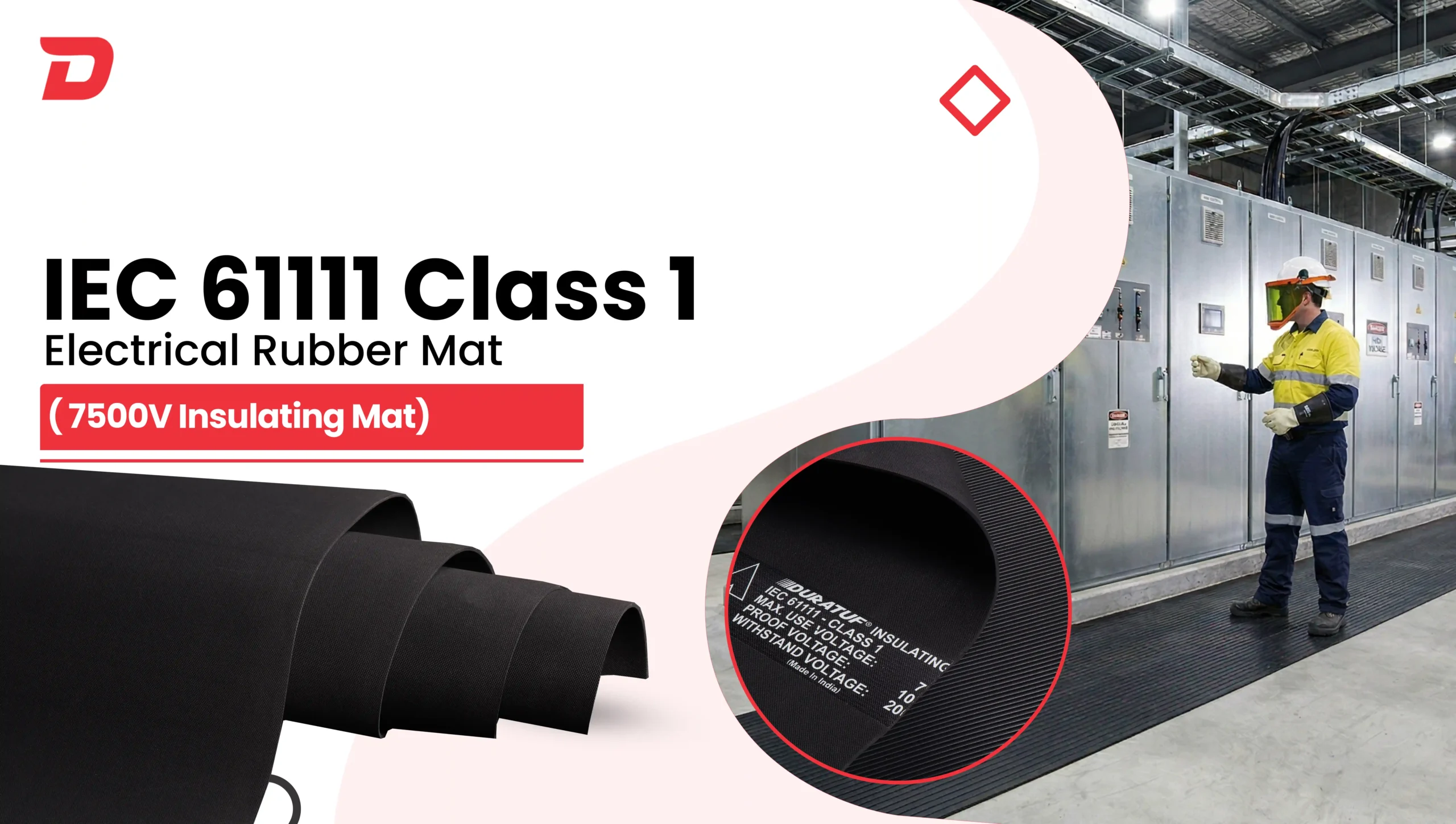
The IEC 61111 Class 1 electrical rubber mat is designed for medium-voltage electrical environments where the working voltage goes up to 7500V AC. Whether you manage a substation, a switchboard room or an industrial power installation, this mat provides the critical insulation barrier that keeps workers safe from electric shock.
This article covers everything about the Class 1 insulating mat such as its technical specs, applications, design features, installation guidelines, and answers to the most common questions buyers ask.
What is an IEC 61111 Class 1 Electrical Rubber Mat?
An IEC 61111 Class 1 electrical insulation mat is a certified elastomer floor mat that provides shock protection against voltages up to 7500 volts AC. It is tested at a proof voltage of 10,000V and must withstand 20,000V, ensuring a substantial safety margin above its rated working voltage.
This mat is manufactured in accordance with IEC 61111:2009, the international standard that governs electrical insulating matting for floor use in power installations.
Key Voltage Ratings for Class 1:
| Specification | Value |
| Max Use Voltage (AC) | 7,500 V |
| AC Proof Voltage | 10,000 V |
| Withstand Voltage | 20,000 V |
| Recommended Thickness | 2.0 mm |
| Max Thickness Allowed | 6 mm |
| Standard Length | 10 m |
| Standard Width | 1.0 m |
Where is IEC 61111 Class 1 Mat Used?
Class 1 insulating mats are suitable for a wide range of medium-voltage applications. Common installation locations include:
- Electrical substations and substation control rooms
- Switchgeae rooms with voltages between 1kV and 7.5kV
- Power plant control areas including generator and turbine rooms
- Transformer stations and cable trench areas
- Railway electrification signal equipment rooms
- Industrial distribution boards and switchboards
- High voltage testing laboratories
- Overhead Equipment (OHE) maintenance depots.
The Class 1 mat is the most widely used category across industrial and utility power sectors globally due to its versatility in medium-voltage environments.
Material and Design Features
The Class 1 mat is manufactured from a premium-grade elastomer compound using a combination of natural rubber and synthetic polymers. Key design highlights include:
- Fine ribbed surface on top: Increases surface area and disperses electrical discharge effectively
- Textured anti-slip underside: Ensures the mat stays in place without adhesive
- Anti-skid performance: Minimum slip resistance of 50N
- Flame retardant compound: Does not catch fire
- Resistant to mild acids, alkalis, oil, water and moisture
- UV and ozone resistant for extended service life
- Clearly marked every meter with product name, class, and voltage ratings
- Working temperature range: -25°C to +55°C.
Technical Specifications of IEC Class 1 Electrical Mats
| Technical Property | Performance Value |
| Material Composition | Elastomer – Natural Rubber + Synthetic Polymers |
| Mechanical Puncture Resistance (min) | 70 N |
| Slip Resistance (min) | 50 N |
| Flame Retardance | Does not catch fire |
| Low Temperature Test (-25°C) | No visible tears or cracks |
| Acid Resistance | Mechanical values ≥ 75% of original |
| Oil Resistance | Mechanical values ≥ 75% of original |
| Aging at 70°C for 168 hrs | Puncture resistance ≥ 80% of original |
Class 1 vs Class 0: When Do You Need to Upgrade?
If the electrical equipment in your facility operates at voltages above 1000V, a Class 0 mat is no longer sufficient. Here is a simple comparison to guide your decision:
| Feature | Class 0 | Class 1 |
| Max Working Voltage | 1,000 V AC | 7,500 V AC |
| Withstand Voltage | 10,000 V | 20,000 V |
| Thickness | 2.0 mm | 2.0 mm |
| Typical Use | Low-voltage panels, commercial buildings | Substations, switchgear, power plants |
How to Install IEC Class 1 Insulation Mats?
Correct installation is as important as selecting the right class. Follow these steps:
Step 1: Clean the floor surface thoroughly. Remove any oil, dust or sharp debris.
Step 2: Place the mat in front of the electrical panel, switchboard or control equipment.
Step 3: Ensure full coverage of the standing area. The mat should cover the entire operator zone.
Step 4: Do not overlap adjacent mats. Lay them edge to edge without overlapping.
Step 5: No adhesive or tape is required. The mat’s weight and textured underside hold it in place.
Step 6: Inspect the mat visually before each use. Any damage means the mat must be replaced.
Conclusion
The IEC 61111 Class 1 electrical rubber mat is an essential safety investment for any industry handling medium-voltage electrical systems. Always verify that your mat is certified, comes with a test certificate, and is properly marked.