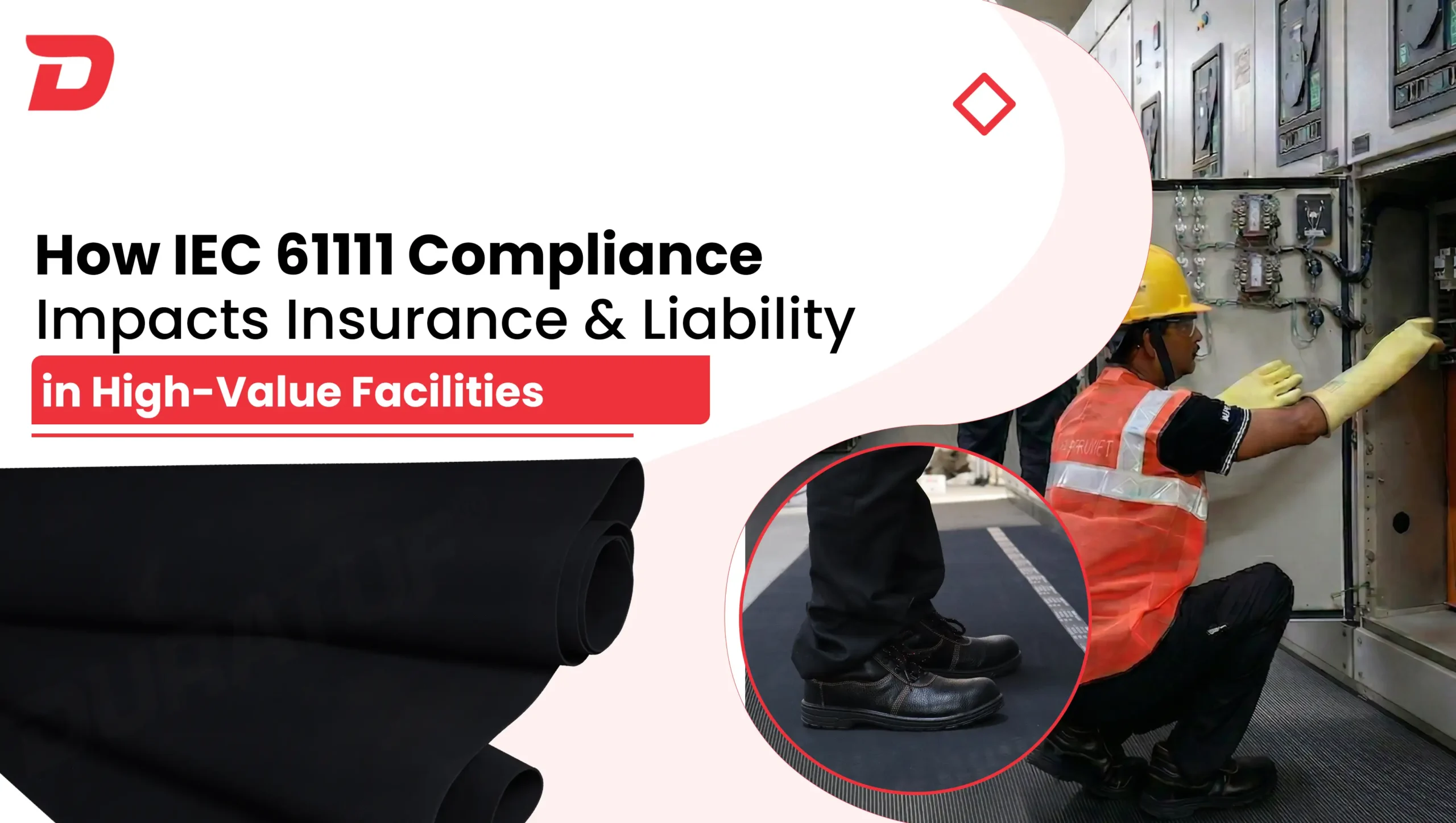
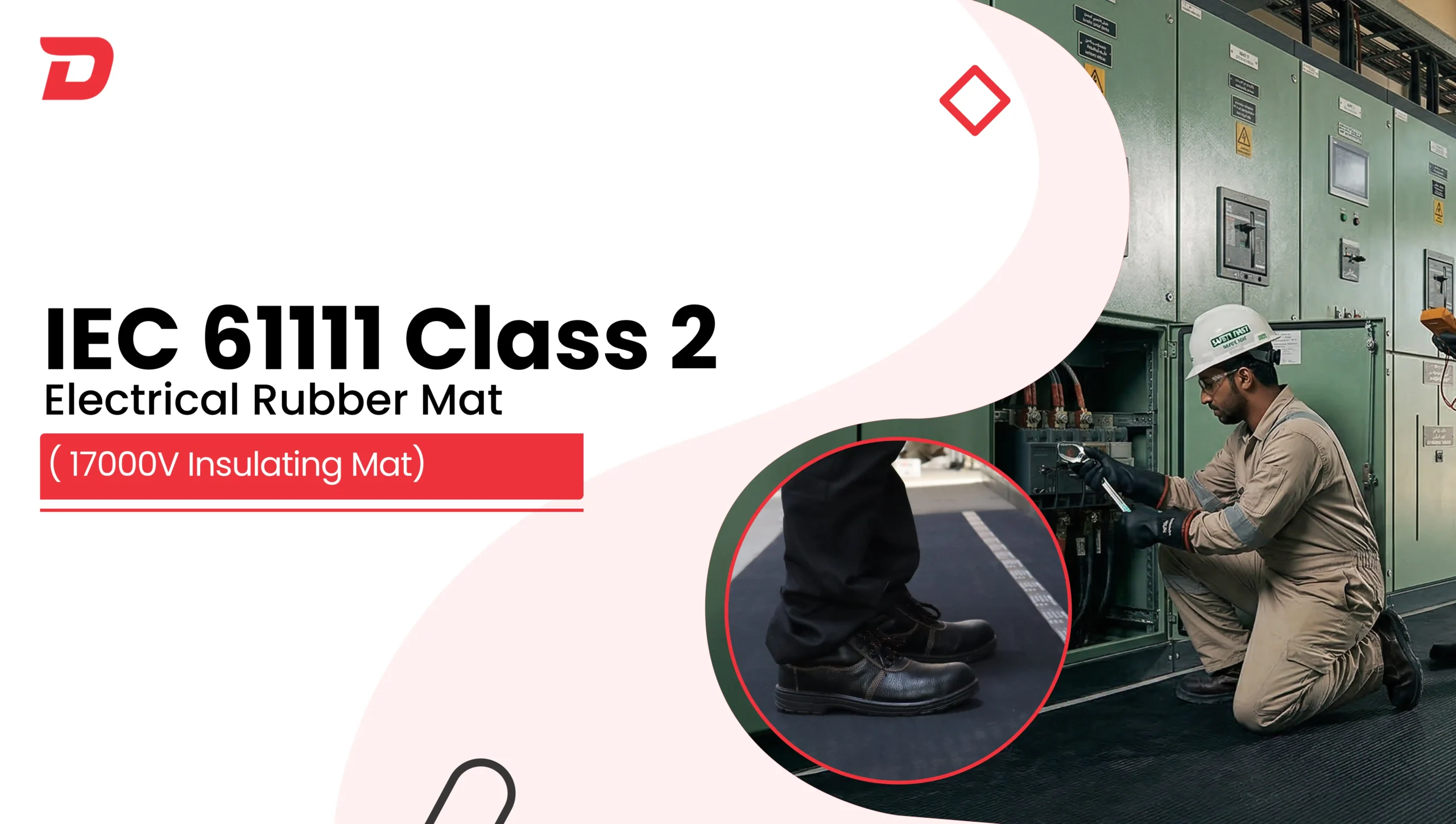
For workplaces with high-voltage electrical systems operating at up to 17,000V AC, the IEC 61111 Class 2 electrical rubber mat is the correct safety floor mat. It is widely used in power plants, electrical substations, high voltage rooms, and industrial switchgear areas where medium to high voltages are present.
This guide covers the Class 2 insulating mat in detail including its voltage ratings, material properties, applications, installation instructions, and frequently asked questions.
What is an IEC 61111 Class 2 Electrical Rubber Mat?
An IEC 61111 Class 2 electrical rubber mat is a certified high-voltage insulating floor mat made from premium elastomer. It is tested and certified to protect workers from electrical shock in environments where the operating voltage is up to 17,000 volts AC.
Class 2 mats are proof tested at 20,000V and must withstand 30,000V during the withstand test, providing a substantial safety margin for high-risk electrical workplaces.
Key Voltage Ratings for Class 2:
| Specification | Value |
| Max Use Voltage (AC) | 17,000 V |
| AC Proof Voltage | 20,000 V |
| Withstand Voltage | 30,000 V |
| Recommended Thickness | 3.0 mm |
| Max Thickness Allowed | 8 mm |
| Standard Length | 10 m |
| Standard Width | 1.0 m |
Where is IEC 61111 Class 2 Mat Used?
Class 2 mats are used in environments where voltages exceed the Class 1 range. Typical applications include:
- High voltage rooms including testing labs and high-voltage switchboard rooms
- Power plants areas like generator rooms, turbine rooms, and transformer yards
- Electrical substations operating at 11kV
- Industrial electrical panels handling 11kV to 17kV systems
- Transformer stations such as busbar areas, switching areas, and cable trenches
- Electrical testing zones and high voltage equipment testing benches
- Railway electrification systems like overhead line equipment (OHE) maintenance areas
If your equipment operates at 11kV, a Class 2 mat is the correct choice as it comfortably covers this voltage range with ample margin.
Material and Design Features
The Class 2 mat is 3 mm thick, which is slightly thicker than Class 0 mats and Class 1 mats to accommodate higher voltage requirements. Here is what makes it suitable for high-voltage environments:
- Premium elastomer: No foreign insertions, made from high-grade natural rubber and synthetic polymers
- Fine ribbed top surface: Improves traction and disperses surface electrical discharge
- Textured anti-skid bottom: Keeps the mat stable without adhesives
- Flame retardant: Does not catch fire even in industrial settings
- Resistant to mild acid, alkali, moisture, oil, and water
- UV and ozone stable: Suitable for long-term deployment
- Marked every meter with class, product name, and voltage ratings
- Operating temperature: -25°C to +55°C
Technical Specifications of IEC Class 2 Electrical Mats
| Technical Property | Performance Value |
| Material | Elastomer – Natural Rubber + Synthetic Polymers |
| Mechanical Puncture Resistance (min) | 70 N |
| Slip Resistance (min) | 50 N |
| Flame Retardance | Does not catch fire |
| Low Temperature Test (-25°C) | No visible tears or cracks |
| Acid Resistance | Mechanical values ≥ 75% of original |
| Oil Resistance | Mechanical values ≥ 75% of original |
| Aging at 70°C for 168 hrs | Puncture resistance ≥ 80% of original |
| Working Temperature | -25°C to +55°C |
IEC 61111 Class 2 vs Class 1: Key Differences
Upgrading from Class 1 to Class 2 is necessary when your installation voltage exceeds 7500V. Here is a quick comparison:
| Feature | Class 1 vs Class 2 |
| Max Working Voltage | Class 1: 7,500V | Class 2: 17,000V |
| Proof Voltage | Class 1: 10,000V | Class 2: 20,000V |
| Withstand Voltage | Class 1: 20,000V | Class 2: 30,000V |
| Thickness | Class 1: 2.0 mm | Class 2: 3.0 mm |
| Weight per Roll | Class 1: ~32 kg | Class 2: ~40 kg |
| Common Application | Class 1: Substations up to 7.5kV | Class 2: 11kV Substations & HV Rooms |
Installation and Usage Precautions
Proper use of a Class 2 mat is just as important as choosing the right class. Follow these key precautions:
- Always clean and dry the floor surface before placing the mat.
- Cover the entire working area in front of the electrical equipment.
- Never fold, crease or overlap the mat during use.
- Inspect the mat visually before every use for cuts, holes or surface damage.
- Use Class 2 mats only in environments where they are appropriate for the voltage level.
- Pair the mat with appropriate PPE such as insulating gloves and safety footwear for comprehensive protection.
- Remove the mat from service immediately if any damage is found.
Conclusion
The IEC 61111 Class 2 electrical rubber mat is an essential safety tool for 11kV substations and high-voltage industrial environments. Ensure it is certified, tested, and supplied with documentation before deployment.